Burnham: Brexit 'Has Not Worked' Ahead of EU Summit
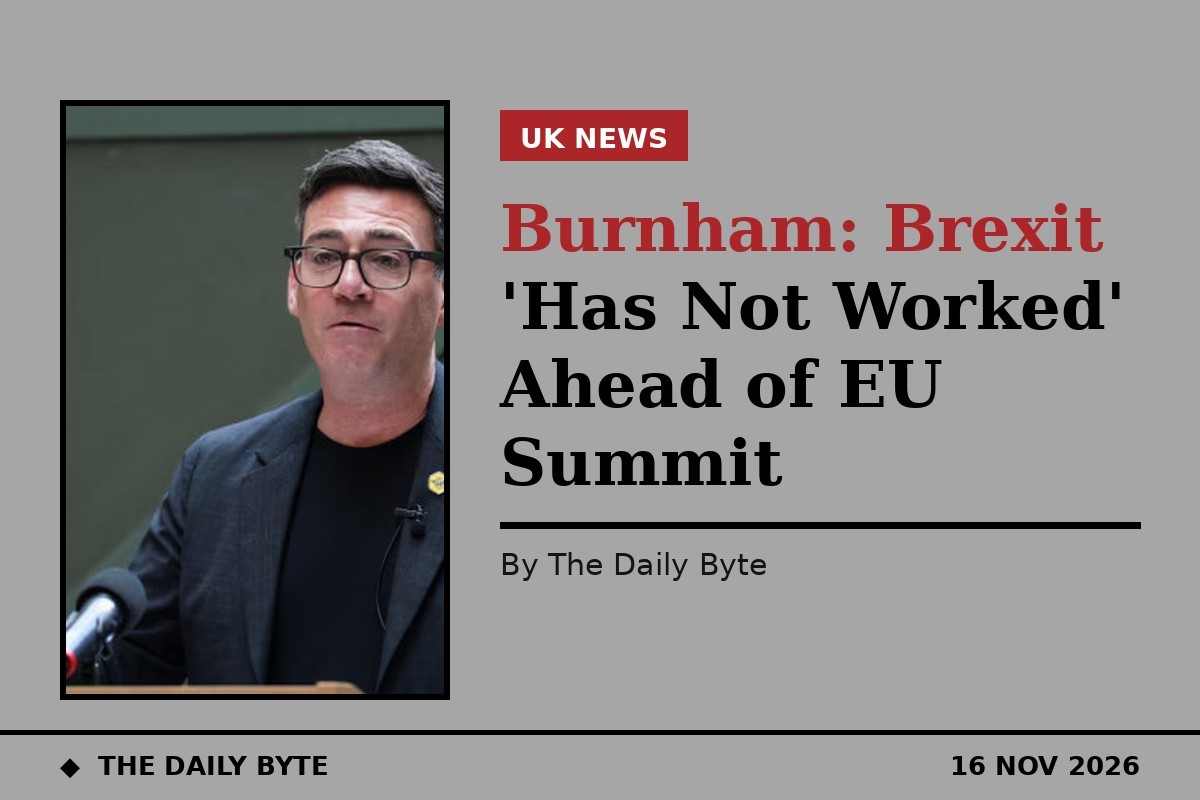
Prime Minister Andy Burnham will tell the Lord Mayor's Banquet on Monday evening that the Brexit Britain was given "has not worked", and will set out three tests any new agreement with the European Union must pass, according to advance excerpts of his speech released by Downing Street on Sunday.
Mr Burnham is due to deliver the foreign policy speech at the Guildhall in the City of London, four days before a UK-EU summit in Brussels on Friday 20 November. In the prepared text he is expected to say: "It's like the emperor's new clothes – where no one is prepared to say the obvious truth. Well, I say it as I see it. And to be frank, the emperor has nothing on. The Brexit we were given has not worked. We have lost more than we gained."
The three tests for a new EU deal
The prime minister will set out three conditions for any agreement reached in Brussels. The first is that it must be consistent with Labour's manifesto and the government's red lines, so there would be no return to the single market, the customs union or freedom of movement.
The second is that it must improve on the existing Brexit deal and bring it closer to what people thought they were voting for in 2016. The third, which he calls the "Makerfield test", is that it must deliver tangible improvements in people's everyday lives, particularly in communities that have felt neglected for too long. Makerfield is Mr Burnham's Greater Manchester constituency, which he won in a by-election before becoming prime minister in July.
At the summit, Mr Burnham will meet European Commission President Ursula von der Leyen and European Council President António Costa. He hopes to secure agreements on food and farming, emissions trading and a youth mobility scheme. The government says the package could raise GDP by 0.4 per cent, about £17 billion.
What Burnham said in Wales on Saturday
The speech formalises a position the prime minister set out on Saturday at the Welsh Labour conference in Llandudno. There he accused the Conservatives of giving Britain "a harsher and harder Brexit" than people thought they were getting when they voted in 2016, saying the party had "burned all of our bridges" with the EU.
He told delegates in Llandudno he would go to the summit to try to get the best deal for Wales, including for Welsh farmers and exporters of Welsh shellfish and lamb, and said a new food and farming deal would "get food prices down" and put more money in the pockets of British exporters.
The BBC has reported that the UK and EU have agreed a draft deal to remove post-Brexit checks on food and agricultural exports. Obstacles remain, however: the Institute for Government has said the EU objected to an annual cap on the youth mobility scheme demanded by the UK, and wants EU students to pay home fees at UK universities.
Why the speech matters now
Mr Burnham has criticised Brexit before, telling Labour's conference in Liverpool in September that it had damaged Britain. But the Lord Mayor's Banquet speech is his bluntest statement yet as prime minister, and it comes as he tries to frame closer ties with Brussels as a practical, cost-of-living issue rather than a return to the arguments of the referendum.
Critics of closer ties argue the food deal would mean taking on large amounts of EU law, while supporters say it would cut red tape for exporters and bring prices down. The summit on Friday will show how far the EU is prepared to go within the limits Mr Burnham has set for himself.
Sources: Great Yorkshire Radio; UK Fact Check; The Times.


