Burnham faces Labour revolt over Rosebank oil field
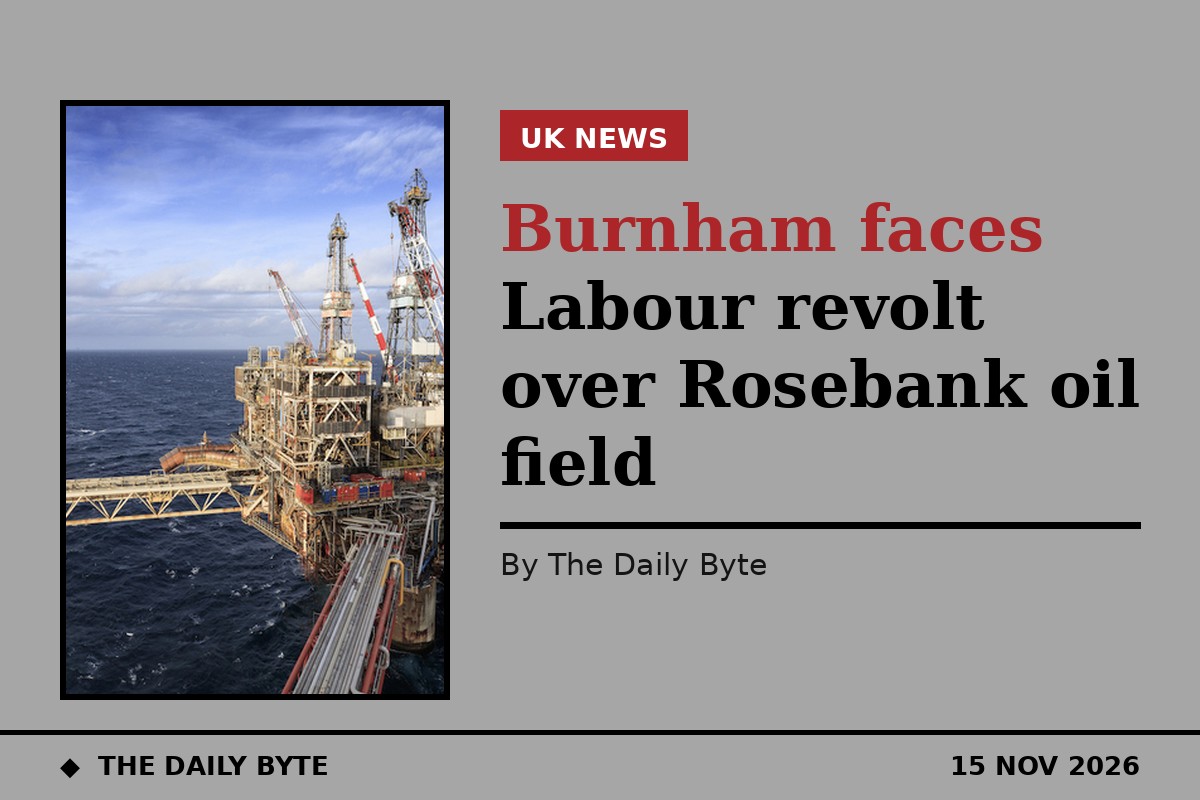
Prime Minister Andy Burnham is facing the first major rebellion of his premiership, with 75 Labour MPs reported to have signed a letter opposing approval for drilling at the Rosebank oil field.
The Sunday Times reported that the letter, which has not yet been made public, argues that approving the North Sea field would damage the UK's credibility on climate change and would not bring down energy bills. Those behind the campaign hope the number of signatories could rise to 100.
Rosebank, about 80 miles north-west of the Shetland Islands, is Britain's largest remaining untapped oil field, and no decision has yet been taken on whether drilling can go ahead. The field is widely seen as a test of Mr Burnham's approach to tackling global warming, with a majority of his cabinet understood to be supportive of development.
Resignations threatened
According to the Sunday Times, Mr Burnham also faces the prospect of resignations from his government if a licence is granted. One parliamentary private secretary to a cabinet minister is said to be considering quitting over the issue.
The parliamentary private secretary told the newspaper: "I think they underestimate how strongly people feel about climate change."
The letter is reportedly modelled on the strategy used by Labour MPs who forced Sir Keir Starmer to abandon planned cuts to disability benefits during his premiership, when backbench pressure led the government to change course.
Jackdaw approval
Energy Secretary Miatta Fahnbulleh recently approved plans for drilling at the Jackdaw gas field near Aberdeen, but no decision has been taken on Rosebank. Supporters of the project argue that domestic oil and gas production supports jobs and energy security, while opponents say new fossil fuel extraction is incompatible with the UK's climate commitments.
The row comes days after Mr Burnham addressed the UN COP31 summit in Turkey last week, where he warned that the "climate crisis is upon all of us now" after a "not normal" summer of extreme heat, wildfires and drought.
What happens next
Opponents of the project argue that approving a major new oil field so soon after the prime minister warned world leaders about the climate crisis would undermine his message at COP31. Supporters counter that domestic production supports jobs and energy security while the UK still uses oil and gas. The decision, when it comes, will show which argument has won inside government.
With the letter still private and no decision announced, the coming days will show whether the rebellion grows and whether ministers can hold the line. For now, the prime minister faces pressure from his own benches on one of the most sensitive decisions of his time in office, and the outcome will shape how his government is judged on climate.


