Burnham Vows Generational Fix for Youth Jobs Crisis
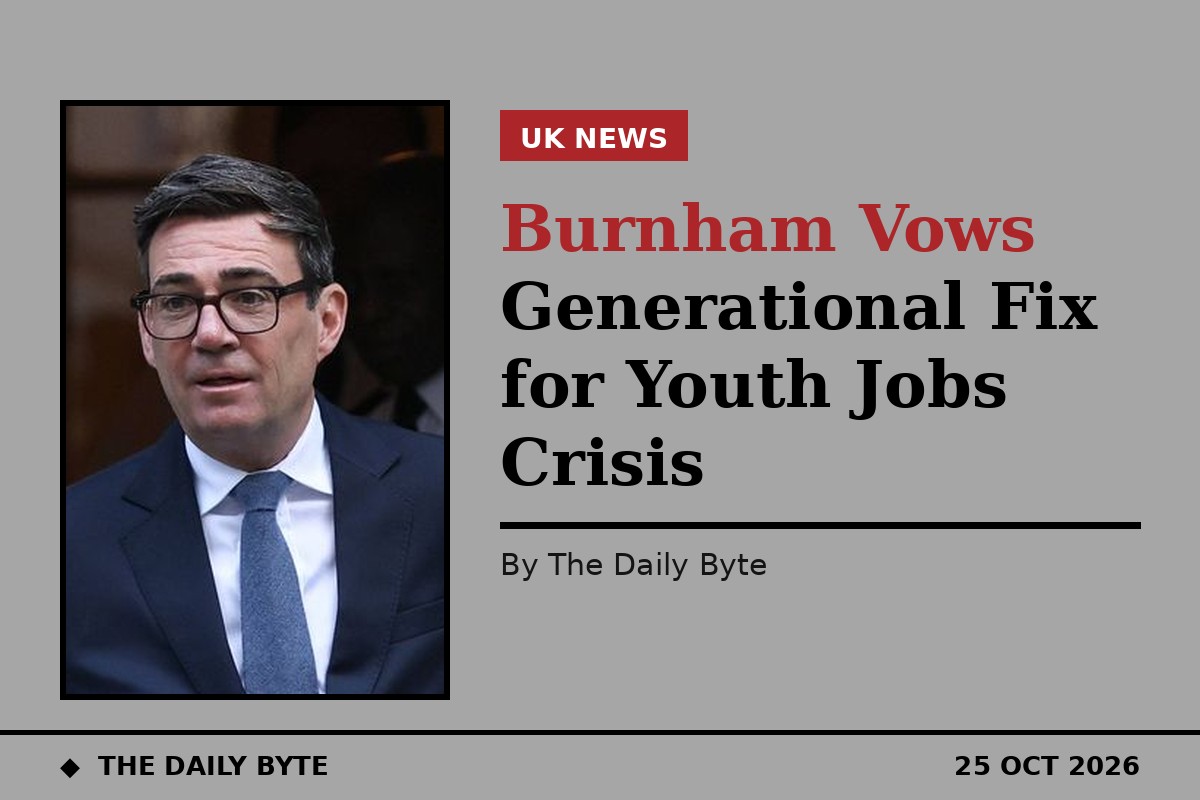
Prime Minister Andy Burnham has promised a “generational” overhaul of the way Britain supports young people, pledging to intervene from childhood onwards to tackle a youth unemployment crisis that has left more than a million 16 to 24-year-olds out of work, education or training.
Writing in the Guardian, Mr Burnham said benefits must become “the backstop, not the starting point” for young people, and that government spending would shift away from “paying for failure” and towards “investing in success”.
“If we give young people genuine opportunities to learn, train and work, we should expect them to take them where they can,” he wrote. “The system will no longer begin by establishing which benefits a young person is entitled to receive. It will understand their ambitions and identify the help they need to achieve them.”
The pledge comes ahead of the publication on Tuesday of Alan Milburn’s independent review into young people not in education, employment or training — known as Neets. The former Labour health secretary was commissioned to examine why so many young people are neither learning nor earning.
What the Milburn review is expected to propose
The number of Neets topped one million earlier this year, the highest level in more than a decade — around one in eight 16 to 24-year-olds. Official figures from the Office for National Statistics put the number at 981,000 in April to June 2026, and Mr Milburn has warned it could reach one in six young people within five years if current trends continue.
His review is expected to promise almost half a million job and education opportunities over the next decade, alongside far-reaching changes to benefits for people under 25. Mr Milburn has said the crisis could take a decade and billions of pounds to resolve, and has argued that “crude cuts” would merely result in young people showing up elsewhere in the government ledger.
Among the proposals expected is a new “youth allowance”, paid at the standard rate of universal credit, replacing some health-related benefits — including personal independence payments — for some young people. Protections are expected for people with severe, long-term disabilities. The review is also expected to recommend a legal duty on the government to guarantee under-25s a job, employment support or training.
Mr Milburn has said benefits for young people currently cost the government 25 times as much as supporting them into employment, and he is expected to propose shifting that ratio to two to one. He estimates the cost of the youth jobs crisis at £125 billion a year.
Burnham calls the review a watershed moment
Mr Burnham has described the review as a “watershed” moment, but he has stopped short of promising to accept its recommendations in full. He said the government would respond “in the coming weeks”, and insisted the reforms would not mean “more money” but “spending differently”.
“For too long, we have waited until young people reach adulthood and then tried to deal with the problems that have built up over the years,” he said. “Under this government, we will start much earlier, making sure children have the support they need at the moments that matter most.”
Ministers signal some young people will lose benefits
Work and Pensions Secretary Pat McFadden, speaking on the BBC’s Sunday With Laura Kuenssberg programme and Sky News on Sunday, said some young people will no longer receive benefits they are currently entitled to, and called for a “complete reset” of the system.
“We need a complete reset of the system in terms of what it offers young people to get these numbers down,” he said, arguing the reforms were being made not “in spite of being Labour people” but “because we’re Labour people”.
Mr McFadden backed Mr Milburn’s proposal of a legal guarantee for young people, arguing that employment support needed a “legislative underpinning” so people had “more certainty about what they’re entitled to”.
The shadow work and pensions secretary, Helen Whately, said creating a legal entitlement “might sound a nice thing to do” but “doesn’t make sense”, though she tentatively backed the shift from “handing out cash for relatively mild conditions” towards employment support. Reform UK’s Danny Kruger said he was “encouraged” by the suggestion of stricter rules, but added that he did not expect Labour to follow through on the cuts.
Ministers will be hoping to head off opposition from their own backbenchers. The previous government of Sir Keir Starmer was forced to water down proposed welfare cuts last year in the face of a backbench rebellion, and some Labour MPs have already raised concerns about the extent of future support for young people.
The full Milburn report is expected on Tuesday, when the scale of the government’s plans — and the political fight over them — will become clearer.
Source: Wandsworth Times


