CERT-In Warns AI Attacks Drove Illegal Bank Payments
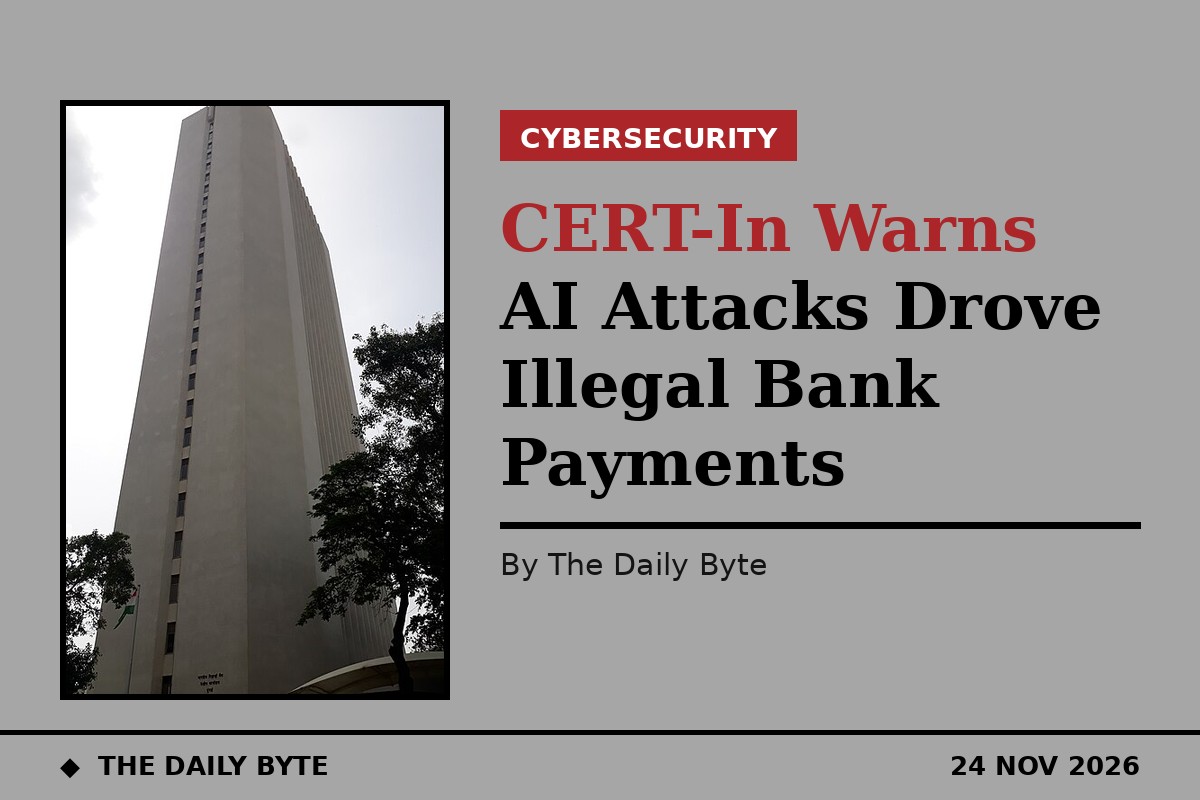
India's cyber emergency agency has warned that attackers using artificial intelligence have pushed unauthorised payments through banks and financial firms by turning the victims' own business processes against them.
The Indian Computer Emergency Response Team (CERT-In) said in advisory CIAD-2026-0062, issued on Friday 20 November, that the activity had produced unauthorised financial transactions at banking and financial services companies, at technology providers supporting government-linked payments, and on platforms that handle vendor and partner payouts. The agency did not say how much money was moved, and it did not name the attackers.
Payments moved through legitimate systems
What makes the incidents unusual is that the attackers did not need to break the payment systems themselves. According to CERT-In, they changed business records and approval arrangements, then let the organisations' own legitimate payment processes carry the money out. Because the transactions travelled through trusted systems and established approval procedures, they did not raise an alert.
The advisory lists four methods seen in the incidents: abuse of business applications and workflows run by service providers, rather than direct attacks on payment-related programming interfaces; changes to business records or approval relationships followed by the use of legitimate payment processes; use of trusted systems and approval procedures to process unauthorised transactions without raising any alert; and exploitation of blind spots in the independent checking, reconciliation and review of changes to business records.
The Indian Cybercrime Coordination Centre (I4C) said the attacks had targeted banks, non-banking financial companies and fintech firms, and had led to unauthorised transactions worth crores of rupees through fund disbursement systems and payment interfaces. It said the money was sent to mule accounts across different banks and then quickly moved on or withdrawn through the IMPS and NEFT transfer systems.
AI agents did the legwork
Separately, CERT-In said its threat hunting had found AI-driven agentic offensive frameworks in use across enterprise, technology, government, academic and research organisations. The frameworks were used for automated reconnaissance to find exposed systems, for rapid creation and modification of exploits for known vulnerabilities, including by studying software patches, and for running clusters of AI agents on intrusion tasks in parallel.
The agents also adapted their scripts, requests and attack methods when they hit errors or blocked attempts, and they used valid credentials, legitimate administrative functions, trust relationships and external infrastructure to move deeper into target networks.
CERT-In said the tooling had compressed the time between initial access and final impact "from days to a few hours", and that multi-agent operations could run in parallel for hours or days to reach the attackers' goals.
The warning follows an earlier alert this month in which CERT-In named a group called Crafty Falcon as the force behind a wave of AI-driven attacks on financial firms. India's central bank, the Reserve Bank of India, has also warned banks about rising attacks on financial infrastructure and asked them to show how they are preparing for AI-related threats.
What banks are being told to do
CERT-In urged organisations to review the security of their business applications, critical records, user identities and third-party interfaces. It said monitoring and incident-response arrangements should also take account of the risks from misuse of trusted business processes and automated intrusion activity.
The US Federal Bureau of Investigation has separately warned that one of the AI frameworks involved, ARTEX, can cut the time from initial targeting to privileged access to under three hours, and that it lets attackers with limited technical skill run complex operations against several targets at once.
For banks and their customers, the message is that the danger is no longer only a break-in at the perimeter. When the paperwork and the approvals look genuine, the payment itself looks genuine too, and the fraud is discovered only when the money has already moved.
Sources: The Hacker News; The Hindu BusinessLine.