China defence chief visits UK first time in 26 years
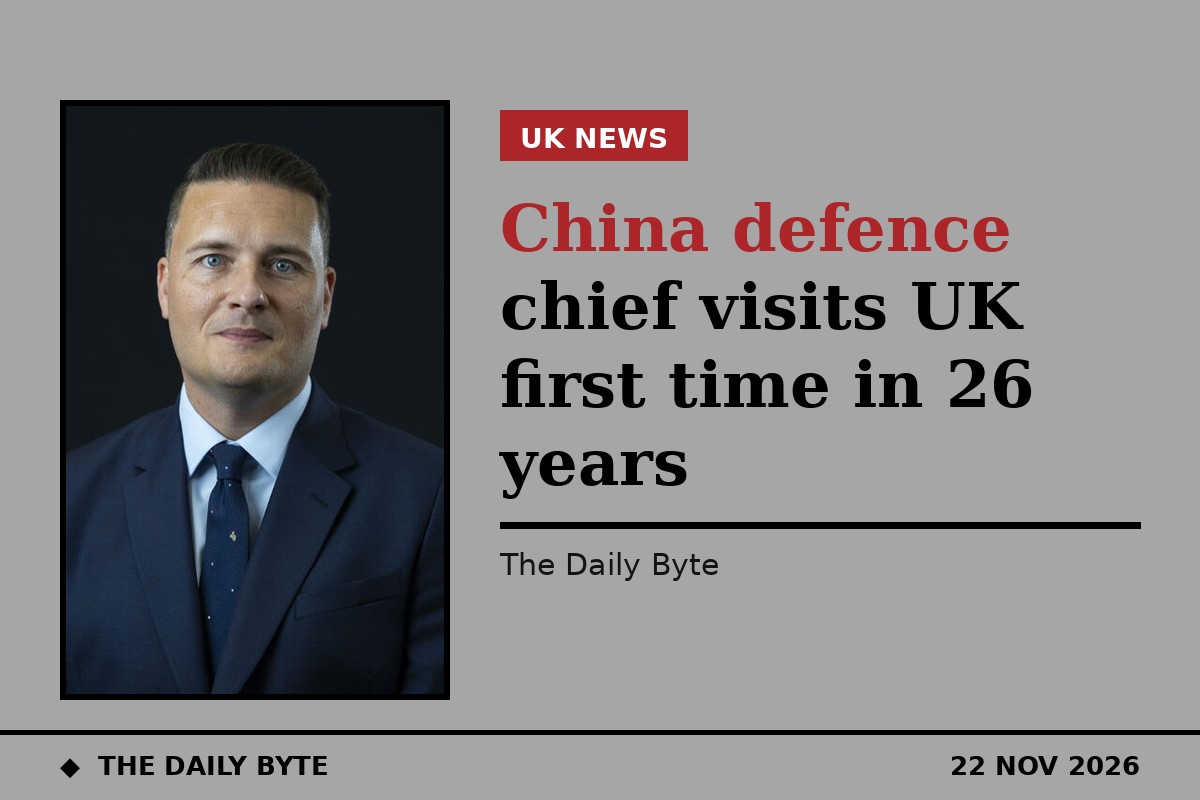
Defence Secretary Wes Streeting hosted China's Defence Minister, Admiral Dong Jun, in London on 19 November 2026, in the first visit of its kind by a Chinese defence minister to Britain in 26 years. The meeting marked a deliberate reopening of military-to-military contact between two countries whose relationship has been defined in recent years by suspicion as much as by trade.
Streeting set out the purpose of the talks in a written statement to Parliament on 19 November, saying he was hosting Admiral Dong in what he described as the first visit of its kind for 26 years, when Labour was last in government. He said the aim was to put more reliable communication in place between two military powers at a time of growing strategic competition, and to make sure that strategic rivalry does not become military confrontation through misunderstanding or miscalculation. The full statement is published on the UK Parliament website.
Diplomacy without lowering the guard
Writing in The Times before the meeting, Streeting argued that Britain must forge better relations with Beijing despite the danger of cyberattacks, espionage and foreign interference, saying Labour should "extend the hand of diplomacy" without "lowering our guard". He described China as a "threat" in an interview with The Times last month, and wrote that the differences between the two countries are profound. His message was that engagement should be steady and clear-sighted rather than swinging between the "golden era" of David Cameron and the "deep freezer" under Rishi Sunak, as he put it.
According to China Military Online, the two ministers held an in-depth exchange of views on relations between the two countries and the two militaries, the international and regional situation, and issues of common concern. They agreed to deliver on the consensus reached by the two heads of state and to promote the steady, sound and sustainable development of the military-to-military relationship. Streeting hosted a welcome ceremony for Admiral Dong before the talks began.
No pact, no change of alliances
The visit announced no defence pact and no change in Britain's alliances. Streeting has stressed that engaging directly with Admiral Dong is the same approach taken in recent years by his counterparts in the United States, France, Germany and Italy. The government says its bilateral relationship with China is now on a more stable footing, underpinned by what it calls a realistic assessment of both the opportunities and the risks involved.
The approach has drawn criticism at home. A report by the think tank Policy Exchange, titled The China Trap, warned that China accounts for 91% of the UK's solar imports and 94% of the permanent magnets used in wind power, and argued that Britain has become dangerously reliant on Beijing for net-zero technology. Shadow foreign secretary Tom Tugendhat and Labour peer Maurice Glasman have both criticised the government's approach, while Streeting has defended it as necessary for a global response to climate change.
The visit comes as Britain's security services have been open about the risks arising from cyberattacks, espionage and foreign interference linked to China. Whether the renewed dialogue produces anything concrete beyond the talks themselves remains to be seen: Beijing confirmed the meeting but announced no specific agreements, joint activities or new institutional mechanisms.
Frequently asked questions
Who is Admiral Dong Jun? Admiral Dong Jun is China's Minister of National Defence. He visited London on 19 November 2026 for talks with Defence Secretary Wes Streeting.
Why is the visit significant? It is the first visit of its kind by a Chinese defence minister to Britain in 26 years, and it restarts ministerial-level military dialogue between the two countries.
Did the talks produce any agreement? No specific agreements, joint activities or new mechanisms were announced. Both sides said they would work to deliver on the consensus reached by the two countries' leaders and to develop the military-to-military relationship.