Cleverbridge breach steals card numbers and CVVs
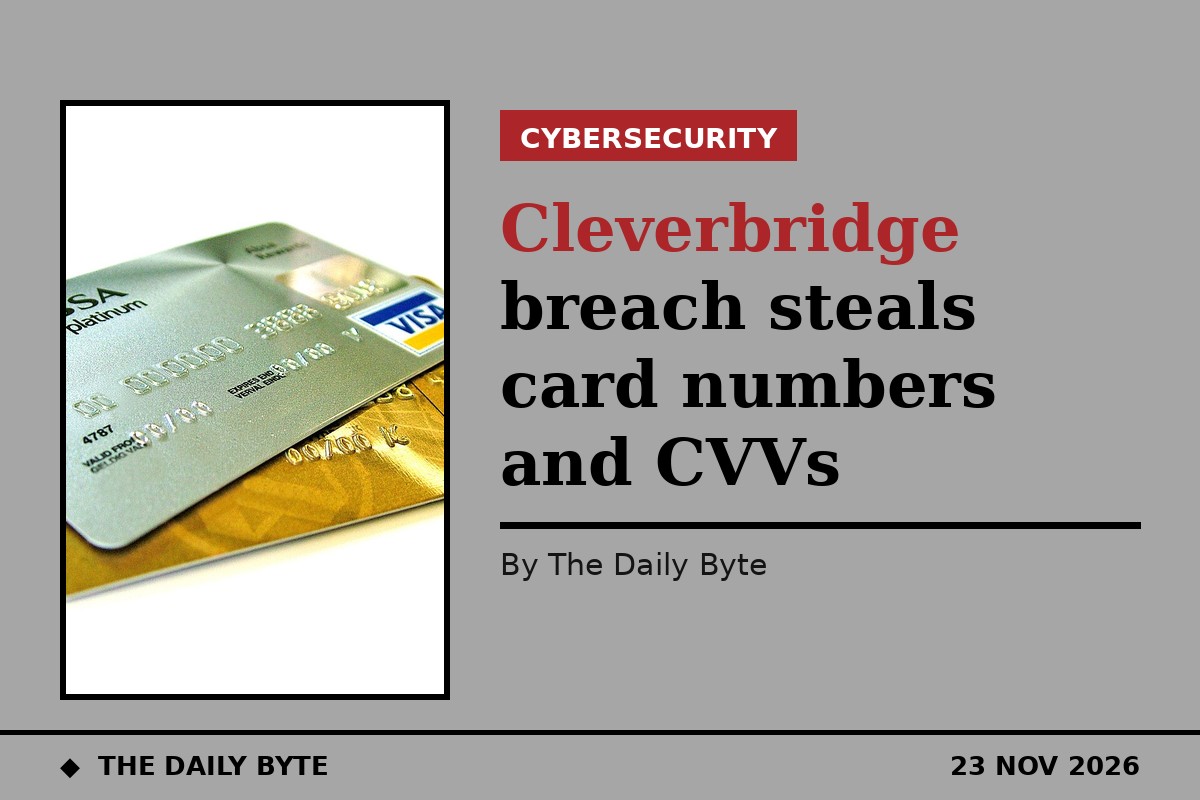
Payments platform Cleverbridge has confirmed that attackers copied customers' payment card numbers, expiry dates and CVV security codes from its systems, in a breach that puts affected shoppers at immediate risk of card fraud.
The Germany-headquartered company, which runs checkouts, payments and subscriptions for software and software-as-a-service businesses, detected unauthorised activity on its platform on 4 November and said it cut off the intruders' access the same day. Its investigation later established that a third party had copied payment card data stored on the platform. Cleverbridge began notifying affected individuals on 20 November, more than two weeks after the intrusion was discovered.
What was stolen
Cleverbridge's public incident update does not spell out exactly what was taken, directing customers to their individual notification letters instead. But a notification sent to affected customers, seen by The Register, states that the information involved includes the card number, expiry date, card security code (CVV or CVC) and contact details used for a purchase made through Cleverbridge.
Email addresses, billing addresses and phone numbers were also among the information potentially exposed, according to that notification. Cleverbridge said there is no indication that account passwords were compromised. The stolen combination of card number, expiry date and security code is exactly what a criminal needs to attempt fraudulent purchases online, without ever touching the physical card.
The CVV question
The stolen CVV codes are the most troubling part of the breach. Payment industry rules under the Payment Card Industry Data Security Standard, known as PCI DSS, prohibit companies from storing card verification codes after a transaction is authorised, even in encrypted form. Cleverbridge has not explained how the attackers obtained codes that should not have been there to steal.
The company has not said whether the codes were improperly retained after transactions, or whether the criminals intercepted them while payments were being processed. BleepingComputer reported that it asked Cleverbridge why the codes were accessible at all, and the company has not answered that question. Until Cleverbridge explains the mechanism, other merchants using its platform cannot be sure the same exposure does not apply to them.
What Cleverbridge has not said
Cleverbridge has disclosed neither how many people were caught up in the breach, nor which of its business customers' shoppers were affected, nor how the attackers got into its systems, nor how long they were inside before detection on 4 November. Its client roster includes familiar names in enterprise IT, such as Red Hat, SUSE, Tenable, Veeam, Jamf, Parallels and Plesk, but the company has not named the vendors affected, and customers of those companies should not assume their details were stolen.
The company has ruled out one scenario: the incident was not a ransomware attack. Its update states plainly that none of its systems were encrypted. Infosecurity Magazine reported separately that the ransomware group N0n has claimed responsibility for the attack, although a claim on a leak site does not prove the group carried it out, and Cleverbridge itself has not confirmed any link to N0n.
What customers should do
Cleverbridge said it has contacted data protection authorities, payment card schemes and its payment partners, and is working with a specialist police cybercrime unit. It has hired TransUnion and its Cyberscout service to support the notifications, and affected customers are being offered 24 months of free credit monitoring and fraud assistance.
Credit monitoring can help detect identity misuse, but it will not stop a criminal armed with a card number, expiry date and CVV from attempting a fraudulent purchase. Cleverbridge advises affected customers to check their card statements carefully and tell their card issuer right away about any transaction they do not recognise. Customers may also wish to contact their issuer to report the incident, as the issuer may decide to replace the card.
The company also warns customers to watch for phishing attempts, and says it will never ask for card details, passwords or security codes by email, phone or text message. Anyone who bought software through a checkout handled by Cleverbridge and receives a notice should treat it as genuine only after checking with their card issuer directly, and should be wary of unexpected messages about the incident that ask for payment details.