Cold-health alert for North West and West Midlands
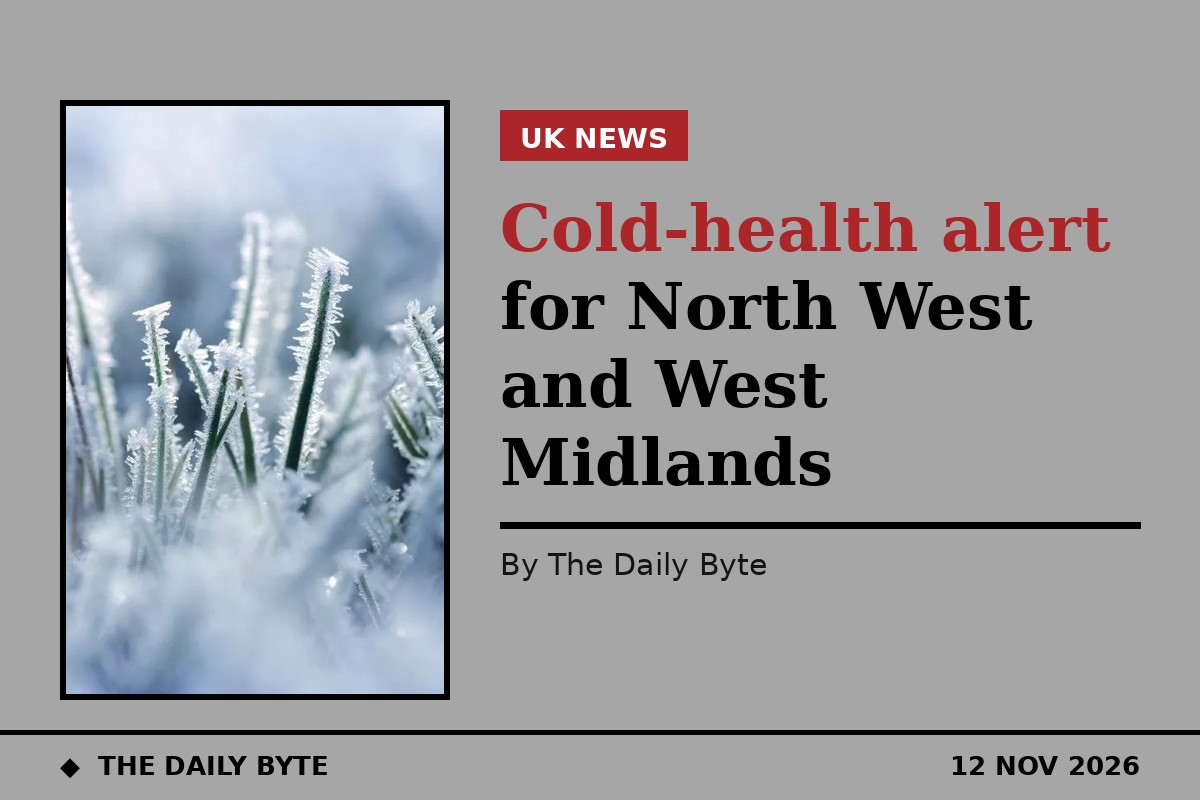
The UK Health Security Agency (UKHSA) has issued the first cold-health alert of the 2026/27 winter, covering the North West and the West Midlands. The yellow alert came into force at 9am on Thursday 12 November 2026 and runs until 12pm on Saturday 14 November. Other regions of England are currently unaffected.
A yellow alert means the cold is unlikely to affect most people but could affect those who are particularly vulnerable. UKHSA said low temperatures could increase demand for health services and pose additional risks to people aged 65 and over, those with pre-existing conditions, particularly respiratory and cardiovascular diseases, and people sleeping rough.
What a yellow alert means
The alert was issued under the Weather Health Alerting system, run by UKHSA with the Met Office. Yellow alerts are issued for periods of cold or hot weather that are unlikely to affect most people but could have an impact on those who are particularly vulnerable. The cold-health alerting season runs from 1 November to 31 March.
The alerts are separate from the Met Office's National Severe Weather Warning Service, which covers the whole UK and issues warnings for hazards such as snow, ice, wind and flooding. The weather-health alerts cover England only, because weather-health responsibility is devolved in Scotland, Wales and Northern Ireland.
UKHSA's risk description for this alert states that forecast weather is likely to have minor impacts on health and social care services, including increased use of healthcare services by vulnerable people and a greater risk to life for vulnerable people.
Check on vulnerable neighbours
Dr Anya Gopfert, consultant in public health at UKHSA, said this was the first cold-health alert of the winter and that further warnings could be expected as the season progressed. She said it was vital to check in on friends, family and neighbours who are most vulnerable, and to keep homes heated where possible and dress warmly.
That advice matters most for the groups UKHSA names as being at increased risk: people aged 65 and over, people with heart and lung conditions, and people sleeping rough. A short visit or phone call, help with heating, and making sure someone has warm clothing and food can make a real difference during a cold spell.
Residents in the North West, including Liverpool and Greater Manchester, and across the West Midlands, including Birmingham, are covered by the alert. Frosty mornings are expected more widely, but no other region of England is currently under a cold-health alert.
What to do during the alert
UKHSA has published guidance for the public on protecting health during cold weather. The practical steps are straightforward: keep living rooms warm, dress in layers when going outside, and look out for older neighbours and relatives. People with long-term health conditions should make sure they have enough medication and know who to contact if they feel unwell.
Healthcare professionals have also been urged to help patients protect their health, as demand for healthcare services can often be expected to increase during low temperatures. Anyone who is concerned about their own health, or about someone else during the cold spell, should contact their GP, a pharmacist, or NHS 111 for advice, and call 999 in an emergency.
The alert ends at midday on Saturday 14 November, but UKHSA has warned that more cold-health alerts are likely as winter progresses. The current alert status for each region can be checked on the UKHSA data dashboard.
Sources: GOV.UK / UKHSA and Pharmacy Business.