Coventry NHS trust apologises after cancer patients given years of unnecessary chemotherapy
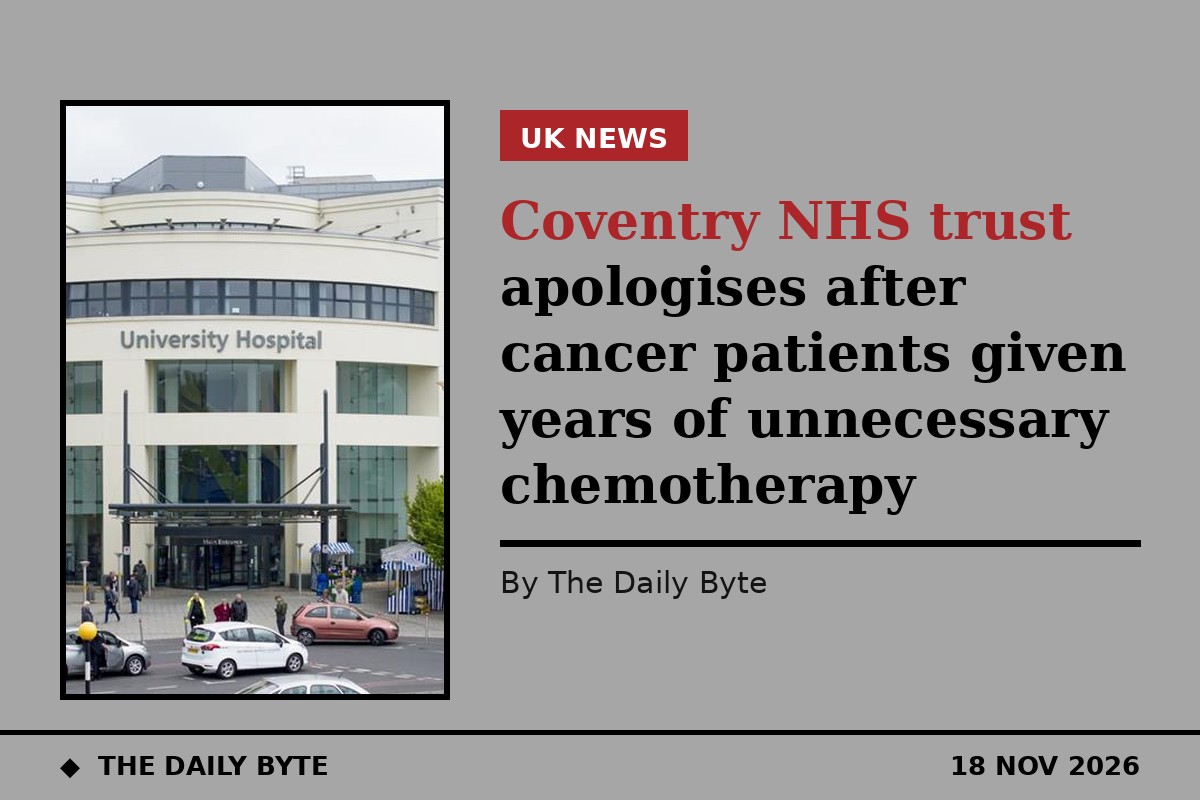
Dozens of cancer patients at University Hospitals Coventry and Warwickshire NHS Trust were given chemotherapy for years longer than they should have been, an independent review has found, prompting an apology from the trust and calls for a public inquiry.
The Royal College of Physicians (RCP) published its report on Wednesday 18 November 2026 after examining the care of 20 brain tumour patients treated by a now-retired consultant clinical oncologist at the trust. It found that the chemotherapy drug temozolomide, known as TMZ, was repeatedly prescribed far beyond accepted national guidance, in some cases for more than a decade, despite limited or no evidence that it was helping.
TMZ is normally given in a defined course of six cycles over about six months after radiotherapy for certain brain tumours, including glioblastoma. The review found patients at University Hospital Coventry kept receiving it for years, even when their condition was deteriorating or the drug was causing harm.
What the review found
Of the 20 cases examined, 15 were rated unsatisfactory overall and five were found to require improvement. None was rated as good clinical practice. The review team judged that six patients had suffered severe harm, five moderate harm and eight low levels of harm, with one case where the level of harm could not be determined.
In the worst example, a patient received more than 100 cycles of TMZ over 13 years before it was identified that they had a slow-growing, low-grade brain tumour rather than the aggressive cancer they had been treated for. That patient later developed acute myeloid leukaemia, a fast-growing blood cancer and a known risk of prolonged exposure to drugs such as TMZ.
Gayle Bodinnar received more than 150 rounds of the drug over at least 12 years, which she says has left her housebound. Becky Jones was 21 when she was told she had a grade 4 glioblastoma and only six to 12 months to live. She received more than 100 cycles of chemotherapy over more than a decade before independent experts concluded she had never had a brain tumour at all.
David Bown, diagnosed with a brain tumour in 2016, was treated with TMZ for more than eight years and has since lost the ability to speak after suffering permanent neurological damage.
The review also raised concerns about misdiagnosis, with the diagnosis considered insecure in three of the 20 cases, and about consent. In every case reviewed there were concerns about how consent was obtained and explained. In some cases there was no documentation of consent where it would have been expected, and consent forms that did exist were often of poor quality. Some patients were told they would die if they stopped treatment, even though that was not true.
Failures of oversight
The investigation was prompted by concerns about the practice of the consultant, identified only as Dr Y in the report and named by the trust as Professor Ian Brown, who worked at the trust from 1996 until his retirement. Colleagues raised concerns when his patients were handed over after he retired.
The RCP found that the systems intended to oversee the service were ineffective and that repeated opportunities to challenge unsafe care were missed. It concluded there was no evidence of effective challenge at any stage from the wider multidisciplinary team, including nursing and pharmacy teams, and that some very unusual treatment decisions appear not to have been challenged.
The trust spent more than £3.6 million on temozolomide between 2007 and 2023, over ten times the amount spent by comparable NHS hospitals. The review warned there may be many more affected patients: 83 people received extended TMZ treatment at the trust between 2017 and 2023, and more than 40 patients have raised concerns and are pursuing legal action.
Trust apology and what happens next
Professor Andy Hardy, the trust's chief executive, and chair Sue Noyes apologised to patients and families, saying the treatment had been prolonged beyond accepted national guidance and that opportunities to challenge and oversee the decisions had been missed. They said: "We let you down, and for that we offer our sincere apologies."
The RCP has recommended an independent review for every living patient who received more than 12 monthly cycles of temozolomide, and said the trust should consider reviewing the large number of deceased patients who received the same non-standard treatment. The trust said it had extended its historical review back to 2005, when national guidance for TMZ was first published.
The law firm Brabners, which represents more than 40 patients, is calling on the Health Secretary to commission an independent public inquiry. It said cases had been referred to the police but no action had been taken so far. A second report by Greatest Hits Radio also confirmed the trust's apology and the referral of a retired nurse, known as Mr N, to the Nursing and Midwifery Council.
Frequently asked questions
Which hospital is involved? University Hospitals Coventry and Warwickshire NHS Trust, based at University Hospital Coventry.
How long should temozolomide normally be given for? For glioblastoma, the standard course is usually six cycles over about six months after radiotherapy, following national guidance.
What should affected patients do? The trust said it was reviewing cases back to 2005 and would independently review every living patient who received more than 12 cycles of the drug. Patients with concerns about their treatment can contact the trust directly.
Source: The Independent, 18 November 2026. The Guardian also reported the findings on 18 November 2026.


