CVE-2026-120382: Synology DSM OAuth Flaw
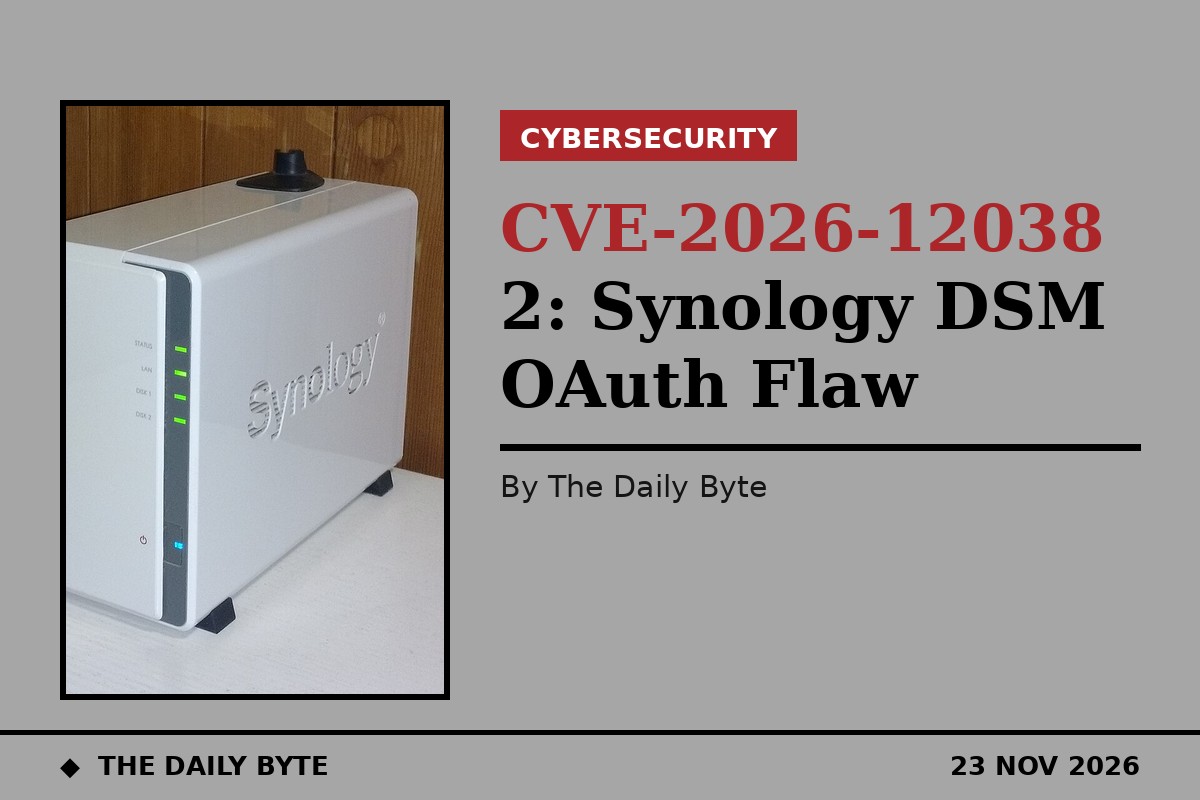
A critical flaw in Synology's DiskStation Manager software lets remote attackers read or write files on affected network storage devices without logging in, according to the vulnerability record published on Monday 23 November.
The flaw, tracked as CVE-2026-120382, carries the maximum practical severity rating of 9.8 out of 10. It sits in the OAuth API of DiskStation Manager, known as DSM, the operating system that runs Synology's network-attached storage, or NAS, devices. The API normally lets third-party applications reach stored resources without needing the user's password.
The weakness is classified as CWE-88, improper neutralisation of argument delimiters in a command. In plain terms, the OAuth API mishandles input that it passes to a system command, so a remote attacker can craft requests that let them read or write arbitrary files on the device, or disrupt its service in a denial-of-service attack. The flaw needs no login and no action from the device owner: the CVSS vector records no privileges required and no user interaction.
Which versions are affected
Synology's advisory, SA-26:21, lists DSM releases before 7.1.1-42962-10, 7.2.1-69057-14, 7.2.2-72806-11, 7.3.2-86009-6 and 7.4.1-90080-2 as vulnerable, along with earlier 6.2.4 releases. BeeStation OS 1.5, which runs Synology's BeeStation backup devices, is also listed as critically affected.
Fixed releases are available for the two newest DSM lines: owners should upgrade to 7.4.1-90080-2 or later, or to 7.3.2-86009-6 or later. For DSM 7.2.1 and 7.2.2, where a dedicated fix is still in progress, Synology recommends upgrading to 7.3.2-86009-6 or later. Fixes for DSM 7.1 and for BeeStation OS 1.5 are still listed as ongoing, with no fixed build named yet.
What owners should do now
Synology's immediate mitigation for systems that cannot yet be updated is to deactivate the OAuth Service package, which removes the vulnerable functionality from active use until a permanent update is installed. Owners of DSM 7.4 and 7.3 devices should install the fixed release as soon as possible, and those on older lines should follow the upgrade path Synology has set out rather than waiting for a dedicated patch for their version.
Synology has said it has not seen the flaws exploited, but that is no reason to delay: NAS devices typically hold backups, photographs and business files, and an unauthenticated flaw that reaches the file system is exactly the kind of weakness attackers scan for once details are public. The flaw is not listed in the US CISA Known Exploited Vulnerabilities catalogue.
How the disclosure unfolded
Synology first published advisory SA-26:21 on 19 November, and the fixed DSM 7.4 and 7.3 releases followed on 20 November. The CVE record was then published by the US National Vulnerability Database on 23 November, bringing the flaw to wider attention. Hong Kong's HKCERT issued a security bulletin on the vulnerability the same day.
The same Synology update round also addressed a separate flaw in the NGINX web software that DSM uses to handle incoming requests. Owners who apply the update deal with both issues at once, but anyone who cannot update yet should at least switch off the OAuth Service package now and check Synology's advisory for the status of their own DSM version.