DOJ Files to Forfeit $1.1bn in Binance Hack Crypto
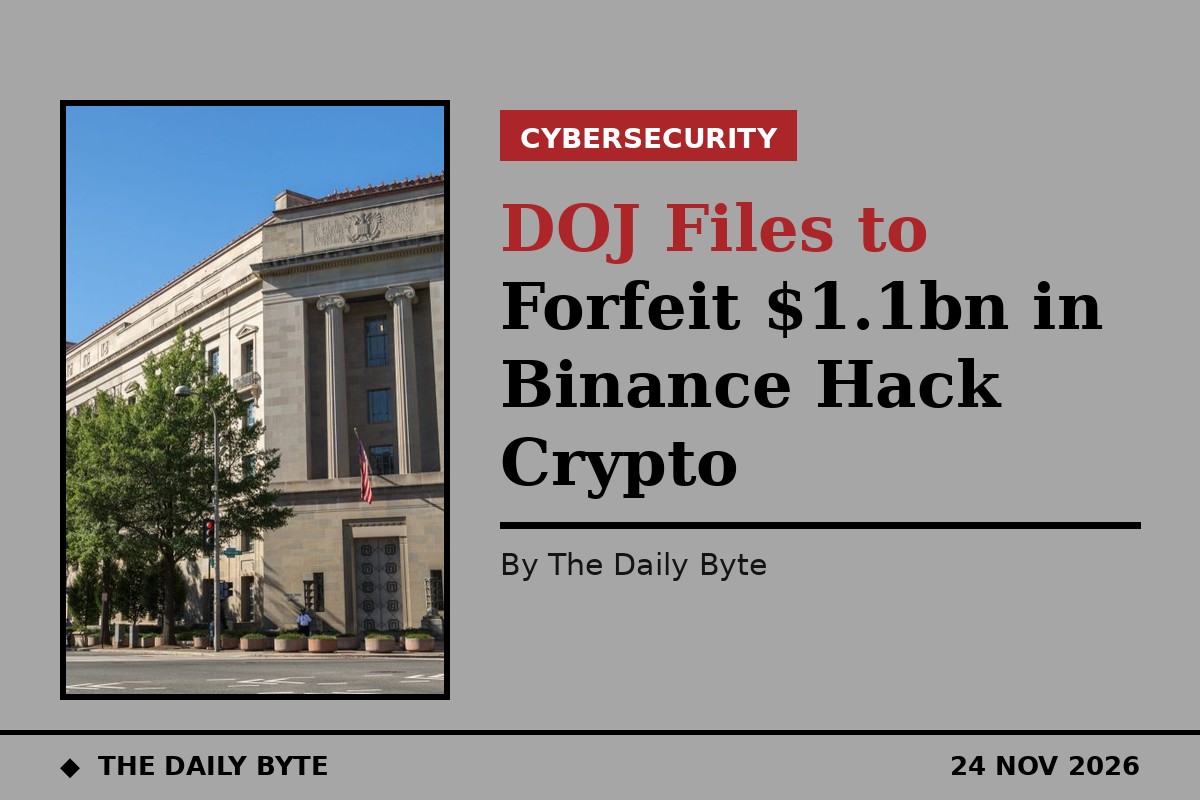
The United States Justice Department moved on Monday to take permanent control of more than $1.1 billion in cryptocurrency stolen from Binance by North Korean hackers, filing a civil forfeiture claim in a federal court in Washington. The money is held in USDC, a stablecoin pegged to the US dollar and issued by Circle, and prosecutors say it is the proceeds of the theft from the exchange on or about 29 October.
The filing, announced on 23 November, asks the court to forfeit the funds permanently. The complaint covers about $1.17 billion in USDC spread across 36 addresses on 18 blockchains, according to The Block, which reviewed the filing. It is the latest step in a recovery effort that has already clawed back a large share of what was taken: the department says the United States has helped freeze, seize or return more than $2.9 billion in cryptocurrency from several sources since the theft.
The scale of the original theft makes the recovery unusual. North Korean hackers took more than $6 billion from Binance in the 29 October attack, one of the largest cryptocurrency thefts on record. US investigators link the attack to Lazarus Group, also known as APT38, and to the TraderTraitor cluster of North Korean activity. According to Binance, the intruders got in after tricking an employee into downloading malicious software during a fake job interview.
The money at the centre of Monday's filing had already been restrained. Earlier this month the department obtained a court order allowing authorities to seize or restrain more than $1.2 billion in assets tied to the hack, and Monday's action asks the court to convert that restraint into a permanent forfeiture. The case is being investigated by the FBI, the US Secret Service and IRS Criminal Investigation, with assistance from Circle.
The money trail since the theft
Blockchain analysts say much of the stolen money is still moving. Elliptic, which updated its analysis on Monday, reported that the hackers have pushed at least $247 million in Bitcoin through mixers, tools that blend transactions to make funds harder to follow. The firm said about $2.22 billion remained in wallets linked to the theft, while $2.85 billion had been frozen or seized, and that the stolen funds had passed through more than 27,000 wallets across at least 16 blockchains. The 18,270 Bitcoin taken directly from Binance had not moved since the attack, it said.
Binance has pursued its own recovery in parallel. On 18 November the exchange said it had secured a $6.5 billion worldwide freezing injunction from the Abu Dhabi Global Market Courts, aimed at unidentified attackers and allowing legal notices to be served through blockchain transactions to wallets linked to the theft. Binance has said it committed more than $6.34 billion to cover the losses and that customer funds are safe.
Officials framed the filing as a test of whether stolen cryptocurrency can be recovered before it disappears into laundering networks. The department's national security division said the action showed its commitment to keeping victims at the forefront, while the FBI's cyber branch said its teams moved quickly after the theft to trace and freeze assets and share information with virtual asset service providers. The Secret Service said its investigators identified and froze stolen funds within minutes of the hack.
What happens next
The forfeiture claim is a request, not a final judgment: a federal judge in Washington must now decide whether the funds should be forfeited. Prosecutors will have to show the USDC is the proceeds of the theft or laundered funds from it. The Secret Service said it would keep monitoring accounts holding additional stolen funds with industry partners, and the department said the investigation continues.
For the rest of the industry, the case is a measure of how far tracing has come. Three weeks after the theft, roughly half the stolen value has been frozen, seized or returned, and the largest single cache is now before a court. What remains is the harder half: billions still sitting in wallets the hackers control, and the laundering networks built to move it. The Justice Department's announcement sets out the filing, and Cointelegraph reported the court details and Elliptic's updated figures.