Energy Bills Forecast to Rise to £2,166 in January in Biggest Jump in Four Years
By The Daily Byte
·18 Nov 2026
·4 min read
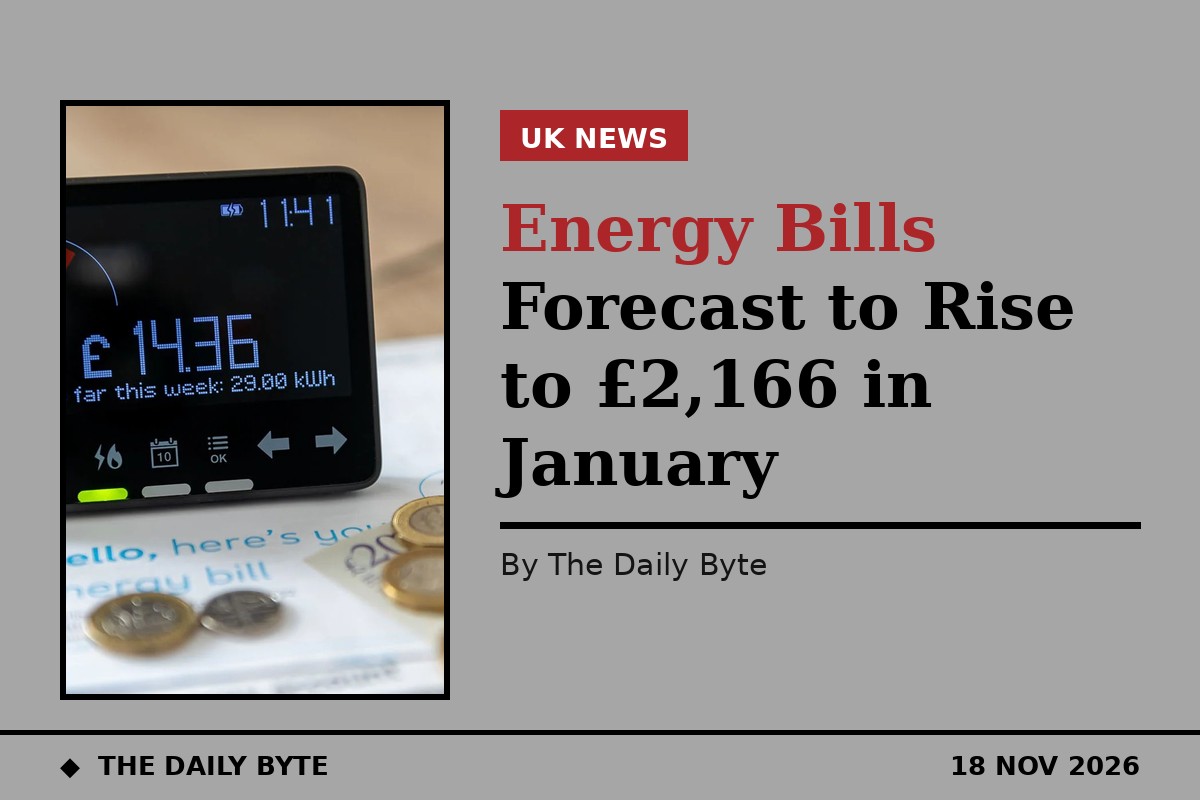
Household energy bills in Great Britain are forecast to rise by more than a quarter in January, reaching £2,166 a year for a typical household — the highest level in four years. Analysts at Cornwall Insight expect Ofgem's energy price cap to climb by 26% from 1 January 2027, adding £443 to the annual bill for a typical dual-fuel household paying by direct debit.
The forecast, published on 18 November, is the final Cornwall Insight forecast before Ofgem announces the official price cap for January to March on 25 November. The current cap, covering October to December, stands at £1,723 a year for a typical household. If the forecast proves correct, bills will be higher than at the peak of the energy crisis in 2023, after the government stepped in with a cap on prices and bill rebates.
## Why bills are rising again
Wholesale gas prices have climbed sharply as conflict in the Middle East has intensified, pushing up the cost of the gas that still generates much of Britain's electricity and heats most homes. Cornwall Insight said gas unit prices were expected to reach about 10.9p per kilowatt hour from January — the highest ever level for gas used for heating — while electricity was forecast at about 32.54p per kilowatt hour.
Business Live, reporting the Press Association's account of the forecast, noted that wholesale prices had eased in recent weeks on hopes of a resolution to the Middle East conflict, but not quickly enough to avert the January bill shock. EDF, the energy supplier, has published a similar forecast, putting the January cap at £2,172 a year and predicting it will rise again in April to £2,270, staying above £2,000 for all of 2027.
Cornwall Insight's retail markets principal, Dr Craig Lowrey, said: "After already climbing in October, energy bills look set to rise again in the new year, and the timing could hardly be worse, with colder weather in January pushing up energy use and households already dealing with the cost-of-living crisis."
## What it means for households
The forecast was published on Fuel Poverty Awareness Day, and the national fuel poverty charity National Energy Action warned that the rise would leave low-income and vulnerable people unable to heat their homes. Its chief executive, Adam Scorer, said: "Energy bills higher than any previous year. This new forecast predicts a rise in typical annual bills by £443. That means actual energy bills will be higher than at the peak of the 2023 energy crisis, after the government stepped in to put a cap on prices and provide bill rebates."
He added that the forecast should compel the government to match its longer-term ambitions for controlling energy costs with deeper, targeted support this winter.
The £100 Household Energy Payment announced in the Budget for homes in council tax bands A to D in England is not included in the £2,166 forecast, because it is a one-off payment made outside the price cap. The removal of VAT from electricity bills, extended until July 2027, is factored into the forecast.
## What happens next
Ofgem will confirm the January to March price cap on 25 November, and the new cap will take effect on 1 January 2027. Cornwall Insight also indicated there could be a modest further increase in April, although it cautioned that the forecast was likely to shift before it is announced in February, given volatility in wholesale markets.
It is important to remember that the price cap is not a limit on a household's total bill. It limits how much suppliers can charge per unit of gas and electricity, plus daily standing charges, so what a household actually pays depends on how much energy it uses.
## Frequently asked questions
**When will the January energy price cap be confirmed?**
Ofgem is due to announce the official cap for January to March on 25 November 2026.
**How much will a typical bill rise?**
Cornwall Insight forecasts a rise of £443 a year, from £1,723 to £2,166, for a typical dual-fuel household paying by direct debit.
**Does the £100 Household Energy Payment reduce the forecast?**
No. The one-off payment for homes in council tax bands A to D in England is paid separately and is not included in the price cap figure.
*Sources: National Energy Action, "Energy bills forecast to rise 26% in January" (https://www.nea.org.uk/news-insights/ci-cap-forecast-jan-27/); Business Live, "Energy bills set to reach highest level in four years" (https://www.business-live.co.uk/retail-consumer/energy-bills-set-reach-highest-34928046).*
Source
National Energy Action — https://www.nea.org.uk/news-insights/ci-cap-forecast-jan-27/ 

