EU to unveil 22nd Russia sanctions package by year-end
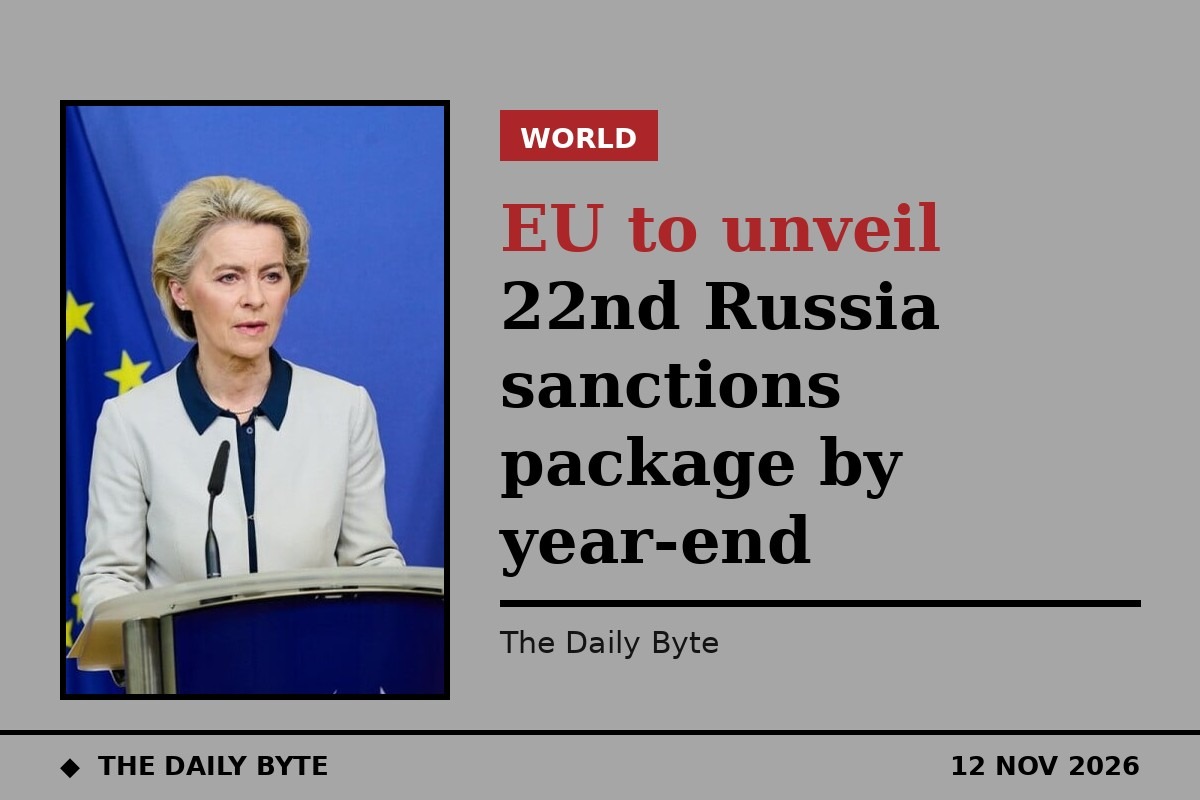
The European Commission will present a new sanctions package against Russia, along with proposals to cover Ukraine's financial needs in 2027, before the next meeting of EU leaders, European Commission President Ursula von der Leyen said on Thursday.
Von der Leyen made the announcement in Dublin, where around 50 European leaders have gathered for a summit of the European Political Community. The next European Council is a special summit scheduled for 26-27 November, and the Commission intends to bring both the sanctions package and the Ukraine funding proposal to leaders before then.
The package will be the EU's 22nd round of sanctions against Russia since its full-scale invasion of Ukraine nearly five years ago. The Commission is still debating the final details of the measures.
What the 22nd package is expected to contain
According to EU diplomats, the package is expected to include new restrictions on banks, cryptocurrencies and crypto platforms, as well as measures to close loopholes that allow sanctions to be circumvented through third countries.
It may also include a ban on Belarusian and Russian athletes competing in international sporting events held in the EU, the diplomats said. EU foreign policy chief Kaja Kallas, speaking to Reuters on the sidelines of a Group of Seven meeting this week, backed the idea, saying: "The athletes is important because for a dictator like Putin ... he doesn't care about the lives lost on the battlefield, but he really cares about these big sports events where he can show that the country is big and powerful and accepted the same way as everybody else."
Kallas added that discussions were also continuing about possible visa restrictions on Russian former combatants.
Funding Ukraine through 2027
Alongside the sanctions, the Commission is preparing a proposal on how to cover Ukraine's financial needs in 2027. "We are ... preparing a proposal (on) how to cover the financial needs of Ukraine in 2027. We will come with the sanctions package and the proposal for the financial needs before the next European Council," von der Leyen said.
Securing reliable funding for Kyiv has become one of the most pressing questions for European capitals, as the war continues into its fifth year and the United States presses for a negotiated settlement. The Commission's proposal will set out how the EU intends to keep Ukraine's government and war effort financed through next year.
What happens next
Once the Commission tables the package, it will need the agreement of EU member states before it can take effect. Previous sanctions rounds have often required days of negotiation between capitals, and the inclusion of measures such as a sports ban and new crypto restrictions could draw debate.
The timing, however, is deliberate. By putting the package and the Ukraine funding plan before leaders ahead of the 26-27 November summit, von der Leyen is giving the European Council a chance to endorse both in the same sitting, as Europe's leaders weigh how to sustain pressure on Moscow while keeping Kyiv funded.
For now, the details remain under discussion in Brussels. What is clear is that the EU is preparing its latest round of economic pressure on Russia, and that Ukraine's finances for 2027 are at the top of the agenda when leaders meet later this month.