EU Academy Data Leak Confirmed After Cyberattack
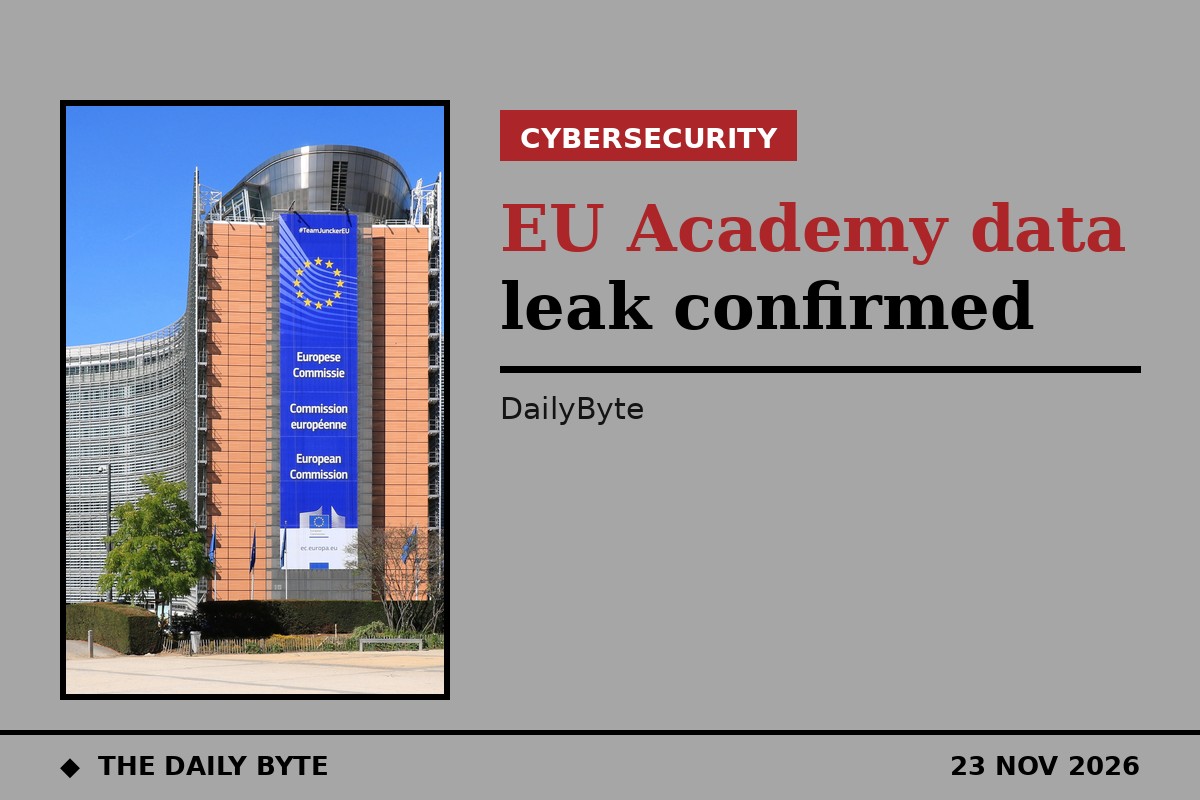
The European Commission has disabled public access to EU Academy after confirming that a cyberattack on the Commission exposed the personal data of people who use the learning platform. The announcement on Monday, 23 November 2026, marks the first time the Commission has publicly confirmed that user data leaked in the wider campaign against it.
EU Academy is the Commission's online learning hub, hosting courses and workshops produced by EU institutions for learners outside the institution itself. With the platform now out of action, enrolled users cannot reach their courses until the Commission restores access, and it has not said when that will happen.
What the Commission confirmed
Commission spokesperson Thomas Regnier told reporters on Monday that the platform had been caught up in the cyber campaign detected against the Commission. Reuters reported his words: "The EU Academy platform has been affected by the detected cyber campaign against the Commission. This resulted in leak of personal data of EU Academy users. Users have been informed today via the EU Academy website."
The Commission posted a notice on the academy's website telling users about the incident. It did not say how many people were affected, and it has not given a date for the platform's return. Regnier also said the investigation into who was behind the attack is continuing, and that the Commission is not in a position to disclose any information on that question.
What was exposed, and what was not
The confirmed exposure covers users' names and email addresses, according to the Associated Press, as reported by Cyber Security News. That makes EU Academy the first service in the wider incident for which the Commission has publicly confirmed a leak of users' personal data.
What the Commission has not confirmed matters just as much. It has not said whether passwords were exposed, whether any other types of data were taken, or how many accounts are involved. Until it provides more detail, the confirmed exposure of names and email addresses should not be read as confirmation that login details were also taken.
Even a leak limited to names and email addresses carries a real risk. Exposed email addresses can make phishing messages look more credible, because a fake message can address a victim by name and refer to a real course they were taking. The Commission warned EU Academy users to be cautious about unexpected emails or messages and not to share personal information in response. Anyone who receives a message about a course, account access or the breach should open the academy's website directly instead of following a link in the message.
A campaign first detected in October
The Commission detected the campaign on 22 October and confirmed the incident on 26 October after an initial investigation. It disclosed the campaign publicly the previous week, saying it had taken several applications offline as a precaution and had restored most of them. Earlier disruption affected staff tools used for timesheets and medical reimbursements, although those outages do not by themselves establish that attackers accessed the records those tools handle.
The Commission has also confirmed that the campaign used an AI-assisted tool. It has not publicly explained how the attackers first gained access, or what role the tool played in the EU Academy breach. Euronews reported that officials suspect a China-backed hacking group and that the wider attack had not been fully contained by Monday, citing people familiar with the investigation. The Commission has not publicly named any group, so the suspected link is not a confirmed finding.
What EU Academy users should do now
For learners waiting to resume a course, the official academy website remains the place to check for updates, since the Commission has not said when public access will return. Users should treat any message claiming to be about the breach with suspicion, especially one asking them to verify an account or sign in through a temporary page.
People who used the same password for EU Academy as for another service should change it on the other service, and anyone who receives a message that knows their name or email address should remember that this alone is not proof it came from the Commission. The investigation is continuing, and further detail on the scale of the leak is expected only when the Commission is ready to release it.