EU agrees €211.5bn budget for 2027 in final MFF year
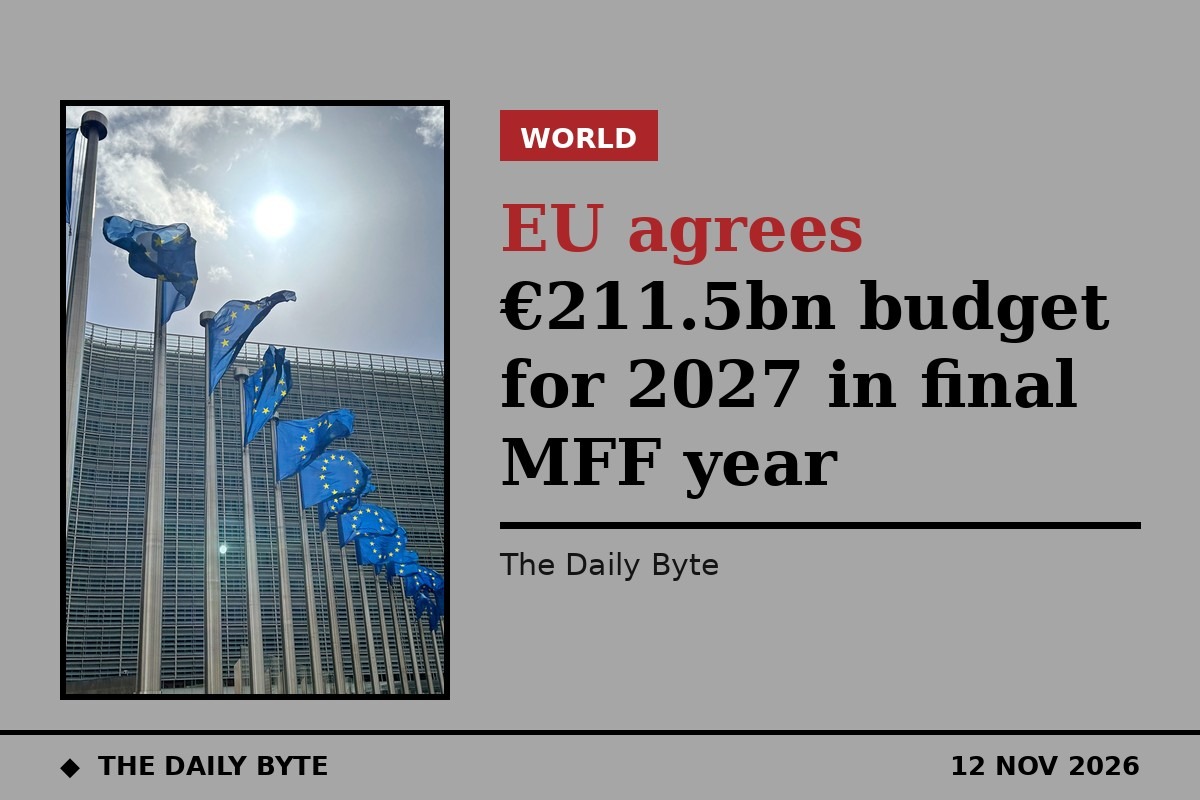
The Council of the European Union and the European Parliament have reached agreement on the EU's annual budget for 2027, setting total commitments at €199.7 billion and total payments at €211.5 billion.
The deal was struck in the early hours of Wednesday 11 November, after intensive negotiations in Brussels between the Council, chaired by Ireland as part of its presidency of the Council, and the European Parliament, with the European Commission helping to facilitate the talks.
The 2027 budget is the seventh and final annual budget of the current multiannual financial framework, which runs from 2021 to 2027. The agreed figures amount to 0.99 per cent of the EU's gross national income in commitments and 1.05 per cent in payments.
What the deal covers
According to the Council, the budget strongly focuses on the EU's main policy priorities and addresses the difficult geopolitical context. The Commission said the deal provides targeted and reinforced funding for competitiveness, defence, affordable housing, water resilience and the energy transition.
The budget also supports farmers and fishing communities, businesses, education, research and infrastructure, and keeps €710.1 million available under the spending ceilings of the current framework so the EU can react to unforeseeable needs during the year.
Payments of €211.5 billion are almost five per cent higher than in 2026, the Commission said, largely because cohesion programmes are running at full speed. The provisional agreement also restores €1 billion in spending commitments that the Council had cut from its earlier position.
Led by Ireland's Simon Harris
The negotiations were led for the Council by Simon Harris, Ireland's deputy prime minister and finance minister, who chaired the EU's Economic and Financial Affairs (Budget) Council and led talks on behalf of the 27 member states.
Announcing the agreement, Harris said the budget sets out how the EU will fund key programmes next year, supporting "farmers and fishing communities, businesses, education, research, infrastructure and other priorities that affect people's everyday lives".
Formal approval still to come
The agreement is not yet final. The European Parliament and the Council now have 14 days to formally approve the compromise. The Council is expected to endorse it on 23 November, where adoption requires a qualified majority, and the vote in the European Parliament's plenary, which will mark the end of the process, is currently scheduled for 24 November.
Because 2027 closes the current seven-year framework, the annual deal also sets the baseline for a far more consequential negotiation already under way: the next long-term EU budget for 2028-2034. That settlement, which requires unanimous agreement among member states, is not decided by this annual procedure.
For now, the agreement ends weeks of talks over the final year of the current framework, giving EU institutions and member states a settled spending plan for 2027 while the debate over the next long-term budget continues.