Euro slides below $1.12 as strong US jobs data lifts dollar
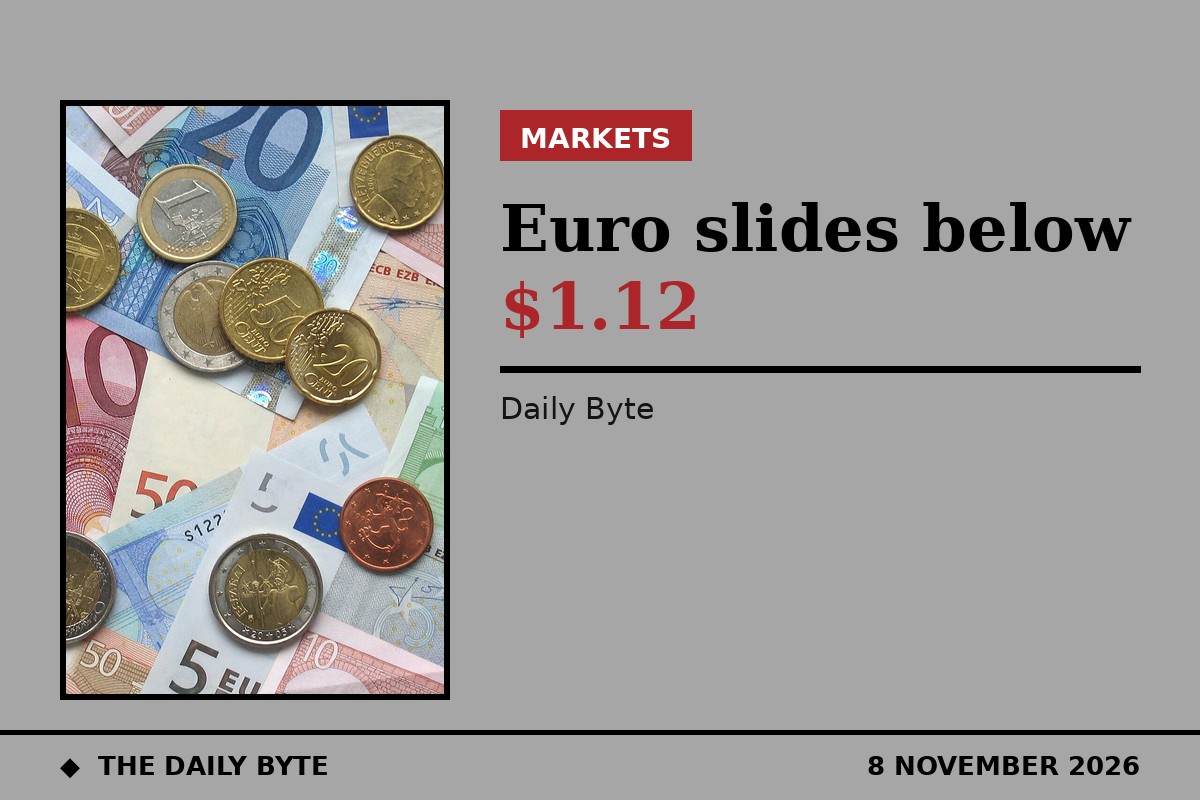
The euro slipped below $1.12 on Friday 6 November after stronger-than-expected US jobs data sent the dollar higher and pushed US Treasury yields up. The single currency traded around $1.1132, down 0.77 percent on the day, erasing all of its gains for the week, according to TradingKey's market report.
The US economy added 165,000 jobs in October, more than double the 65,000 that economists had forecast, while the unemployment rate fell to 4.1 percent from 4.2 percent. September's job gains were also revised higher, to 60,000 from 29,000. Wage growth beat forecasts too, with average hourly earnings rising 0.4 percent on the month against 0.3 percent expected.
The figures pointed to a resilient American labour market and hardened expectations that the Federal Reserve will raise interest rates again in December. That pushed the dollar higher across the board: the dollar index, which tracks the greenback against a basket of six major currencies, traded around 102.33, up 0.73 percent on the day.
XTB's afternoon market analysis put the euro's fall at nearly 0.6 percent on the day, with the pair slipping below $1.115 after the strong US data, and noted that a better-than-expected University of Michigan consumer sentiment reading, up to 51.0 in November from 48.0, had also supported the dollar. The sentiment figure had been expected to stay at 48.0.
The euro had been trading near highs of about $1.1270 on Thursday before the selling set in. Risk aversion added to the pressure: with technology shares falling sharply on Wall Street, investors sought the safety of the dollar, and the euro was unable to benefit from German industrial production data that beat expectations earlier in the day. German factory output grew 0.7 percent in September, according to the country's official statistics office, against expectations of a flat reading.
Weak demand at home gave traders another reason to sell the euro. Eurostat figures released on Friday showed eurozone retail sales fell 0.7 percent in September compared with August, a much bigger drop than the 0.1 percent decline economists had expected, following a revised 0.4 percent increase the previous month.
Sterling fell alongside the euro, dropping below $1.34 after the same jobs report, as the dollar strengthened. The pound's slide and the euro's fall told the same story: a US labour market that refuses to cool is keeping the Federal Reserve on course for tighter policy, while growth in Europe looks fragile.
Attention now turns to US inflation data due on Tuesday, which will be the next big test of how far the Fed goes in December, and to the European Central Bank's own December meeting, where policymakers remain divided over whether to follow with a rate rise of their own. For now the euro's break below $1.12 leaves traders watching whether the $1.11 area holds if selling continues. Currency moves are not investment advice.