Farage Predicts May General Election After EU Deal
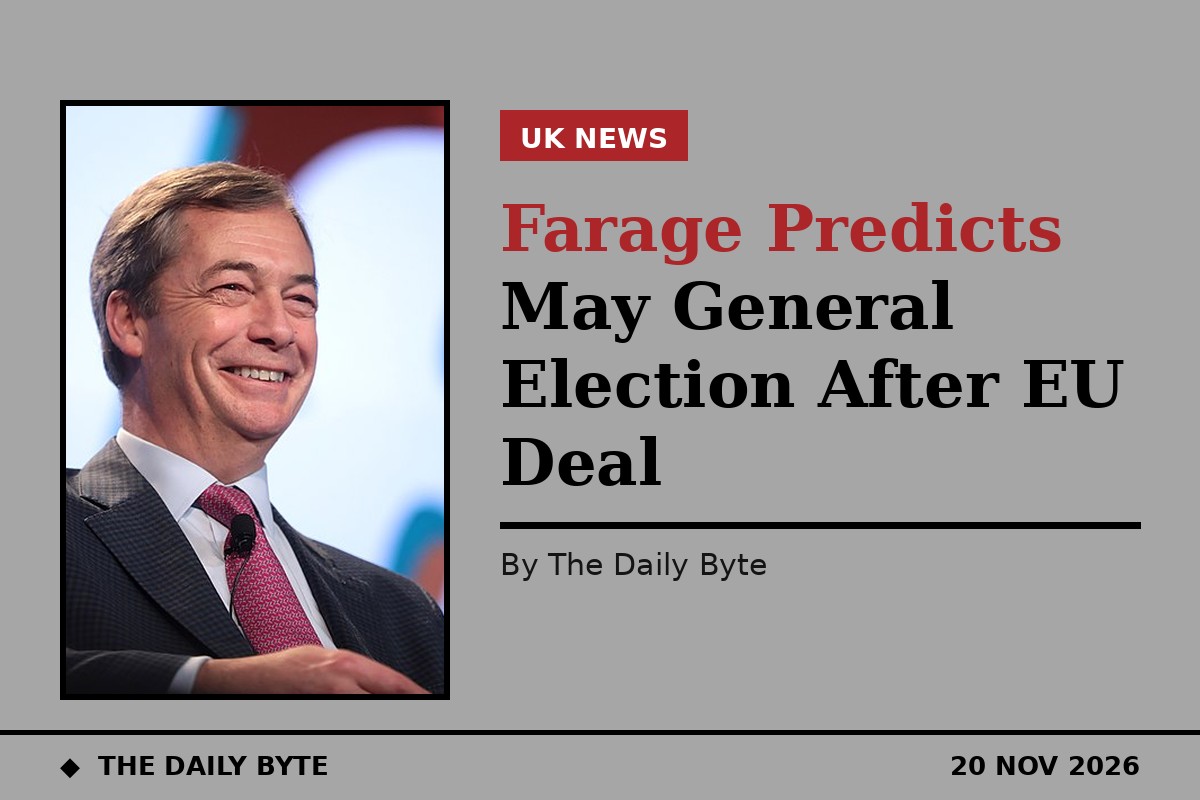
Reform UK leader Nigel Farage has predicted that Britain will go to the polls in a general election in May 2027, saying he is “80 per cent” sure an early vote will be called after Prime Minister Andy Burnham’s EU reset deal.
Mr Farage made the prediction at a press conference in Brussels on Friday, hours after Mr Burnham announced a package of agreements with the European Union covering food trade, emissions trading and a youth mobility scheme. He argued that the Prime Minister’s claim that the deal was “probably the limit” of what could be achieved before a general election meant an early poll was now likely.
“Nothing’s really been fully agreed I get that. But the intention and statement is clear,” Mr Farage said. “And I think the marker has been down for the next general election and I believe 80 per cent now it’ll be in May next year.”
Mr Burnham has ruled out an early general election, saying the country needs stability. He described Friday as “a good day for Britain and a good day for Europe”, and said the deal would “draw a line on a decade of drift and division by reconnecting with old friends”.
What the Brussels deal contains
Under the agreement announced in Brussels, most post-Brexit checks and restrictions on food and agricultural products will end under a sanitary and phytosanitary deal. Linking the UK and EU emissions trading schemes will mean £6.5 billion of British exports, including steel and aluminium, will be exempt from EU carbon border taxes.
A youth experience scheme will allow UK and EU citizens aged 18 to 31 to live and work in each other’s countries for up to three years, with 100,000 visas available each year. The joint statement said the aim is to apply the main elements of the agreement from 2028, with a January 2030 target for the youth scheme opportunities to be available.
Treasury analysis cited by Mr Burnham suggested the deal could add up to £17 billion a year to the British economy, and up to 0.5 per cent to gross domestic product by 2040. The Prime Minister said the next 12 months would be spent “brainstorming” ideas with the EU about the future relationship, including the possibility of seeking to rejoin the bloc, while sticking to Labour’s manifesto red lines ruling out a return to the single market, customs union or free movement.
One dispute remains unresolved. EU member states want their students charged the same tuition fees as British students, a cut from fees of up to £38,000 a year to £9,970, and a six-month deadline has been set to reach agreement. Mr Burnham said there was “no confusion” over the status of the deal, with firm dates for implementing its different parts.
Farage attacks the deal as betrayal
Mr Farage, who held his own press conference in Brussels under the slogan “Forward with Farage, backward with Burnham”, accused the Prime Minister of breaking Labour’s manifesto commitments and said claims made by Mr Burnham on Friday were “simply untrue”. He said: “Burnham’s whole rationale is 73% of the people want to be closer to Europe. But what he completely misunderstands is that is not an open ticket to rejoin a significant chunk of the single market today.”
He also argued that the deal would open the door to up to 300,000 young workers coming to Britain over three years to compete for jobs, at a time when a report this week said immigration was damaging the prospects of a million young people not in education, employment or training.
Conservative leader Kemi Badenoch warned the youth scheme risked making competition for jobs fiercer for young Britons, saying: “I just don’t think this deal is fair.” European Commission president Ursula von der Leyen called the summit a “turning point”, while European Council president Antonio Costa said the EU remained open to “the closest possible relationship” with the UK.


