Farage Unveils Reform National Security Review Plan
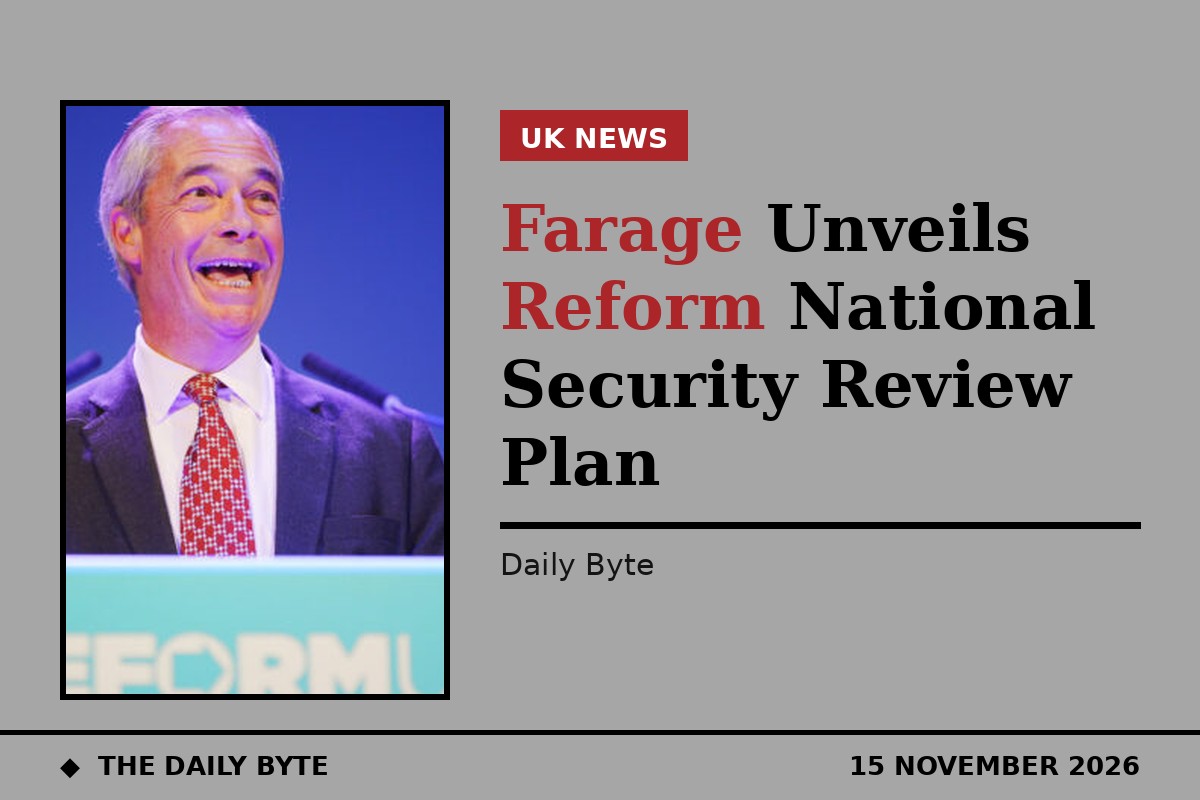
Nigel Farage has set out Reform UK's defence and foreign policy plan, warning that Britain faces real threats from Russia, Iran and China and promising to restore the country's standing as a world power.
Writing in the Daily Express on Sunday, the Reform UK leader said the threats facing Britain were no longer abstract, pointing to lone-wolf terrorists and state-sponsored actors, many of them working at the behest of Iran, entering the country through porous borders.
The plan is built around the party's first National Security Review, launched on Friday and led by its new Shadow Armed Forces Minister, Angus MacIntyre, a 40-year military veteran who served in the Army and the RAF Regiment before ending his career in the Ministry of Defence's operations directorate.
What the review says
The review brands Russia the greatest state threat to Britain, accusing President Vladimir Putin of waging a hybrid war against the UK through attacks on undersea cables, cyber attacks and espionage. Farage has called Mr Putin a "cornered rat" and said he would not talk to him if he became prime minister.
It also describes Iran as the largest state sponsor of terrorism and China as a tyrannical regime bent on dominating the world, arguing that the three states together threaten Western security. The review is guided by eight principles that stress homeland defence, border protection, priority for Euro-Atlantic ties and internal cohesion under the Crown.
Mr MacIntyre said he was proud to be conducting Reform's landmark first national security review. "The threats our country faces are stark, and I will never flinch from confronting them," he said.
Defence spending and the foreign aid cap
Under the plan, a Reform government would spend 3 per cent of GDP on defence by 2030 and 3.5 per cent by 2035, rebuilding depleted military stockpiles and restoring the ability to sustain the country in a conflict. The increase would be paid for partly by putting a hard £1 billion cap on the foreign aid budget.
Farage said the armed forces had been gutted and the nuclear deterrent was creaking. "Instead of a nation in decline, we must be a nation on the rise once again," the party's policy guide states. The spending targets match the government's own stated ambitions, and Labour insists it is investing heavily in defence with the largest funding uplift since the Cold War.
Borders first
Border security is the review's top-tier priority. Farage argued that a nation that cannot police its own borders will hardly be taken seriously on the global stage, and that Britain's national security does not end at the 12-mile line.
The plan would deploy the Royal Navy to intercept migrants crossing the Channel and return them to the French beaches they came from. Mr MacIntyre said this could be done within international law, adding: "You can certainly, within international law, put them back on the beaches they came off."
Courts, sovereignty and the UN veto
Abroad, Farage said Britain must use its UN Security Council veto in pursuit of explicitly British interests. At home, Reform would leave the European Court of Human Rights, repeal the Human Rights Act, disapply the Refugee Convention and refuse to let any international court override British law.
In a blunt message to critics abroad, Farage said: "We mean business." He added: "The Falklands are British. The Chagos are British. Gibraltar is British. And no, we will not pay reparations to anyone, ever."
The plan would also end the prosecution of special forces troops and Northern Ireland veterans, except in cases of murder and rape.
Why Farage is making the move now
The defence push is a deliberate reset for Reform after a bruising period of vetting and financial scandals, internal divisions and a slide in the polls from around 30 per cent to the low 20s. Farage has in the past been accused of harbouring sympathy for Mr Putin, having once named him the world leader he admired most, and the new hard line is designed to answer that attack.
Reform has also faced questions about a Metropolitan Police investigation into allegations that the party broke foreign funding laws, and a decision from the parliamentary standards commissioner on a £5 million gift is still awaited. Party insiders hope the focus on defence and the cost of living will move the conversation on. Farage is due to head to Brussels this week, returning to the Brexit debates on which he is most comfortable.


