Financial literacy: pupils to learn payslips, mortgages
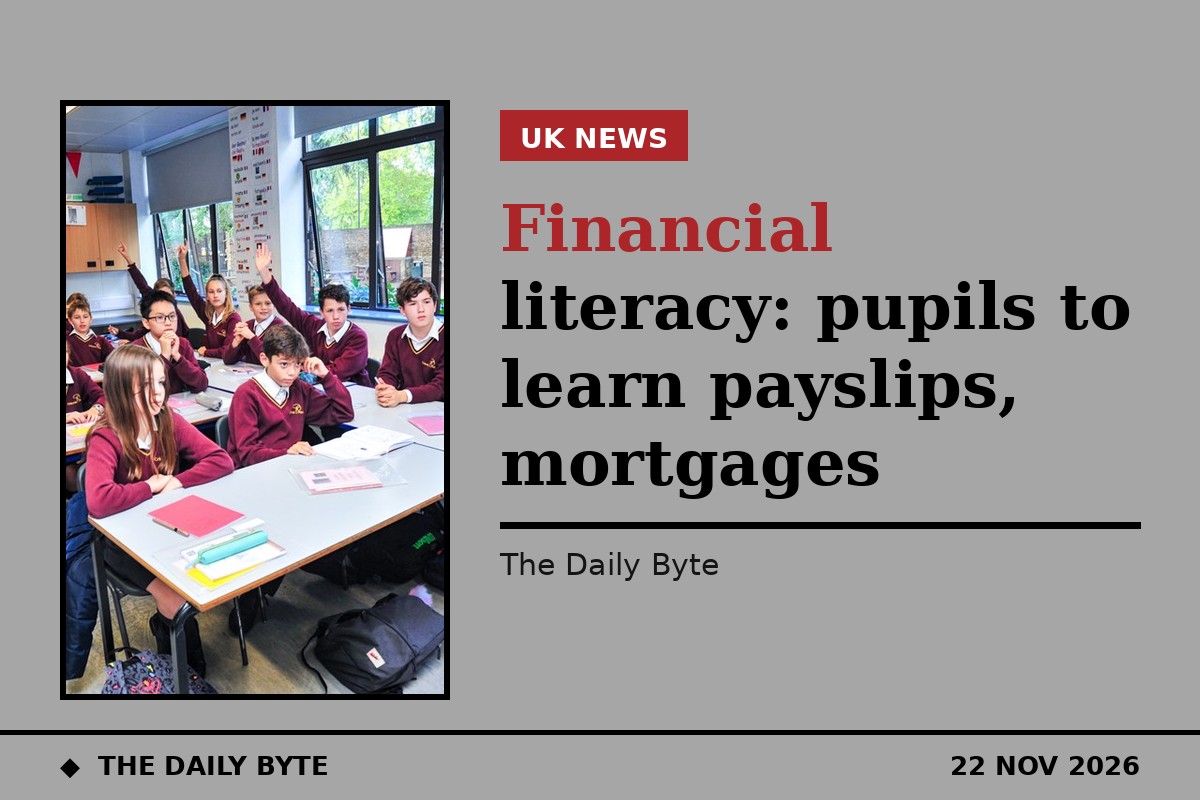
School pupils in England will be taught how to read a payslip, understand a mortgage and spot a financial scam under a major curriculum shake-up unveiled by the government today.
The reforms give financial literacy a much stronger role from primary school through to GCSE, as ministers respond to evidence that too many young people leave school without the practical money skills adult life demands. Education Secretary Lucy Powell said spending money had become "as easy as tapping a screen", yet too many pupils were leaving school "without the practical skills and confidence they need to navigate adult life".
What pupils will learn
In primary school, children will be taught how money is earned, saved and kept safe, how to budget, compare prices and judge whether a deal is really good value, as well as the basics of inflation and interest, including why prices rise and how savings grow.
In early secondary school, lessons on taxation, affordability and credit, consumer rights, scams, inflation and interest rates will be strengthened and made mandatory. In Years 10 and 11, pupils will learn about mortgages and rent for the first time, alongside pensions, insurance, saving, investing and debt in more detail.
The changes also cover the "big three" concepts of inflation, compound interest and diversification of risk, deliberately connecting maths to real-life topics such as interest, mortgages and savings. At GCSE, particularly at foundation tier, content will be rebalanced towards the mathematical skills pupils need for life and work, including financial mathematics and statistics.
Why the change is happening now
The overhaul follows research from the Initiative for Financial Decision-Making and the concerns raised in Alan Milburn's Young People and Work Report. Government-cited research says 71 per cent of children aged 7 to 17 make purchases online, and 67 per cent of those do so without adult supervision, while only a third recall learning useful money skills at school.
Powell said the aim was an education system that prepares young people "not just to pass exams, but to seize the opportunities ahead of them", mastering the fundamentals of maths and English while learning to apply those skills in the real world. She insisted the government was not "dumbing down" the curriculum, and said maths reforms would cut unnecessary content, improve the sequencing of topics and give pupils more chances to reason and solve problems.
When it starts
Financial literacy is already part of citizenship lessons at secondary level, but it will become mandatory for primary schools as well when the new national curriculum is introduced in September 2028. The full curriculum rewrite is due to be set out in the coming weeks.
The Department for Education worked on the reforms with The Richmond Project, the numeracy charity founded by former prime minister Rishi Sunak and his wife Akshata Murty, which is testing the programme in classrooms ahead of teaching from 2028. Sunak welcomed the emphasis on linking maths with financial literacy, saying he was glad the charity had worked with the department on developing the plans.