France Seeks UN Meeting Over Russian Strikes on Kyiv
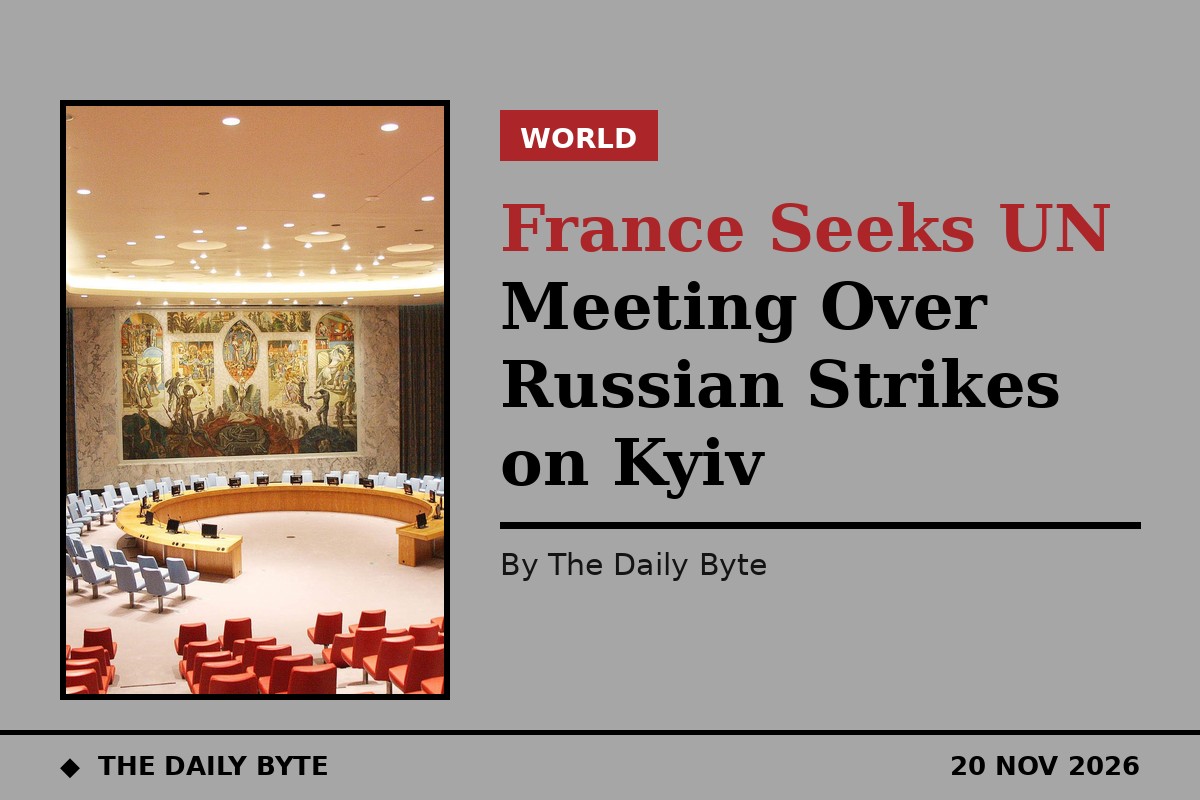
France has called for a meeting of the UN Security Council after the latest Russian strikes on Kyiv, Foreign Minister Jean-Noël Barrot said on Friday.
Ukrainian officials said eight people were killed in Russian missile strikes overnight into Friday, in one of the heaviest bombardments of the war. Barrot announced the request in a post on social media platform X, writing: "Russia will have to answer for this."
France, a permanent member of the Security Council, is seeking the meeting after two days of attacks on the Ukrainian capital that also damaged diplomatic premises. Russia, as another permanent member, holds a veto over any Council action, so the meeting is expected to serve mainly as a forum for condemnation rather than a route to binding measures.
Embassies hit on Thursday
The diplomatic fallout began on Thursday afternoon, when daytime Russian strikes on Kyiv damaged the embassies of Austria and the Netherlands. No staff at either mission were harmed.
A projectile struck behind the Dutch embassy, causing minor damage to the building, Dutch Foreign Minister Tom Berendsen said. The Dutch government summoned the Russian ambassador in The Hague in response.
Austria's embassy, in central Kyiv near St Volodymyr's Cathedral, was also hit. An explosion at about 4.30pm local time shattered windows and damaged vehicles outside the building while around ten people were working inside. The cathedral itself had windows broken in the same attack.
Debris also fell on the grounds of Ukraine's foreign ministry and near Brazil's embassy. A 26-year-old man was killed and five people were injured in the daytime strikes on Thursday, according to Kyiv city authorities.
The overnight bombardment
The strikes that prompted France's call came hours later. President Volodymyr Zelensky said Russia fired more than 400 drones and over 110 missiles, including 27 ballistic missiles, in an assault lasting more than ten hours that targeted energy, transport and logistics infrastructure across Ukraine.
Six people were killed in Kyiv, including three employees of a water utility, and two more died in an attack on a railway station in the western city of Lviv. Three bridges across the Dnipro river in Kyiv were damaged, and emergency power outages were imposed in several regions.
The attack also spilled into NATO territory. Poland said three objects, likely two missiles and a jet-powered drone, violated its airspace and came down in the south-east of the country. Polish and NATO fighter jets were scrambled, and Prime Minister Donald Tusk described the incursion as a likely deliberate provocation.
Europe's diplomatic response
The EU's foreign policy chief, Kaja Kallas, said the bloc would summon Russia's representative in Brussels. "As Putin walked the red carpet in Shenzhen, Russian strikes hit Kyiv and damaged several European and non-European embassies," she said, referring to the Russian president's meeting the previous day with US President Donald Trump and Chinese leader Xi Jinping.
The strikes came after Putin vowed a painful retaliation for Ukrainian attacks on the bridge linking Russia with occupied Crimea, which Kyiv struck for a third time this week.
France has not said when the Security Council meeting would take place. The Council has met repeatedly over Russia's full-scale invasion, which began in February 2022, but has been unable to pass resolutions condemning it because of Russia's veto.
For Paris, the value of the meeting lies in putting the embassy damage and the civilian deaths on the Council's formal record, and in forcing Russia to answer the charges in front of the other members. Barrot's message was blunt: the strikes were crimes, and France would not ease the pressure.