GlobeTopper Cyberattack Costs $2.5 Million in Lost Sales
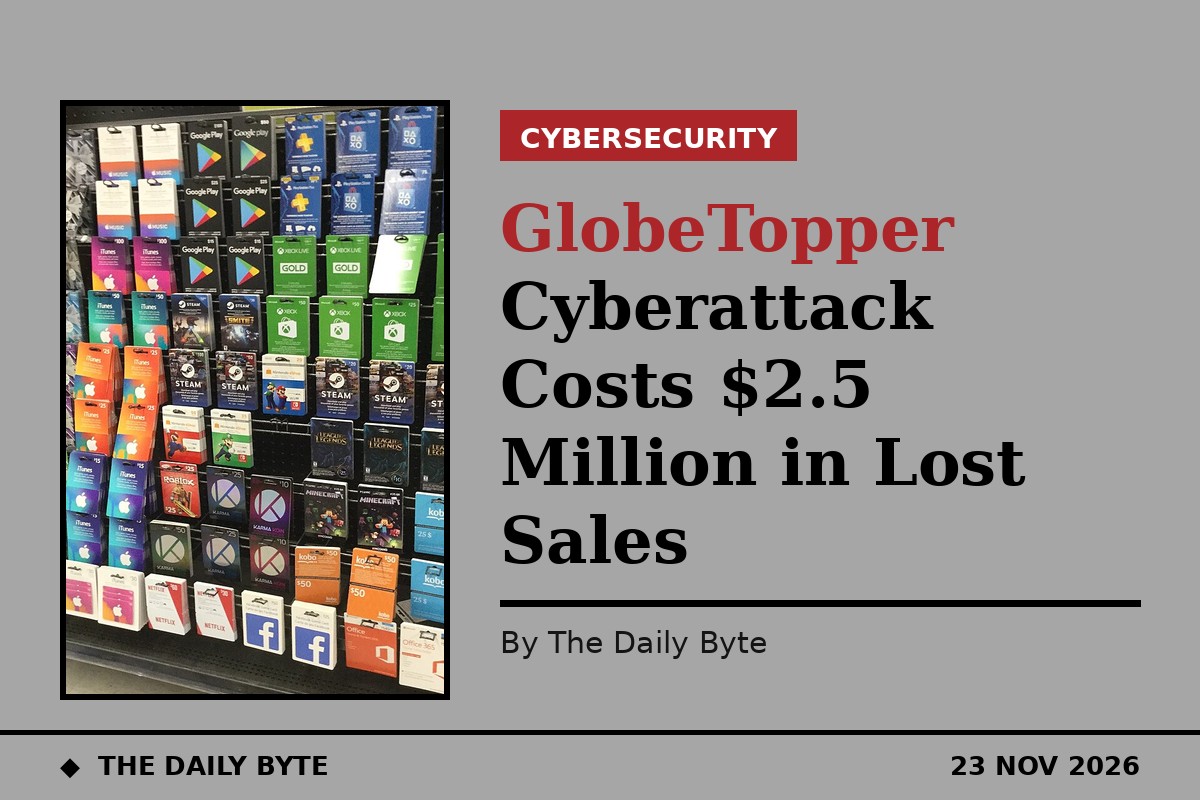
A cyberattack on digital gift card distributor GlobeTopper cost the company an estimated $2.5 million in revenue that was never generated, after hackers stole business customers' API credentials and redeemed about $70,000 worth of digital gift cards. The incident was disclosed by parent company iQSTEL in a filing with the U.S. Securities and Exchange Commission (SEC), and reported by BleepingComputer on 23 November 2026.
GlobeTopper is a business-to-business supplier of digital gift cards and top-ups. Retailers, fintech apps and rewards platforms connect to its service through an API, and the company says its platform is used by more than 4,000 brands across 65 countries, including IKEA, Adidas, Spotify, Target and Roblox. The company stressed that those brands were not themselves hacked: the attackers hit the supplier that sits behind them.
What happened at GlobeTopper
According to the SEC filing, GlobeTopper detected unauthorised access to the systems behind its platform on 22 October 2026. The company suspended its platform that morning and began an investigation, restoring service later that day. When it detected further unauthorised activity the next day, it took the platform and all affected servers offline in the early hours of 23 October to contain the intrusion and investigate.
The recovery was a full rebuild rather than a patch. GlobeTopper deployed a completely rebuilt platform on Amazon Web Services (AWS) on 31 October, and commercial operations were restored in stages starting on 1 November. The disclosure only became public when iQSTEL filed its report with the SEC on 20 November.
Stolen API credentials and gift cards
During its investigation, the company determined that the unauthorised party had obtained API credentials and integration keys belonging to certain GlobeTopper business customers. Those credentials and keys have all been revoked and rotated, and affected customers have been issued new credentials with additional access restrictions. GlobeTopper said it had observed no unauthorised use of the stolen credentials yet, but the risk is clear: credentials of this kind can open the door to the systems its customers connect through the platform.
Separately, the attackers redeemed digital gift cards with a face value of about $70,000 without authorisation. The company says it cannot block, recover or reclaim those cards, so it expects to absorb the loss itself. The investigation is still open, and iQSTEL said it was still establishing whether other customer, personal, payment or provider data was accessed or acquired.
The financial impact
Management's preliminary high-end estimate is that the service interruption cost GlobeTopper about $2.5 million in revenue that was not generated. The incident hurt the company's fourth-quarter transaction volume and operating results, although iQSTEL said that, as of the filing, it had not determined the incident to be material. The $70,000 in redeemed gift cards is a direct loss on top of the disrupted sales, and the company noted that the effect on gross profit may be smaller because of the low margins in its business.
At the time of writing, no ransomware group had listed iQSTEL or GlobeTopper as a victim on its extortion site, and the company has not attributed the attack to any group. BleepingComputer said it had contacted iQSTEL with further questions, but the company declined to share more information.
Why supplier breaches matter
The GlobeTopper incident is a reminder that a breach at one supplier can reach thousands of businesses downstream. A single set of stolen API keys can give an attacker a route into customer systems, and a short outage at a payments intermediary can wipe out days of sales across its client base. Companies that rely on third-party platforms should check which credentials those suppliers hold, rotate keys after any supplier incident, and watch for unusual transactions even when the supplier says it has seen no misuse yet.