Gold demand rebounds in India and China as prices fall
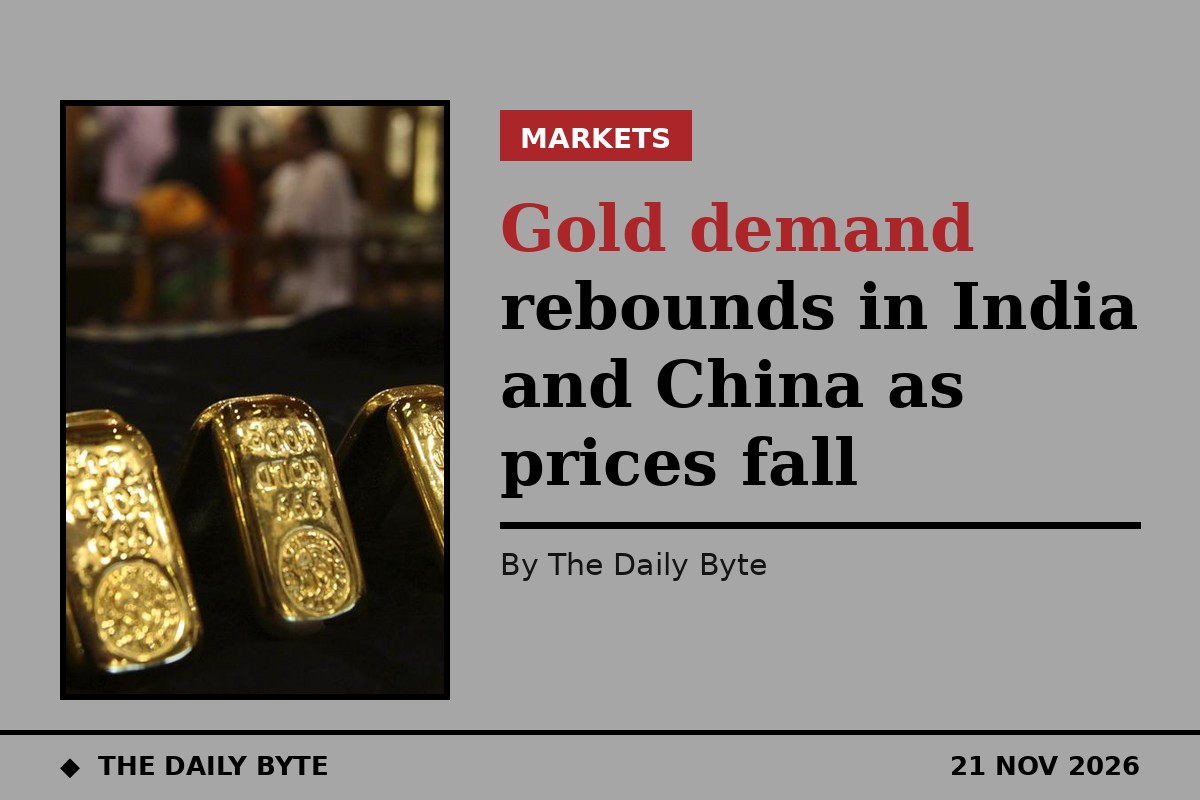
Physical gold demand in India and China picked up this week as a sharp fall in prices drew bargain hunters back into the market, even as investors in financial markets continued to sell bullion. Dealers in both countries reported stronger buying while spot gold slid towards its lowest level in more than a year.
Spot gold fell 1 percent to 3,585.92 dollars an ounce by 1113 GMT on Friday, after touching 3,513.54 dollars earlier in the session, its lowest level since 4 September 2025. Bullion had shed about 8 percent so far that week, its steepest weekly decline since the week ended 20 March, according to Reuters. United States gold futures for December delivery dropped 2.7 percent to 3,587.90 dollars an ounce.
The contrast between the paper market and the physical market was the story of the week. Financial investors sold gold to raise cash as technology shares fell, while shoppers and investors in Asia treated the lower price as a chance to buy. Reuters reported that physical demand in India and China strengthened during the week, with bargain hunters flocking to stores in India and Chinese investors viewing the correction as an opportunity to accumulate bullion.
Premiums rise as prices fall
The clearest sign of returning physical demand came from local premiums, the amount buyers pay above the international benchmark price. In India, premiums roughly doubled over the past week amid wedding-season demand, while premiums in China traded at around 10 dollars an ounce, according to ActionForex. XTB reported that premiums in India had risen to 17 dollars an ounce, from 8 dollars a week earlier, with premiums in China ranging from 9 to 13 dollars.
Rising premiums as global prices fall suggest that lower prices are bringing buyers back rather than scaring them away. Parts of the market are even facing shortages of physical gold and silver, according to XTB, as the wedding season in India adds to demand. India is the world's second-largest gold consumer, and the wedding season running from mid-November to March is traditionally one of the busiest periods for jewellery buying.
Chinese investors have also stepped in. Trading in the Shanghai Gold Exchange's most active contract jumped in recent weeks, and Chinese households have been buying the dip as prices tested lower levels, according to market reports. The buying has not been enough to stop the slide in the global spot price, but it has given the market a source of support that was absent during the early stages of the sell-off.
Why gold sold off
The sell-off was driven by a sharp repricing of United States interest rate expectations. After hotter-than-expected inflation data and hawkish remarks from Federal Reserve officials, investors became convinced that the Fed will raise rates again in December. Markets saw a 99 percent chance of a 25-basis-point rise in December, according to CME's FedWatch tool, cited by Reuters.
Philadelphia Fed President Anna Paulson joined other policymakers in flagging inflation risks that could warrant another increase, reinforcing expectations that borrowing costs will rise further. Higher yields raise the opportunity cost of holding gold, which pays no income, while a stronger dollar makes bullion more expensive for buyers using other currencies.
The decline then fed on itself. As technology shares fell, some investors sold gold alongside equities to raise cash and cover losses elsewhere. Gold has lost around 15 percent from its early November peak, according to ActionForex, and the gold-to-silver ratio has climbed to about 85, its highest level in more than a year, as silver fell even faster.
What to watch next
Silver, platinum and palladium all fell with gold. Spot silver was down 0.4 percent at 42.58 dollars an ounce on Friday, platinum dropped 2.6 percent to 1,309.36 dollars and palladium slid 0.3 percent to 906.67 dollars, Reuters reported. All three metals were set for a second straight weekly decline.
Whether the physical buying can steady prices will depend on whether financial investors stop selling. Flows into gold-backed exchange-traded funds will offer a read on whether investment demand is improving alongside physical demand. Fresh inflows would show investors are willing to rebuild exposure after the sell-off, while continued redemptions could keep prices under pressure. For now, the message from Asia's gold markets is that lower prices have buyers, even if they have not yet been enough to turn the global price around. This article reports market movements only and is not investment advice.