Pakistan to Overhaul Audit System in SECP Bill
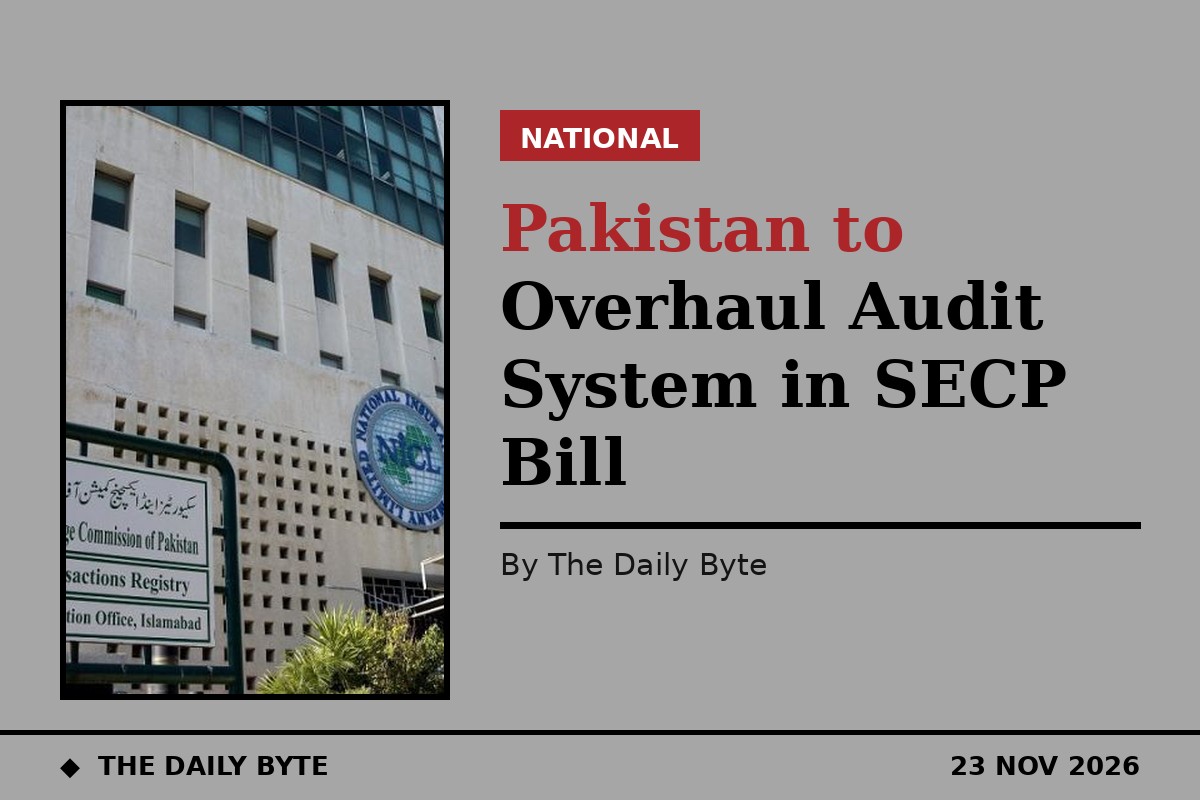
Pakistan's federal cabinet has approved a bill to overhaul the country's audit oversight system, after a government task force described the existing framework as weak and harmful to investment.
The reforms will be introduced through the Securities and Exchange Commission of Pakistan (SECP) (Amendment) Bill, 2026, which the cabinet approved following consultations and reviews by three ministerial-level committees. The bill still has to be passed by parliament before it becomes law.
According to documents seen by Dawn and reported on 23 November, the changes follow recommendations from the Prime Minister's Federal Board of Revenue (FBR) Task Force, which found that weak audits discourage local and foreign investment and limit access to capital markets. Investors and lenders rely on audited accounts, the task force said, so unreliable audits raise the cost of doing business in Pakistan.
Why the government says reform is needed
The official briefing document behind the bill states that the existing Audit Oversight Board (AOB) law does not comply with international standards. The International Organisation of Securities Commissions (IOSCO) has declared Pakistan non-compliant with independent audit oversight, while the European Union has withdrawn the equivalence status of Pakistan in the same area.
The document cited Unity Foods and SE Foods as examples of companies affected by weak audits and prospectus disclosures, and noted concerns over the audited accounts of Hascol. It added that developed and developing countries have shifted from self-regulatory oversight by accountancy bodies to independent audit oversight, and that smaller jurisdictions including Sri Lanka, Mauritius and Botswana are already compliant members of the International Forum of Independent Audit Regulators (IFIAR).
The draft legislation was approved after a review by the FBR Task Force, IFIAR, the SECP and the AOB, along with consultations with stakeholders. The government says the changes are expected to strengthen Pakistan's international recognition and establish an effective audit oversight system.
What the bill would change
At the centre of the reforms is the Audit Oversight Board, the body that oversees the auditors of public interest companies. Under the bill, the FBR chairman would replace the president of the Institute of Chartered Accountants of Pakistan (ICAP) on the nominating committee that appoints AOB board members, a change intended to strengthen the committee's independence.
AOB board members would not be permitted to have any association with audit firms. The board itself would be responsible for policy matters, while management, operations and adjudication would be handled in line with governance principles and the board's regulatory functions.
The AOB would conduct regular, risk-based inspections of the auditors of public interest companies to assess compliance with professional auditing standards. Accountancy bodies would continue to conduct inspections and Quality Control Reviews of non-public-interest-company audits, but under AOB oversight.
The board would also be able to investigate complaints and references from the SECP, the State Bank of Pakistan and the FBR directly, after approval by its board or a designated committee. Action could be taken against individuals who refuse to provide required information, and the AOB would be empowered to file complaints concerning criminal offences involving falsification.
A second attempt at reform
This is not the first time such legislation has been attempted. A similar bill was passed by the National Assembly in 2021 after scrutiny by the National Assembly Standing Committee on Finance, but it was withdrawn from the Senate in 2022 for resubmission. The cabinet has now approved the revised bill after review by the three ministerial-level committees.
The task force has also recommended amendments to the Audit Oversight Board law to improve tax collection, and the government says the proposed system will end the dominance of private auditors over audit oversight.
What happens next
The government plans to introduce the legislation in parliament, where it must be passed by both houses before it takes effect. Until then, the existing audit oversight framework remains in force, and the weaknesses identified by the task force — including the lack of independent oversight recognised by IOSCO and the EU — remain unresolved. Further reporting on the bill's passage is available from Tijarat News and TechJuice.