Hobbycraft back in profit as EBITDA triples to £15.5m
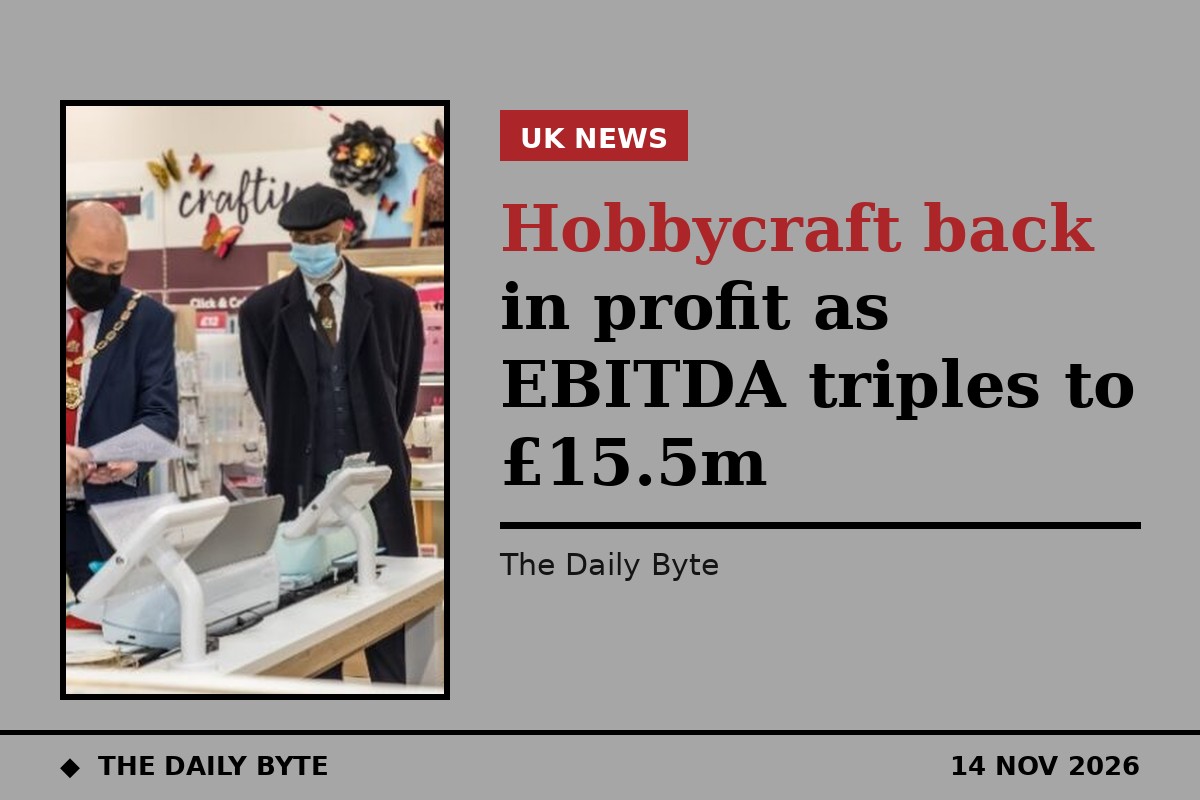
Hobbycraft has returned to profit after a year of restructuring, reporting a statutory profit of £8.7 million for the 52 weeks to 15 February 2026, compared with a loss of £10.1 million the year before. Adjusted trading EBITDA more than tripled to £15.5 million, up from £4.8 million, as the arts and crafts retailer completed its turnaround ahead of schedule.
The results, published on 13 November 2026, mark a decisive change of fortune for the chain, which is owned by the investment firm Modella Capital. Like-for-like sales rose by 2 per cent over the year, against a fall of 4.3 per cent in the previous year, with growth accelerating to 4 per cent in the second half as peak seasonal trading delivered a strong finish.
From loss to profit in a year
The swing back into the black follows a comprehensive turnaround plan carried out by Hobbycraft's executive team with the backing of its shareholder. The plan restructured the store estate, cut operating costs and tightened stock management, and the company said the measures allowed it to meet its restructuring milestones ahead of plan.
That progress enabled Hobbycraft to exit its company voluntary arrangement, the formal restructuring process it entered in 2025, on 25 June 2026, two years ahead of schedule. Modella Capital acquired the business from Bridgepoint in 2024, and the accounts will be filed with Companies House during the week beginning 9 November 2026.
Graeme Campbell, Hobbycraft's acting chief executive, said the year had been pivotal and transformative for the retailer. He said the decisive actions taken under the turnaround plan had right-sized the cost base, revitalised the core estate and returned the business to robust profitability, despite continuing inflation and subdued consumer confidence across the retail sector.
Fewer stores, stronger trading
Total revenue fell to £210.4 million from £215.9 million, reflecting the smaller store estate. Hobbycraft ended the year with 107 stores, down from 124 a year earlier, after closing underperforming branches as part of the restructuring.
Even so, the remaining estate traded more profitably. Trading gross margin held steady at 59 per cent, which the company linked to disciplined pricing and strong sales of its own-brand ranges. Borrowings under its asset-backed revolving credit facility fell by £5.7 million to £17.9 million, while inventory was cut by £7.9 million through tighter stock control.
Customer loyalty also strengthened. Active membership of the Hobbycraft Club grew to a record 2.8 million, up from 2.7 million a year earlier, underlining the chain's pull with regular crafters even as it traded from fewer shops.
Screen-free hobbies drive the recovery
Hobbycraft said its recovery was powered by a shift in how people spend their leisure time, with growing demand for screen-free hobbies, mindful making and creative wellbeing. Model making led the way, with sales up 45 per cent over the year, while crochet sales rose by 24 per cent. Online searches for Japanese pop-culture Kawaii crafting items jumped by 221 per cent.
The trend chimes with research from Hobbycraft's Power of Making report, produced with its mental health charity partner Mind, which found that 8.8 million UK adults use crafting to support their mental health and that 91 per cent agree children should spend less time on digital devices.
Joe Price, chief executive of Modella Capital, said he was incredibly proud of colleagues across the country, in stores, the distribution centre and head office, for relaunching a refreshed and revitalised Hobbycraft. He said the management team had delivered an amazing set of results and had much more to achieve, both in the UK and overseas.
What happens next
With its finances stabilised, Hobbycraft has set out a growth strategy built around its new positioning as The Home of Creativity. The plan includes trialling three new garden centre locations, continuing to roll out concessions such as its Post Office partnership, and expanding into social commerce with the imminent launch of a TikTok Shop.
The retailer is also looking abroad, evaluating international expansion into Ireland, Germany and Poland. For now, the focus is on building on a year in which a smaller, leaner Hobbycraft proved it could make money again, and on turning a one-year recovery into sustained growth.


