Hong Kong Launches Tokenised Bond Platform CMU DAP
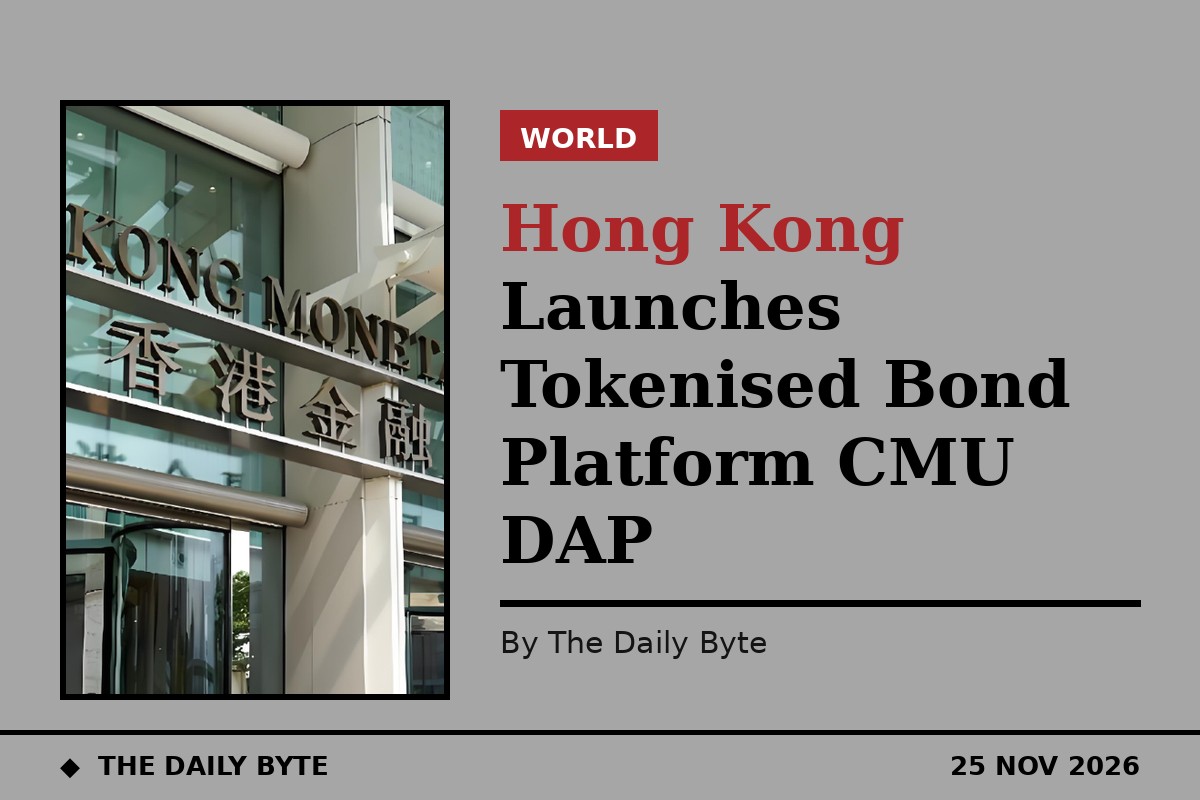
Hong Kong's de facto central bank has launched a new platform for issuing and settling tokenised bonds, in the city's biggest step yet towards putting its bond market on distributed ledger technology. The Hong Kong Monetary Authority (HKMA) announced the official launch of the CMU Digital Asset Platform on Tuesday, 25 November.
The platform, known as CMU DAP, is the digital arm of the Central Moneymarkets Unit, Hong Kong's central securities depository for debt. It was developed and is operated by CMU OmniClear Limited on behalf of the HKMA. The authority described the launch as a major milestone in advancing the digital landscape of Hong Kong's financial market.
What the platform does
CMU DAP handles the full life cycle of a bond without paper, from primary issuance through clearing and settlement of secondary trades to coupon payments and redemption at maturity. It also supports the tokenisation of traditional debt securities, turning existing bonds into digital tokens so they can be held and settled on the same system as digitally native bonds.
Settlement uses an atomic delivery-versus-payment model on the ledger, meaning the bond and the cash change hands in a single operation rather than in separate steps. The platform connects directly with real-time gross settlement systems and central bank digital currencies, and supports settlement around the clock in multiple currencies using cash tokens. That is a break from bond markets that settle only during business hours and usually take a day or more.
The platform also adopts the International Capital Market Association's Bond Data Taxonomy as its common data standard, which is intended to let different systems exchange bond information in the same format. The HKMA said the design was validated by trial trades in tokenised Exchange Fund Bills earlier in 2026.
Ten banks in the first group
The first batch of direct participants comprises ten banks: Bank of China (Hong Kong), Bank of Communications (Hong Kong), China CITIC Bank International, China Construction Bank (Asia), CMB Wing Lung Bank, Credit Agricole Corporate and Investment Bank, DBS Bank's Hong Kong branch, Industrial Bank Co, Standard Chartered Bank (Hong Kong) and HSBC. The platform runs on a private, permissioned ledger, with access restricted to approved participants, rather than on a public blockchain open to anyone.
Eddie Yue, chief executive of the HKMA and chairperson of CMU OmniClear Holdings, said the platform unlocked the transformative power of distributed ledger technology to push the boundaries of financial innovation. He said CMU OmniClear would build the Central Moneymarkets Unit into the core infrastructure for a multi-asset digital financial ecosystem in Hong Kong, and develop it into a leading central securities depository in Asia.
Why Hong Kong is doing this
The launch fits Hong Kong's strategy of becoming a hub for digital finance, set out in its roadmap for fixed income and currency markets. The city has been issuing digital bonds for several years, and in September 2026 the government priced about HK$20 billion in digital green bonds across four currencies. CMU DAP gives those instruments, and ordinary bonds that issuers choose to tokenise, a permanent home for issuance and settlement rather than one-off pilots.
The HKMA said the platform would improve settlement efficiency, reduce operational costs and increase market liquidity. For issuers, a paperless process from issuance to redemption should cut paperwork and reconciliation; for investors, round-the-clock settlement in several currencies should make it easier to move money across time zones, including over weekends.
What comes next
CMU OmniClear has set out a roadmap to extend the platform beyond debt securities to other asset classes, such as funds and real-world assets, and to integrate it with other distributed ledger platforms and wider payment instruments, including tokenised deposits and regulated stablecoins. The aim, the HKMA said, is a digital financial ecosystem in which tokenised and traditional market infrastructure work together.
Whether that ambition is realised will depend on uptake beyond the first ten banks. Tokenised bonds remain a small share of global issuance, and rival centres in Europe and Singapore are building similar infrastructure. But with a live platform, a published data standard and the city's largest banks already connected, Hong Kong now has the rails in place to test whether tokenisation can move from pilot projects into everyday market practice.
Sources: Hong Kong Monetary Authority (via Hong Kong Government Information Services); The Block; Cointelegraph.