How Long Does a UK Visa Take? Processing Times Explained
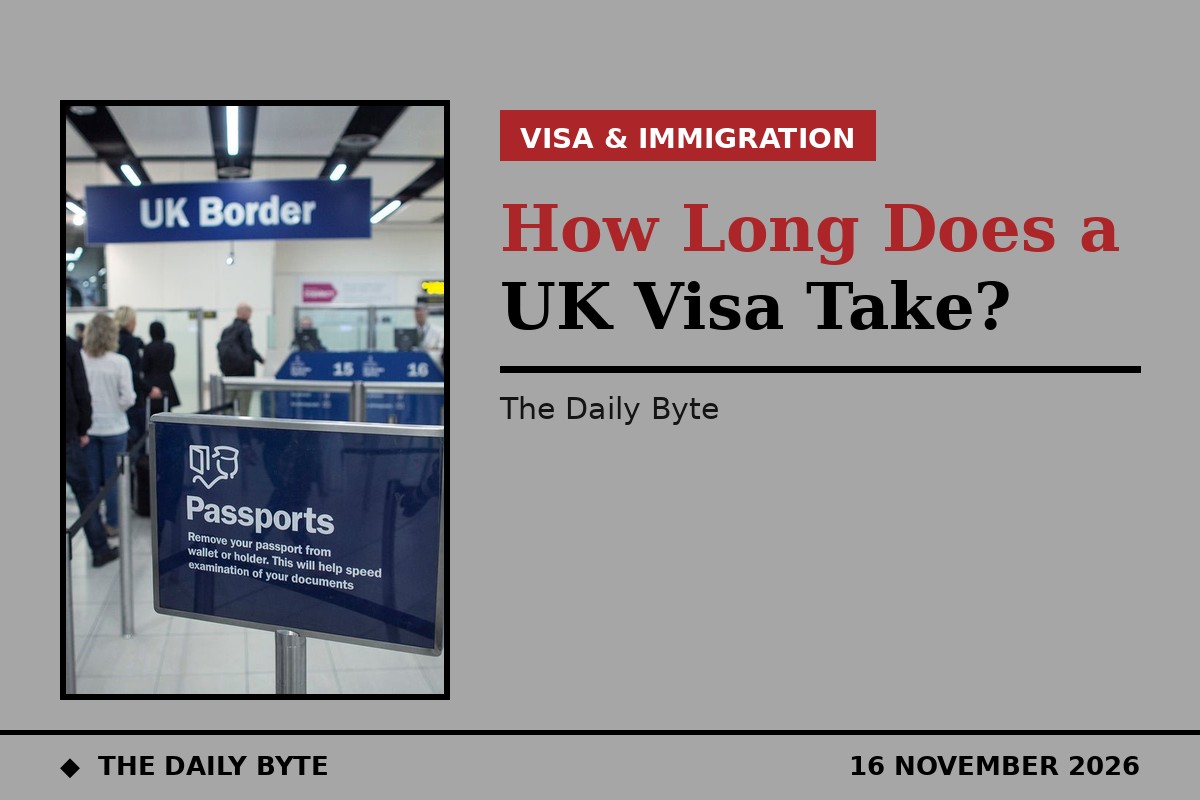
How long does a UK visa take? For most people applying from outside the UK, the answer is three weeks: GOV.UK lists visit, study and most work visas at three weeks from the point UK Visas and Immigration starts processing the application. Family visas take longer — 12 weeks from outside the UK — and most applications made inside the UK take eight weeks. These are published service standards, not guarantees, and the clock does not start when you submit the online form. It starts when you prove your identity, either at a biometrics appointment or through the UK Immigration: ID Check app.
That distinction catches many applicants out. Weeks can pass between paying online and attending a visa application centre, and none of that time counts towards the three weeks. This guide sets out the official GOV.UK times for the main routes, explains when the clock starts and stops, what the paid faster services do and do not do, and why some applications take longer.
How long does a UK visa take from outside the UK?
GOV.UK publishes a separate set of waiting times for applications made outside the UK. The headline figures, checked on 16 November 2026, are straightforward: three weeks for most routes, 12 weeks for family routes and for British National (Overseas) applications.
| Route (applying outside the UK) | Published processing time |
|---|---|
| Standard Visitor, Marriage Visitor, Transit | 3 weeks |
| Student, Child Student, Short-term student | 3 weeks |
| Skilled Worker, Health and Care Worker, Global Talent | 3 weeks |
| Most other work routes, including Youth Mobility and Graduate Trainee | 3 weeks |
| Partner or spouse, Parent, Child, Adult coming to be cared for by a relative | 12 weeks |
| British National (Overseas) | 12 weeks |
| Homes for Ukraine | 3 weeks |
Three weeks means 15 UK working days. GOV.UK counts the UK working week, Monday to Friday, and includes UK public holidays. It does not include public holidays in the country where you apply. The times are based on the current volume of applications, so they can change, and GOV.UK advises applicants to use its online visa processing time service to check the current figure for their route and country before making plans.
For students, the timing of the application matters as much as the decision time. GOV.UK says you can usually apply for a Student visa from outside the UK up to six months before your course starts, and you usually get a decision within three weeks. For visitors, you can usually apply up to three months before travel. Applying at the earliest point in those windows is the simplest way to build in a buffer if the decision runs late.
How long does a UK visa take from inside the UK?
Applications made inside the UK are slower. GOV.UK lists most routes at eight weeks, with some important exceptions. The Student visa, Skilled Worker visa, Graduate route and most other work and visit routes are all listed at eight weeks when you apply from inside the UK. The Health and Care Worker visa and the Start-up route are listed at three weeks.
| Route (applying inside the UK) | Published processing time |
|---|---|
| Standard Visitor, Student, Skilled Worker, Graduate | 8 weeks |
| Health and Care Worker, Start-up | 3 weeks |
| Partner or spouse (meeting minimum income and English language requirements) | 8 weeks |
| Partner or spouse on private-life grounds; Parent on private-life grounds | 12 months (no service standard) |
| British National (Overseas) | 12 weeks |
| Turkish Businessperson, Turkish Worker | 6 months |
The 12-month figure for private-life partner and parent applications deserves attention: GOV.UK states expressly that there is no service standard for those applications. That means the published time is an estimate based on current volumes, not a target the Home Office measures itself against. Applicants on those routes should plan on a long wait and should not assume the faster paid services will apply in the same way.
One protection does apply inside the UK. GOV.UK states that you can stay in the UK until you have been given a decision, as long as you applied before your last visa expired. That does not speed anything up, but it does mean an in-time application protects your lawful status while you wait.
When does the processing clock start?
The clock starts when UK Visas and Immigration starts processing your application, which is when you either verify your identity and submit your documents and application online using the UK Immigration: ID Check app, or attend your appointment at a visa application centre to provide your fingerprints and a photograph.
It does not start when you submit the online form, and it does not start when you pay. That matters in practice: if you pay online and your biometrics appointment is two weeks later, the three-week standard runs from the appointment, not from the payment. The same applies inside the UK, where the appointment is at a UK Visa and Citizenship Application Service centre or a Service and Support Centre.
The clock ends when you receive a letter or email telling you a decision has been made. GOV.UK states that you must not travel to the UK before your visa application is approved, and that if you attended a visa application centre and left your passport there, you should not return to collect it until you have been contacted.
What are the priority and super priority services?
GOV.UK offers two paid services for applicants who want a faster decision, where they are available for the route and the application centre. The priority service costs £500 per applicant on top of the visa fee, and GOV.UK says you will usually get a decision within five working days for most visa applications. The super priority service costs £1,000, and usually brings a decision by the end of the next working day.
Family and settlement applications run on a slower paid track: for those routes, the priority service usually means a decision within 30 working days when applying from outside the UK. Neither service is available for every route or at every centre, and availability can be limited in busy periods — the option appears when you book, or inside the online form if you prove your identity through the ID Check app.
Paying for a faster service does not guarantee the target will be met. GOV.UK states that if a decision takes longer, you will not usually get the priority fee back. The paid clock also stops when the file needs extra checks, so a complex case can outrun the paid timetable in the same way it can outrun the standard one. Paying £500 buys a place at the front of the queue, not a different decision.
Why might your application take longer?
GOV.UK lists the reasons a visa application may take longer than the published time. The list is worth reading before you apply, because most of the items on it are within the applicant's control. An application may take longer if the information in it is not accurate or requires further consideration; if you need to provide further evidence, for example evidence of funds; if your supporting documents need to be verified; if you need to attend an interview; or if further information is required about your personal circumstances, for example a criminal conviction.
Volume matters too. GOV.UK also cites increased visa demand and unexpected technical outages affecting visa systems. You will be contacted within the current processing times if your application will take longer. If the published time has passed and you have not been contacted, GOV.UK says you should contact UKVI. Until that point, GOV.UK says you do not need to contact UKVI to track your application, and it will not be able to provide information on its status.
GOV.UK also warns that UKVI will not reimburse any travel costs or other expenses if your application is refused or takes longer than expected. That is why the official guidance repeats, on both the outside-UK and inside-UK pages, that you should not book your travel until you get a decision. Non-refundable flights and hotel bookings made before a decision are a gamble, and the loss falls on the applicant.
How to plan around the wait
The practical approach is to work backwards from the published time, then add a buffer. Apply as early as the route allows — six months before a course starts for a Student visa from outside the UK, and up to three months before travel for a Standard Visitor visa. Book the biometrics appointment as soon as you can after submitting the online form, because the clock does not run until that appointment. Check the live GOV.UK waiting-times page for your route rather than relying on a figure quoted in a forum or an old guide, because the published times are updated as volumes change.
Keep documents ready before you apply: evidence of funds where required, and any documents that will need verification. A request for further evidence pauses the straightforward path and is one of the most common reasons a three-week case becomes a much longer one. And if you are applying from inside the UK, remember that the eight-week standard is the norm — a switch or extension lodged a few weeks before a deadline leaves little room for delay.
Frequently asked questions
How long does a UK visa take from outside the UK? Most visit, study and work visas take three weeks from biometrics, according to GOV.UK. Family visas take 12 weeks. These are service standards, not guarantees.
Does the three weeks start when I apply online? No. The time is counted from when you give your biometrics at a visa application centre, or verify your identity through the UK Immigration: ID Check app.
How long does a UK visa take from inside the UK? Most routes take eight weeks. Partner or spouse and parent applications on private-life grounds are listed at 12 months, with no service standard.
Can I pay to get a faster decision? Yes, where available. The priority service costs £500 and usually brings a decision within five working days for most applications; the super priority service costs £1,000 and usually brings a decision by the end of the next working day. Family and settlement applications on the priority service usually take 30 working days from outside the UK.
What should I do if my visa is taking longer than the published time? GOV.UK says you will be contacted within the current processing times if your application will take longer. If the published time has passed and you have not been contacted, contact UKVI. Do not book travel until you have a decision.
Sources: GOV.UK, "Visa processing times: applications outside the UK" and "Visa processing times: applications inside the UK", checked 16 November 2026. Processing times and fees change; always check the live GOV.UK pages for your route before making plans. This article is general information, not immigration advice.
GOV.UK: Visa processing times — applications outside the UK | GOV.UK: Visa processing times — applications inside the UK