Inheritance Tax Receipts Hit £5.5bn as Thresholds Freeze
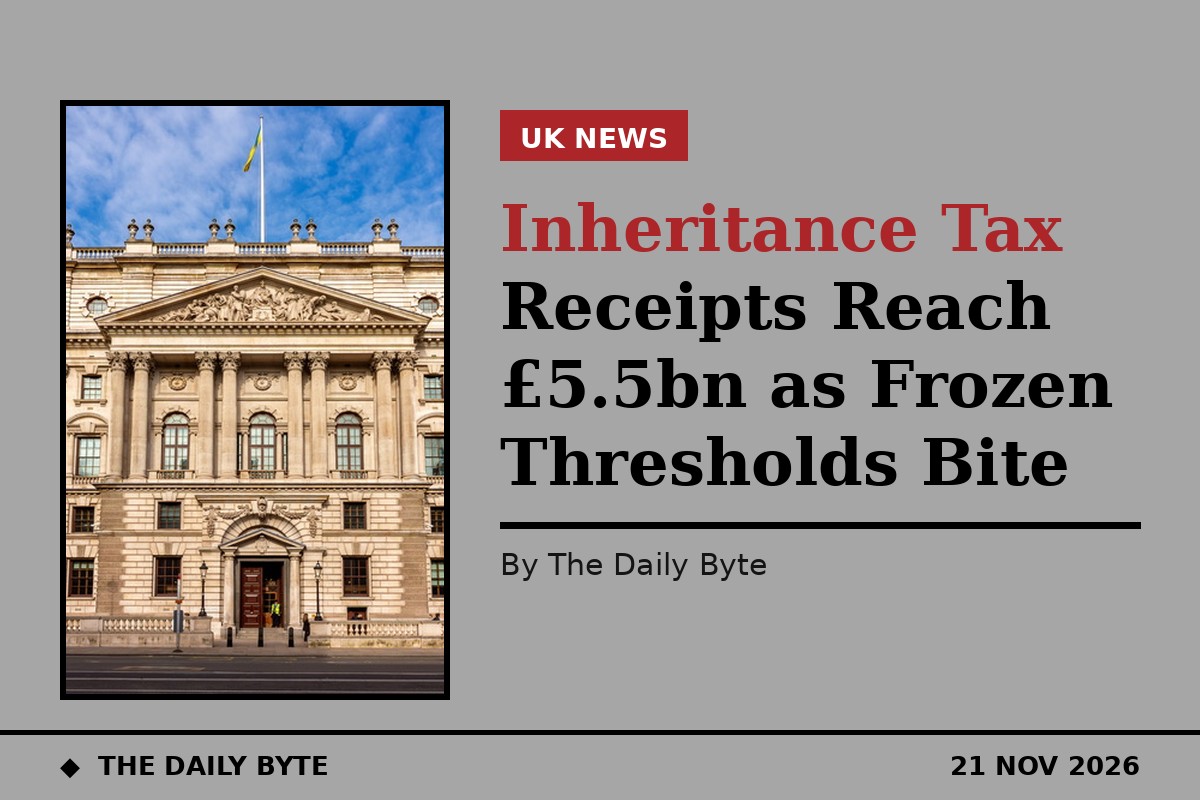
Inheritance tax receipts reached £5.5 billion in the first seven months of the 2026-27 tax year, HMRC said on Friday, as frozen tax-free thresholds and rising asset values continue to pull more estates into the tax.
The total for April to October 2026 was up from £5.2 billion over the same period a year earlier. October alone brought in £825 million, compared with £811 million in October 2025, following a record month in September, when receipts hit £936 million, the highest monthly total on record.
HMRC gave three reasons for the increase: higher volumes of wealth transfers following recent liable deaths, recent rises in asset values, and the Government’s decisions at successive fiscal events to hold the tax-free thresholds at their 2020-21 levels up to and including 2030-31. The nil-rate band, the amount that can be left before any inheritance tax is due, has been frozen at £325,000 since 2009. An extra residence nil-rate band of up to £175,000 applies when a home is left to direct descendants, taking the tax-free total to as much as £500,000 for an individual and £1 million for a couple.
Simon Martin, head of UK technical services at Utmost, said: “Although down on September’s record month, Inheritance Tax receipts are still climbing, as frozen thresholds and higher asset values pull more families into the tax.” He added that the tax net is set to widen further, with thresholds frozen until 2031 and reforms to business property relief already in effect.
A small share of the total tax take
Inheritance tax remains a small part of the overall tax system. Total HMRC tax and National Insurance receipts for April to October were £546.6 billion, £33.4 billion more than a year earlier, so inheritance tax accounted for around one per cent of the total.
Even so, the direction of travel is clear. The Office for Budget Responsibility expects inheritance tax receipts of £9.1 billion in 2026-27 as a whole, an increase of 7.2 per cent on 2025-26, when the total was £8.5 billion. That forecast is lower than the £9.5 billion the OBR predicted in March, but receipts remain on course for another record year. The OBR expects the total to keep climbing, reaching £15.1 billion by 2031-32.
The figures also reflect changes already under way. Reforms to agricultural and business property relief took effect in April 2026, with full relief now applying only to the first £1 million of combined qualifying assets. From April 2027, most unused pension funds and death benefits are set to count as part of an estate for inheritance tax purposes. The OBR expects those changes, alongside the relief reforms, to account for around one-sixth of inheritance tax revenue by the end of its forecast.
What it means for families
Because the thresholds do not rise with inflation or with house prices, more estates cross into taxable territory each year even without any change in the tax rate, which remains 40 per cent on the value above the thresholds. HMRC has previously noted that a small number of higher-value payments can move the monthly figures, with unusually large payments recorded in June and October 2023, September and October 2024, and April and December 2025.
Advisers say the figures are a reminder to review estate planning well before the tax year ends, particularly with the pension changes now only months away. This article is general information about published tax statistics, not personal tax advice, and tax rules can change.
HMRC’s next monthly tax receipts bulletin is due on 22 December 2026.