MPs Call for NHS 111-Style National Legal Service
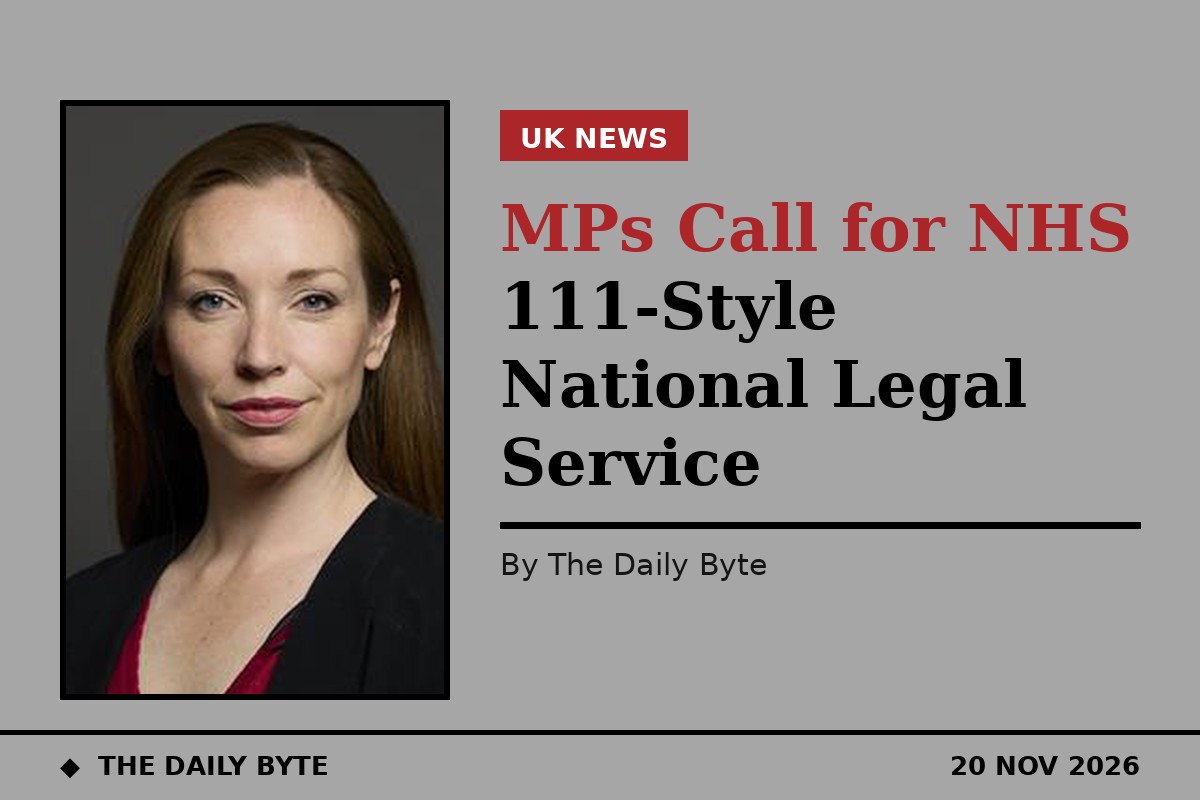
MPs have called on the government to set up a national legal service modelled on NHS 111, so that people with a legal problem have somewhere clear to turn for help before their situation reaches a court or tribunal.
The House of Commons Justice Committee made the call in a 138-page report, Access to Justice: Access to Legal Services, published on 19 November. Its headline recommendation is that the Ministry of Justice should establish the service and lead a permanent programme of work to cut unmet legal need, treating it as a responsibility shared across government rather than a set of disconnected schemes.
What the service would do
Under the committee's plan, the national legal service would have three core jobs. It would give people reliable legal information and work out what support fits their problem, in the same way NHS 111 helps patients decide what care they need. It would signpost people between services while measuring demand and capacity across the system. And it would spot gaps in provision and direct resources towards filling them.
Like the NHS, the service would combine a clear national identity and set of expectations with help delivered locally by different organisations, including law centres, charities and advice agencies. The committee said early advice could help people resolve problems before they escalate, saving them time, money and stress.
Committee chair Catherine Atkinson said demand for legal help was rising while advice services were shrinking, and where a person lives can decide what help they can get. "We recognise the value of getting help early in the NHS," she said. "The same principle applies to justice. Early legal advice can help people resolve problems before they reach a court or tribunal."
Millions face unmet legal need
The report found that 66% of adults in England and Wales face at least one significant legal problem each year, while 32% of people experienced an unmet legal need between 2019 and 2023. It said consumer understanding of legal rights is weak, and that rights have little practical value if people cannot identify, understand or enforce them.
The committee described the current system as a patchwork of legal aid, local authority commissioning, charitable grants, pro bono work and short-term government programmes. That insecurity, it said, makes it hard to retain experienced staff, develop specialist expertise or invest in services, and leaves a postcode lottery in which the help available depends on where a person lives and how their problem is categorised.
The inquiry began in July 2025 and followed an earlier committee report on legal aid published in July 2026, which found the availability and sustainability of legal aid had been severely eroded.
How it would be paid for
To fund the service, the committee proposed a portfolio of extra revenue streams, strictly ring-fenced to address unmet legal need. These include charging interest on lawyers' client accounts, directing dormant client balances to access to justice charities, using undistributed collective action sums and recovered criminal assets, and a levy on third-party litigation funding profits and high-value litigation awards.
The committee backed an interest on lawyers' client accounts scheme in principle, but not in the form proposed by the Ministry of Justice, which would see the money funnelled into the department's general budget. It said such a scheme should be administered independently of government, with transparent grant-making criteria and safeguards including exemptions for legal aid providers.
Law Society president Brett Dixon welcomed the report but expressed doubt that the client-account interest scheme could work, and said a national legal service was a helpful addition to signposting but was not a substitute for a sustainably funded network of local legal providers.
Digital help and what happens next
The report also urged the Ministry of Justice to invest in digital and AI-assisted services, including unbundled legal services and, in the longer term, an AI-assisted platform giving a single point of entry to help people work out whether their problem has a legal dimension. It called for a public legal information repository to reduce the risk of AI tools giving wrong answers, and an online checker for legal aid eligibility.
Other recommendations include reform of legal services regulation, expanding health-justice partnerships, and making before-the-event legal expenses insurance more visible and available. Lord Chancellor Alex Norris has already referenced his ambition for a national legal service at the Bar Council conference.
The government is expected to respond to the report by 19 January 2027. The committee said the Ministry of Justice must treat access to justice as a core purpose, not as a collection of disconnected programmes, and warned that supplementary income cannot compensate for an inadequate core settlement for legal aid, courts or justice services.


