KEPCO breach exposes 1.52 million users' data
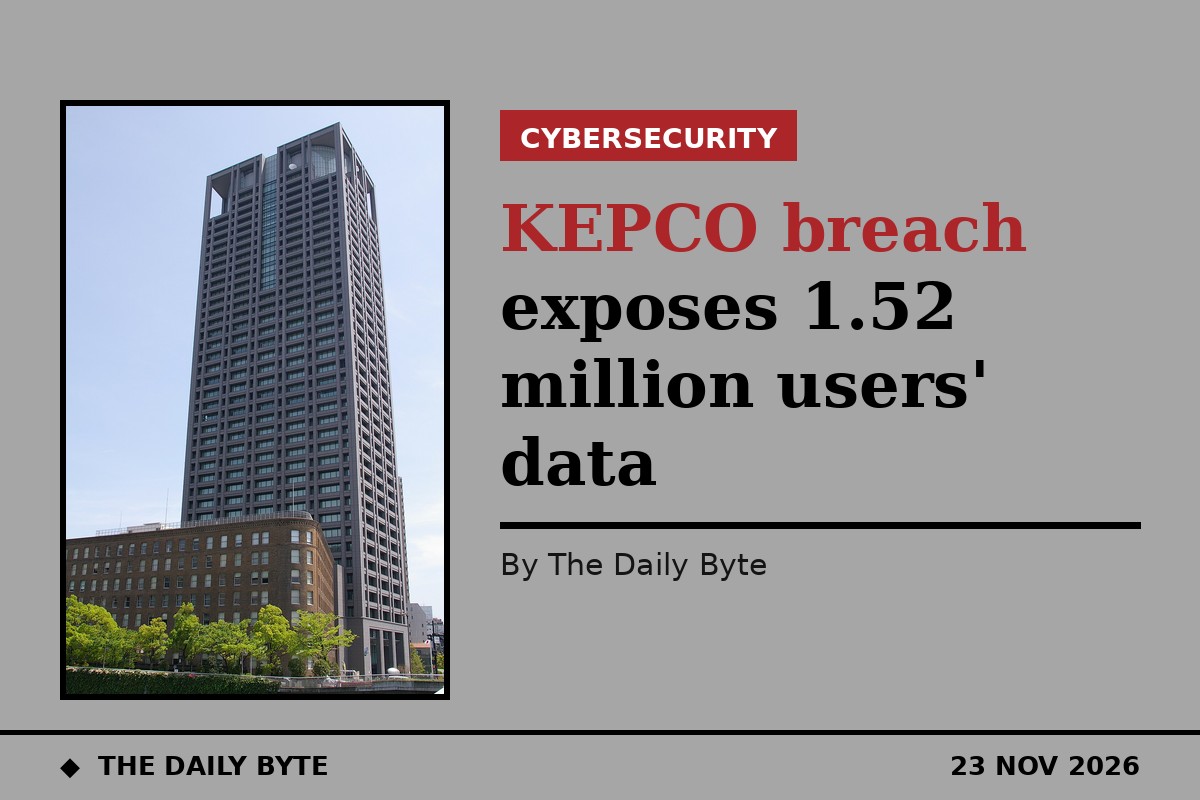
South Korea's state power company has confirmed a data breach affecting more than 1.5 million people, after attackers broke into two of its computer systems and copied customer, employee and supplier data, including bank account and payment card details.
Korea Electric Power Corporation, known as KEPCO, said it detected the intrusion on Friday 20 November and confirmed that personal information had been exposed from its KEPCO ON customer platform and its SRM procurement system. The company announced the breach on Sunday 22 November.
In total, sensitive information belonging to 1,520,248 people was affected, according to the company. KEPCO is South Korea's main electricity supplier and a state-controlled operator of critical national infrastructure.
What data was exposed
The larger share of the damage falls on KEPCO ON, the integrated platform customers use to view and pay their electricity bills. Data on 650,487 customers was exposed, covering 12 categories: customer number, name, resident or foreign registration number, phone number, address, bank name, bank account number, account holder name, card issuer, card number, cardholder name, and electricity charge and billing information. KEPCO said those customers account for 7.1 percent of the platform's 9.2 million users.
The SRM system, which handles procurement for purchases, construction and services, accounted for the remaining 869,761 people affected. That total covers 426,827 company representatives, whose names, registration numbers, email addresses and company addresses were exposed, and 442,934 KEPCO and partner-company employees, whose names, affiliation, employee number, mobile phone number, email address and office phone number were exposed.
How the breach unfolded
KEPCO said it became aware of the situation at 6 a.m. on 20 November, immediately blocked access from the relevant external IP addresses, suspended the affected services and began a detailed inspection of its systems. It also set up an emergency response command centre.
At 9:31 a.m. the same day, the company reported the incident to the Ministry of Climate, Energy and Environment and the National Intelligence Service. It asked the Jeonnam Provincial Police Agency to investigate at 12:31 p.m. KEPCO completed its filing with the Personal Information Protection Commission at 6:30 p.m. on 22 November, within the 72 hours required after becoming aware of a breach, and notified affected individuals at the same time through KakaoTalk alerts, email and its website.
KEPCO chief executive Kim Dong-cheol issued a public apology, saying he felt the weight of responsibility for failing to fully protect customers' valuable information. The company said no secondary damage had been identified so far, but that it would work with financial authorities and other relevant agencies to prevent misuse of the exposed financial information. It has assigned 48 staff to run a call centre around the clock to handle public inquiries.
How did the attackers get in?
KEPCO has not explained how the attackers first gained access. The company said the breach resulted from advanced technologies such as AI, but it shared no specific details about the initial access method or the attack chain.
A hacker using the alias Noiem claimed the attack on a hacker forum on 19 November, saying they held KEPCO user data, supplier records and bidding and contract documents. South Korea's Personal Information Protection Commission separately confirmed that KEPCO received an email from a hacker claiming data theft on 19 November. Attribution to Noiem remains unconfirmed, and the claims match the available evidence only in broad terms.
Power supply unaffected, but grid fears remain
The climate ministry said the breach is not currently affecting power operations, and it plans to widen inspections to affiliated organisations, including other state-owned energy companies. But the incident has raised wider questions in South Korea about the security of the power grid itself, because the SRM system holds procurement records for grid construction projects across the country.
Power grids have been paralysed by cyberattacks abroad before. In Ukraine in 2015, hackers remotely shut down substations, cutting electricity to about 225,000 households. The US Cybersecurity and Infrastructure Security Agency warned in 2024 that Volt Typhoon, a hacking group linked to China, had pre-positioned itself inside energy and telecommunications infrastructure. One industry official quoted in Korean media described the power grid as already a battlefield in peacetime.
People who may be affected have been warned that the exposed information could be used for targeted phishing and impersonation, including voice phishing using their real personal and financial details. KEPCO advises them to report suspicious contact to the police or to Korea's Internet and Security Agency, and not to install unknown apps, enter information into suspicious forms, or share sensitive data or verification codes over calls or texts.