LaLiga Fan Data Stolen in Cyberattack
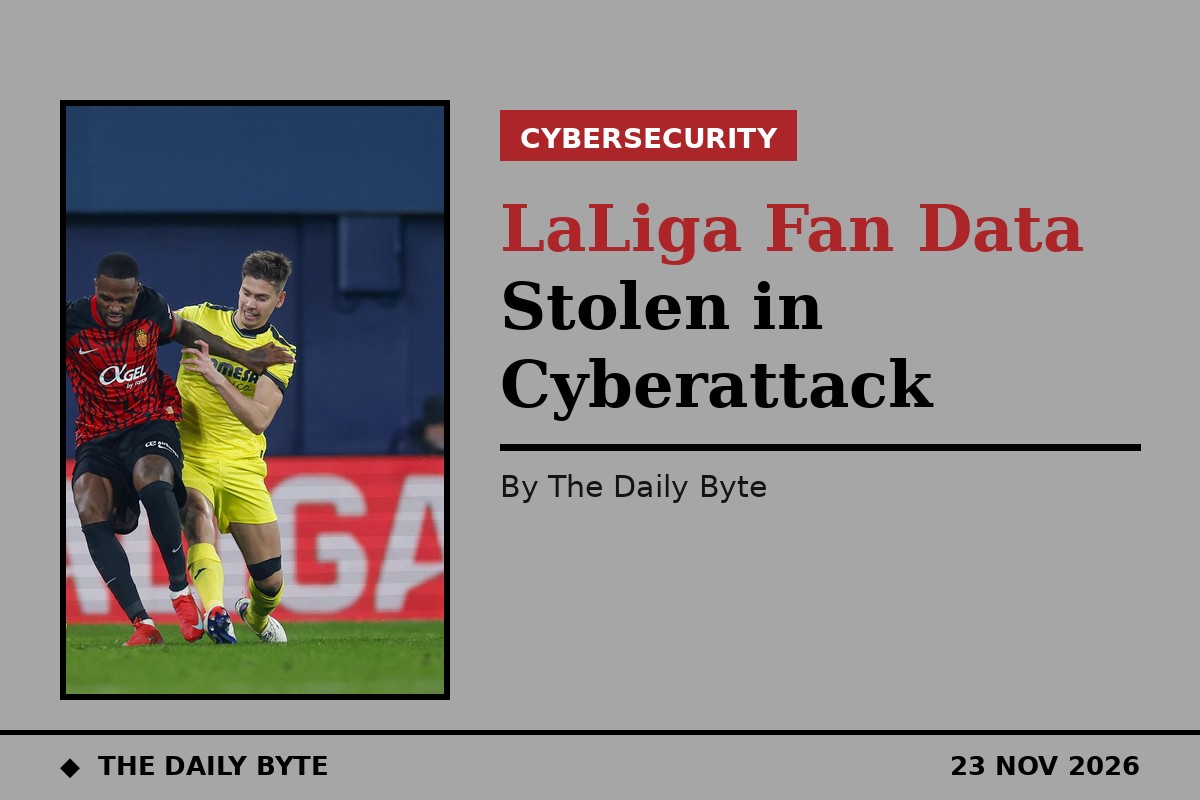
Spain's LaLiga has confirmed that hackers stole personal data belonging to football fans after breaking into one of its digital platforms, in a cyberattack that ran for three days earlier this month.
The league disclosed the breach on Monday 23 November. It said a cybercriminal gained unauthorised access to a technology platform used for fan services between Friday 14 November and Sunday 16 November, and extracted personal data belonging to people registered for digital services offered by LaLiga and by some of its clubs.
LaLiga said its security team identified the source of the unauthorised access on 16 November and took the steps needed to contain the attack, stop the data extraction and block the attacker. The league added that the incident was confined to that one platform and did not spread to the other systems that support the running of its competitions.
What was taken is still unclear
LaLiga has not said what kinds of personal data were taken, how many fans are affected, or which clubs' users are involved. The league said the extent of the leak is yet to be determined and that its security team is still analysing activity on the platform to understand what data was affected.
The clubs whose users were affected have been told directly, and LaLiga said work to inform the fans involved is being coordinated. Until the league publishes more detail, fans registered with LaLiga's digital services should treat unexpected messages claiming to come from the league or their club with caution, and should not follow links or share account details in response to them.
How LaLiga responded
After containing the attack, LaLiga launched an investigation into the scope of the incident and said it has introduced more thorough monitoring to detect any future attempt to breach its systems. The league reported the incident to the Spanish Data Protection Agency, known as the AEPD, and filed a complaint with the National Police's Central Cybercrime Unit, which is investigating.
As of publication, no ransomware group has claimed responsibility for the attack, and LaLiga has not attributed it to any group. The league has also not said how the attacker first gained access to the platform.
Why the breach matters
LaLiga organises Spain's top two men's professional football divisions, and its top flight is one of the most watched leagues in the world, featuring clubs with global audiences such as Real Madrid, FC Barcelona and Atlético Madrid. Its digital services hold registration details for large numbers of supporters, which makes them an attractive target for criminals who can reuse stolen personal data for fraud and phishing.
The incident is the latest reminder that sports organisations hold far more than match results: fan platforms store the names, contact details and account information of millions of supporters. The next facts LaLiga has to provide are the scale of the breach, the types of data taken and the clubs involved.