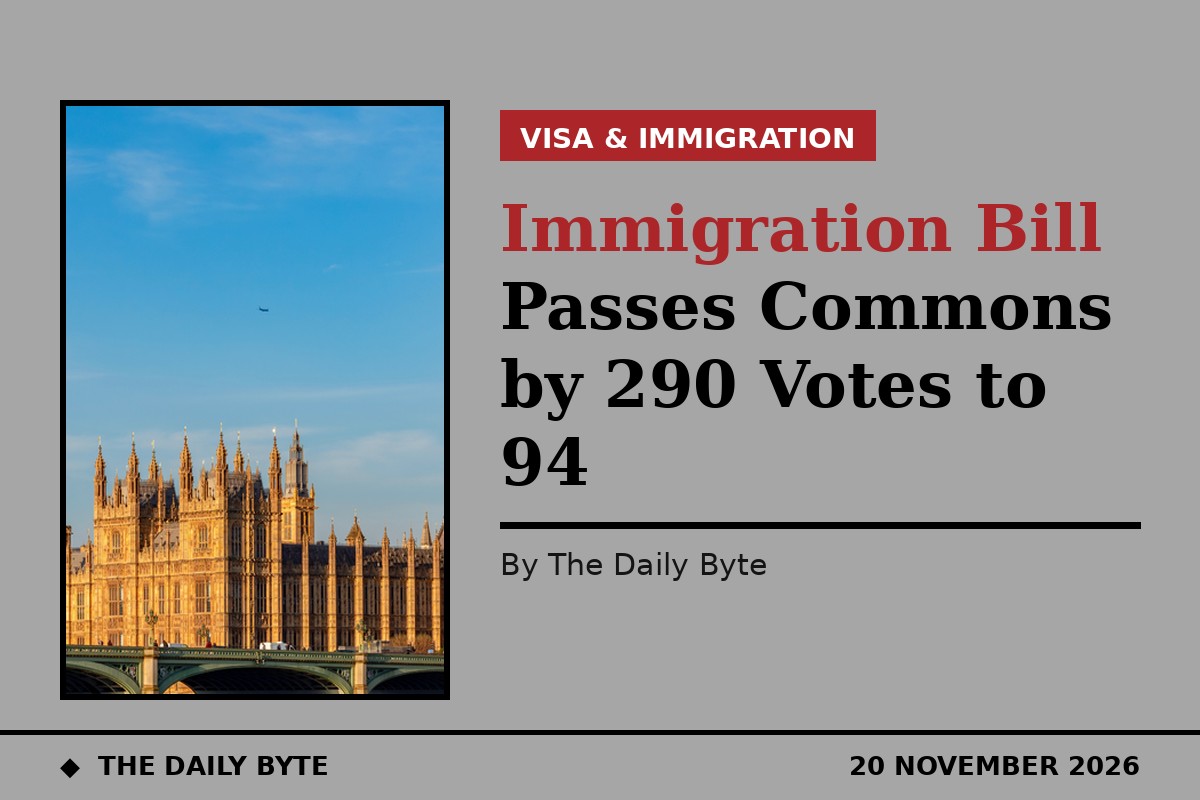
Law Society Warns New Immigration Appeals Body Lacks Independence
By aminah
·18 Nov 2026
·4 min read

The Law Society of England and Wales has warned that the government's proposed new immigration appeals body would lack independence if it is established within the Home Office, as the Immigration and Asylum Bill reaches its report stage in Parliament on Tuesday 17 November.
Law Society president Brett Dixon said housing the body in the department whose decisions it would review creates a conflict of interest. Under the Bill, senior appointments to the new body would be made by the secretary of state, which Mr Dixon said would further compromise its independence.
"The department whose decisions are challenged would also house the body reviewing those decisions," he argued, urging caution as MPs debate the Bill.
## What is the new appeals body?
The government plans to create an Independent Immigration Appeals Authority (IIAA) to replace the current tribunal system for immigration and asylum appeals. The Home Office says the new body will allow a fair appeals system that restores public confidence, with professionally trained and independently appointed adjudicators, much like magistrates, hearing cases.
The authority is expected to begin hearing appeals late next year, prioritising cases in the public interest such as those involving human rights claims and high-harm foreign offenders. Appellants will retain the right of onward appeal to the Upper Tribunal on points of law.
The Bill also proposes speeding up removals: the government plans to change the law so that people whose asylum claims have failed can be removed without the current five working days' notice, a change tabled by Home Secretary Shabana Mahmood.
## The Law Society's objections
In written evidence to the Public Bill Committee, the Law Society said the new body would lack independence, expertise and procedural fairness. It recommended that the body should not sit within the Home Office and that all senior appointments should be made through an independent appointments process.
The Society argued that the government should instead focus on the true causes of delay in the asylum system: the quality of Home Office decision-making. Its evidence cited Home Office data showing that only 52% of decisions met the department's own quality standard in 2023/24, and that 45% of asylum refusals reviewed by the First-tier Tribunal were overturned in the year ending March 2025.
The Immigration Law Practitioners Association has also criticised the plans, arguing that because the Home Office is a party to every appeal, recruitment to the new body must be overseen by the Ministry of Justice and the Judicial Appointments Commission, not the Home Office.
## What the government says
The Home Office maintains that decisions by the new body will be fully independent, while the body will be integrated into the immigration system so cases flow through quickly to removal where appeals are unsuccessful. Ministers say widening the recruitment pool beyond legally qualified judges will help recruit more adjudicators than there are currently judges in the First-tier Tribunal, boosting capacity to decide cases swiftly.
The debate continues as the Bill moves through its report stage. The Law Society's warning adds to wider concern among lawyers about whether a body designed to speed up removals can also be seen as independent of the department driving that policy. [Source: UKPulse](https://ukpulse.co.uk/news/law-society-raises-concerns-over-new-immigration-appeals-body-independence); [Source: Parliament](https://bills.parliament.uk/publications/67863/documents/8828)
## Frequently asked questions
**What is the Independent Immigration Appeals Authority?**
A proposed new body that would hear immigration and asylum appeals in place of the First-tier Tribunal, staffed by professionally trained adjudicators rather than legally qualified judges.
**Why does the Law Society object to it?**
It says the body would lack independence if housed in the Home Office, whose decisions it reviews, and if its senior appointments are made by the secretary of state.
**Has the Bill become law?**
No. The Immigration and Asylum Bill is at report stage in Parliament on 17 November 2026 and must still complete its passage before any of its measures take effect.