MEPs Back EU-Switzerland Deal in Landslide Vote
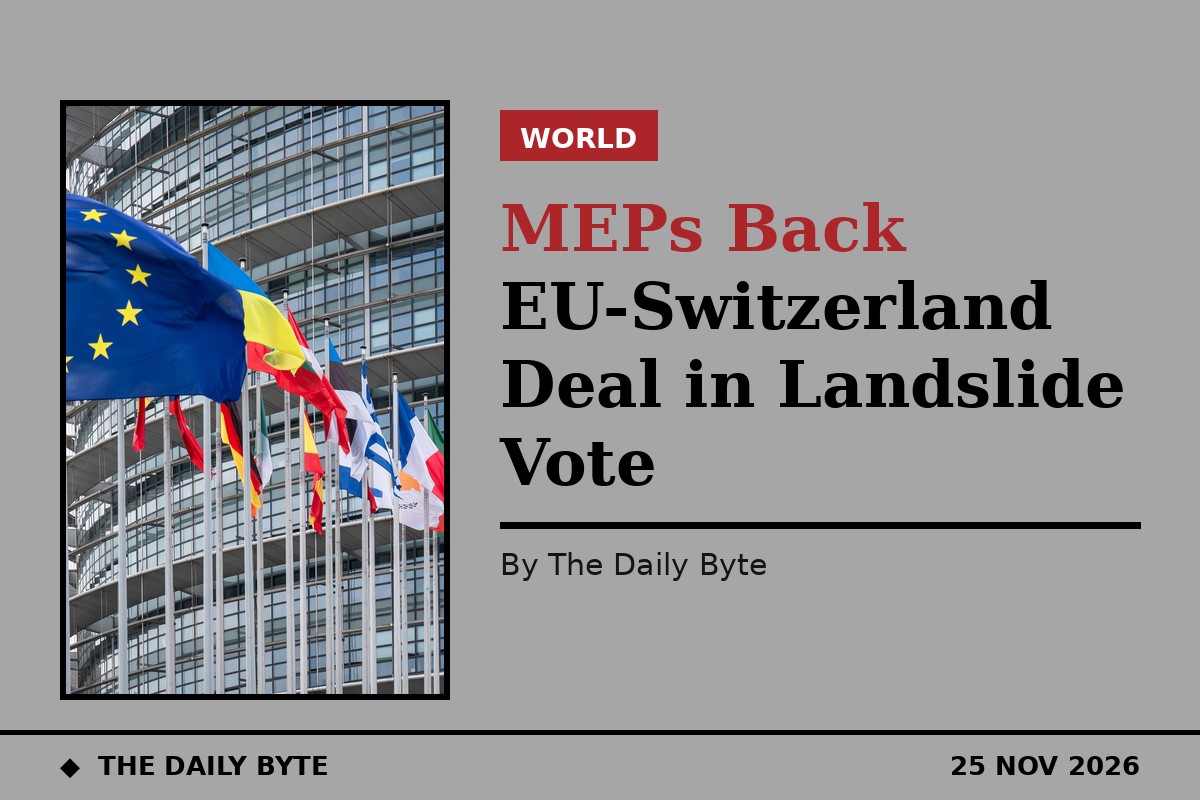
The European Parliament has given its consent to a broad package of agreements with Switzerland, voting by 584 to 13, with 60 abstentions, to deepen political, economic and strategic cooperation between the EU and its close neighbour.
The vote in Strasbourg on Wednesday 25 November ends years of uncertainty in EU-Swiss relations. MEPs also adopted an accompanying resolution setting out their political assessment of the package by 554 votes to 22, with 79 abstentions, describing it as a balanced and responsible compromise. The agreements were negotiated and submitted to Parliament as a single package, so MEPs assessed and voted on them as a whole.
What the package changes
The package updates Switzerland's participation in key areas of the EU internal market, including air and land transport, free movement of persons, mutual recognition of conformity assessments, and trade in agricultural products. It also deepens cooperation on food safety, health and electricity, and addresses Swiss participation in EU programmes.
For citizens, the changes are practical. MEPs say the package aims to safeguard freedoms people already enjoy, including the ability to work, study and cooperate across borders, while preventing unnecessary legal and political obstacles from making cross-border life more difficult. It includes provisions ensuring the recognition of diplomas, qualifications and professional experience, and Switzerland's planned return to the Erasmus+ student exchange programme from 2027. EU and Swiss students will be treated equally on tuition fees at the higher education institutions covered by the agreement.
For businesses, the package offers a more stable framework for the future, a stronger Swiss voice in shaping relevant rules, and a fair mechanism for resolving disagreements. Switzerland will also be able to take part in the EU electricity market, making it easier to buy and sell electricity and helping to secure supply on both sides, and will take part in the EU's space programme. Switzerland will additionally make a regular solidarity contribution to reducing economic and social disparities in the EU.
Ending years of uncertainty
EU-Switzerland relations have developed over several decades through more than 100 bilateral agreements, but the existing deals no longer fully reflected current realities, and an updated and more stable framework was needed. Political negotiations on the package were concluded in December 2024, and the agreements were signed in March 2026.
The rapporteur, Christophe Grudler, a Renew Europe MEP from France, said the vote chose stability over uncertainty. "For years, EU-Swiss relations have been stuck in uncertainty. Today, the European Parliament has chosen the opposite: stability, trust and closer cooperation," he said. "In an unstable world, neighbours must be able to rely on each other. These agreements protect what already works for citizens and businesses, open new areas of cooperation, and give us a stronger basis for the future."
Switzerland is not a member of the EU, but it is one of the bloc's closest partners. Every day, hundreds of thousands of people cross the border, businesses on both sides trade with each other, and electricity flows between the two. The agreements that organise much of that relationship are more than 20 years old, and the new package brings them up to date.
What happens next
The ball is now in Switzerland's court. The Swiss Parliament must ratify the package on similar terms, and the deal may also be subject to a referendum under Swiss law. Once Switzerland has completed its ratification process, the Council of the EU will be able to formally conclude the package, paving the way for it to enter into force.
Nothing changes immediately. The rules governing trade, travel and cooperation between the EU and Switzerland stay in force as they are until the package takes effect, but the Parliament's vote removes the largest political obstacle on the EU side and sets a clear path for the new framework to come into operation.
Frequently asked questions
What did the European Parliament approve? A broad package of EU-Switzerland agreements, by 584 votes to 13 with 60 abstentions, updating market access and adding new deals on electricity, food safety and health.
What does it mean for students? Switzerland's return to the Erasmus+ programme is planned from 2027, and EU and Swiss students will be treated equally on tuition fees at covered institutions.
When will the agreements take effect? Only after the Swiss Parliament ratifies the package, possibly followed by a referendum, and the Council of the EU formally concludes it.