Met Police Face Checks on Phones Without Consent
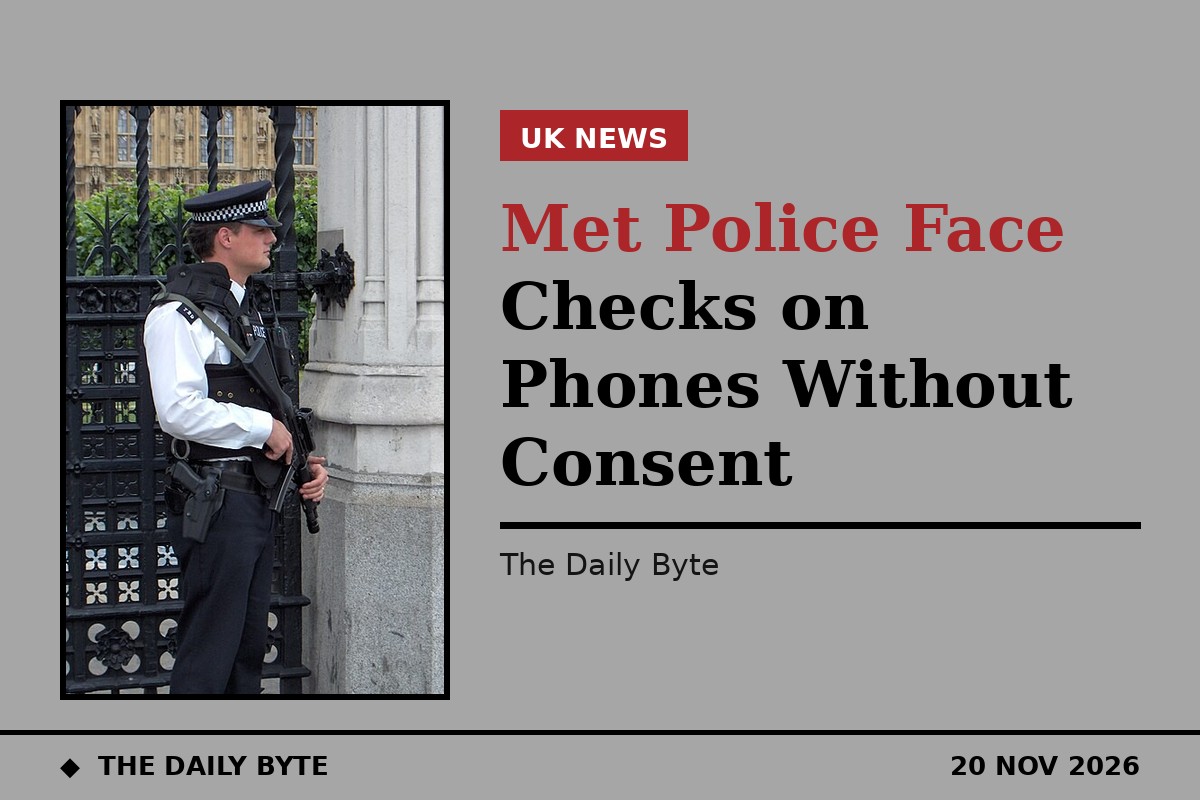
The Metropolitan Police has launched a six-month pilot allowing officers to use their phones to photograph people and check their faces against a database of custody images, without the person’s consent. The force says the new handheld tool will help officers confirm identities more quickly and identify people who are wanted by police.
The system, known as Operator Initiated Facial Recognition (OIFR), is being trialled by 100 trained officers across custody suites and frontline policing. It works by comparing a photo taken by an officer, on a Met-issued mobile device, against the Met’s custody image database, which holds around one million images. The system only returns a result where it finds a match above a threshold informed by independent testing; if no sufficiently strong match is found, no result is returned. Every potential match is reviewed by a trained officer alongside all the information available to them, to ensure the picture taken matches the person in the custody photo.
When officers can use it
The Met says OIFR is not a tool for officers to take pictures of people at random, and it can only be used in two specific circumstances where there is a lawful and proportionate need to establish someone’s identity. The first is to support the identification of a person who is unknown to the officer and believed to have committed a recordable offence, where they refuse to provide their details or the officer believes they have provided false details. The second is following an arrest or detention, when officers are legally permitted to take an image of the person, to help confirm identity and support risk assessments, such as where someone is known to conceal weapons or use drugs.
Officers must first exhaust other reasonable ways of establishing a person’s identity, and they must tell people before taking their photo, although their permission is not required. Officers will not use force if someone covers their face. The pilot will not be used on under-18s for the first month, and any wider programme would exclude those under the age of 13. Commander Nick John, the Met’s lead for OIFR, said: “If a person is not willing or able to confirm their identification, or we believe they might not be telling the truth, then the officer can take a photo on their Met-issued phone, take that photo, upload it into the app, and then the app will search against our custody images.” He insisted: “We are not going to be going around London taking photos of people from a distance who aren’t suspected of being involved in any offending.”
Early use and criticism
Officers uploaded 15 photos during the pilot’s first 24 hours, which Mr John admitted was “more than I was expecting”. On the first day, officers were called to reports of a drunk woman walking into traffic who was unable to identify herself. Using OIFR, they were able to establish her identity quickly, access relevant safeguarding information and ensure she received appropriate medical attention without unnecessary delay. By establishing identity more quickly, the Met says the tool helps alert officers to known risks such as a history of carrying a weapon, trying to escape or attempting to self-harm, and reduces unnecessary time in custody.
The pilot has drawn criticism from civil liberties groups. Akiko Hart, director of advocacy group Liberty, warned that the pilot was putting “powerful surveillance technology in officers’ pockets”, and said it “combines all of the problems of stop-and-search with those of facial recognition”, adding that there was evidence the devices were being used “disproportionately against marginalised communities”. Habib Kadiri, executive director of StopWatch UK, said not enough was being done to “mitigate inherent racial bias in any form of facial recognition technology so far”. The Met said the pilot will be closely monitored, with regular reviews of performance, accuracy and usage data to ensure the technology is used appropriately and to monitor for any evidence of disproportionality, and Scotland Yard has said it will review the pilot before deciding on a wider rollout. The pilot comes weeks after the government promised stricter laws around police use of facial recognition, and announced plans for a new watchdog to advise on standards and scrutinise emerging technologies, with the power to ban forces from using the technology if they fail to comply with regulations. Since 2024, the Met’s live facial recognition has led to more than 3,000 arrests, for offences such as domestic abuse, rape and child sexual abuse, with more than 2,000 of those brought before the courts.


