Milburn Review to Urge NI Cut for Under-25 Workers
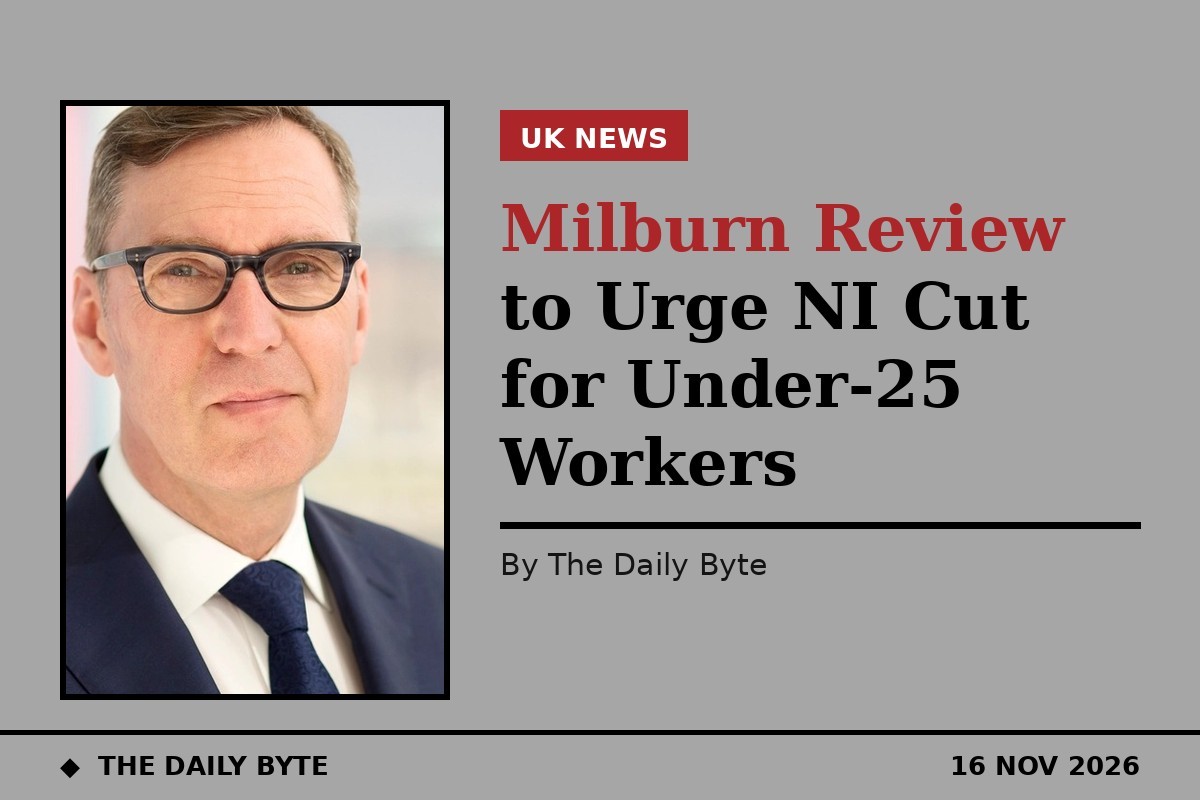
Alan Milburn's year-long review of youth unemployment will recommend gradually cutting the national insurance paid by employers on workers aged 21 to 24, starting in retail and hospitality, when it is published on Tuesday 17 November.
The former Labour health secretary is set to propose reducing the cost of employer national insurance contributions over five years for that age group, and doubling the threshold at which businesses start paying the contributions on their earnings from £5,000 to £10,000. The BBC first reported the proposals on Sunday, ahead of the report's publication.
The recommendations are the centrepiece of a wide-ranging review of the growing number of young people not in education, employment or training, known as Neets. The number of 16 to 24-year-olds in that position topped a million this year, and just under a million 18 to 24-year-olds were Neets in April to June, up 3 percent on the same period last year, according to data from the Office for National Statistics.
Why Milburn wants employers' costs cut
Milburn argues that cutting the cost of hiring young workers would encourage businesses to create jobs for them, but he is not proposing an immediate blanket cut. He is expected to say that national insurance changes should be brought in "when economic conditions allow", and that given the economic backdrop, an immediate across-the-board reduction is not the best way to spend the billions of pounds of public money such a move is estimated to cost.
Research by the Resolution Foundation, a think tank, put the cost of a full cut at £5.1 billion, according to the BBC. The government raised employer national insurance under Sir Keir Starmer, but Milburn will say the rise in youth unemployment was not started by that increase.
Milburn puts the cost of the youth unemployment problem at £22 billion a year. He says the amount spent on young people's benefits is 25 times as much as that spent on employment support, and he wants to shift that balance to two to one. Research from the Liberal Democrats published at the weekend suggested that if nothing was done, the number of Neets would reach 1.26 million by 2031.
A legal guarantee of work or training
The review will also propose a "legal guarantee" of work, training or employment support for young people, with those who refuse to take up the offer potentially losing benefits. The guarantee would give under-25s a job, an apprenticeship, a training place or employment support, and Milburn wants the duty written into law so the state, likely through local councils or mayors, is responsible for making sure young people have something useful to do when they leave school.
Work and Pensions Secretary Pat McFadden has backed the idea of a legal guarantee, arguing that employment support needs a "legislative underpinning" giving people more certainty about what they are entitled to. Shadow work and pensions secretary Helen Whately said a legal entitlement "might sound a nice thing to do" but "doesn't make sense", although she backed the direction of moving away from "handing out cash for relatively mild conditions" towards employment support. Reform UK's Danny Kruger said he was "encouraged" by the suggestion of stricter conditions for young people who should be working.
Benefits changes and school readiness
Some young people would receive less financial support under the proposals. Milburn will recommend moving under-25s off the health element of Universal Credit and off personal independence payment, the main disability benefit in England and Wales, and onto a new "youth allowance" paid at the standard rate of Universal Credit. He has said the changes would not be pain-free and would affect both existing and new claimants.
The review is also expected to sound the alarm over "school readiness", warning that too many five-year-olds are unable to complete everyday tasks such as using cutlery or going to the toilet. To tackle the problem, Milburn will call on the government to raise the target for reception-age children to be school ready from 75 percent to 90 percent.
Prime Minister Andy Burnham has called the review a "watershed" moment but stopped short of promising to accept its recommendations in full. Writing in the Guardian, he promised "generational" reform, saying: "Benefits must become the backstop, not the starting point." He has insisted that paying for the reforms would not mean "more money" but "spending differently" in government, shifting spending away from "paying for failure" and towards "investing in success".
The report's recommendations are not government policy yet.
Sources: Gazette & Herald (PA Media); BBC News, via Everywhere News.


