Ministers to Discuss Staggered Age of Consent
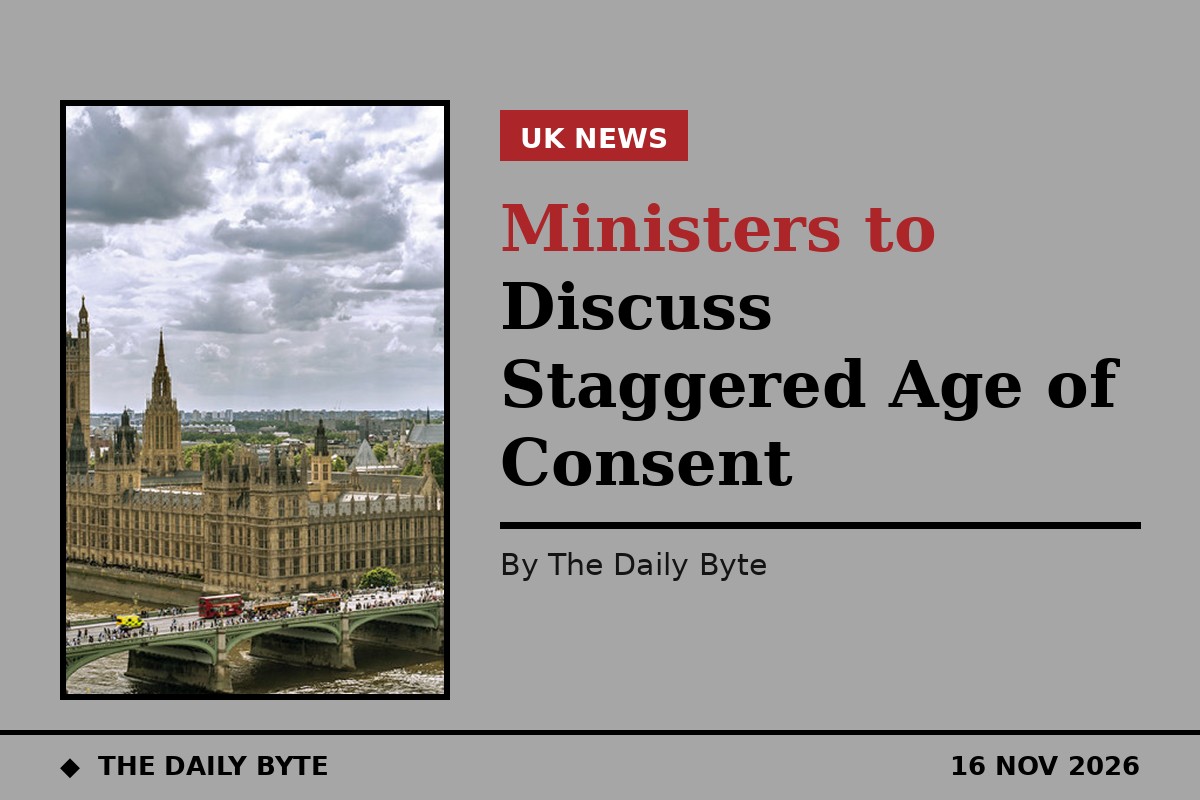
Ministers will discuss a staggered age of consent in the UK after the case of Russell Brand reopened debate about relationships between adults and 16 and 17-year-olds. Work and Pensions Secretary Pat McFadden said on Sunday that the question had been raised and would be discussed, but he stressed that no conclusion had been reached.
Under current law, the general age of consent in the UK is 16. That means adults can legally have a sexual relationship with a 16 or 17-year-old, unless specific offences apply, such as abuse of a position of trust. Campaigners want that changed so that large age gaps are themselves against the law.
What a staggered age of consent would mean
The proposal at the centre of the debate comes from the Close the Consent Gap campaign. It would bar a 16-year-old from a sexual relationship with anyone older than 19, and a 17-year-old from a relationship with anyone older than 20. The idea is to draw a clear legal line around relationships where one person is much older and holds far more power.
The campaign has been led by Mia Latter, now 37, who has waived her anonymity. She says she was in a relationship with Russell Brand when she was 16 and he was 30, and she alleges that he raped her. Her allegation was not part of the trial that led to Brand being jailed this month, and she has called for the law to change so that other teenagers have stronger protection.
Ministers signal the issue will be examined
Speaking on the BBC programme Sunday with Laura Kuenssberg on 15 November, Mr McFadden said the issue was being looked at in a new light. He said ministers would talk about a staggered age of consent and would probably consider changing the law, while adding that he could not give a final answer yet. He said the last week had certainly put the question up in lights.
His comments followed support from other senior figures. Louise Haigh, the First Secretary of State, said changing the age of consent would be a massive step but deserved proper consideration and scrutiny. Catherine Atkinson, the Labour MP who chairs the Commons Justice Committee, said the proposal should be explored properly, including by looking at how other countries handle the issue.
Charities call for a full review
The NSPCC has also backed a review. Anna Edmundson, the charity director of policy, said there was an urgent need to look at what is and is not working, to make sure 16 and 17-year-olds are fully protected in law from predatory behaviour. Campaigners argue that the current law leaves teenagers exposed when an older adult uses fame, money or influence to start a relationship with them.
The shift in tone is notable because only days earlier a justice minister, Jake Richards, had told LBC that such a change was off the agenda. Mr McFadden comments suggest the Government is now willing to look at the evidence rather than rule the idea out.
No legislation yet
Nothing has been decided, and no bill has been introduced. Any change would need detailed work on where the age boundary should sit, how it would be enforced, and what effect it would have on young people in relationships with people close to their own age. Ministers have said survivor testimony and the wider legal and policing consequences would need to be taken into account.
Brand was sentenced on 9 November to ten years and six months in prison after being convicted of one count of rape and three counts of sexual assault against four women. The debate his case has prompted is now set to continue in Parliament, with campaigners pressing ministers to move from discussion to a formal review of the law.
Source: BBC News


