Ministers Drop Foie Gras Import Ban for EU Deal
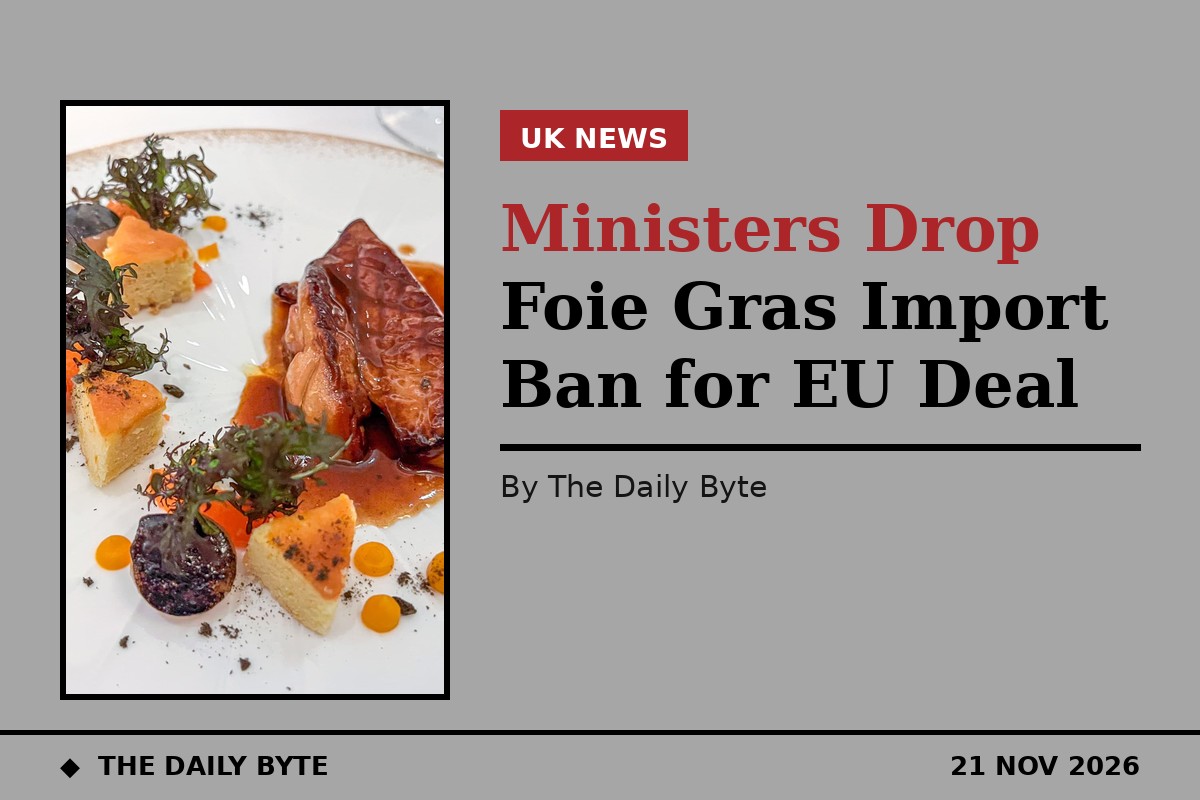
Ministers have dropped plans to ban foie gras imports into the United Kingdom as part of a new food trade deal with the European Union, abandoning a pledge Labour made before the last election.
The decision was confirmed on Friday 20 November, when the government announced a sanitary and phytosanitary agreement with the EU at a summit in Brussels. The deal is designed to cut paperwork and border checks on food and drink, and ministers say it could boost the British economy by up to five billion pounds a year.
Foie gras is produced by force-feeding ducks and geese to enlarge their livers. Production using that method has been banned in Britain since 2007, but imported foie gras can still legally be sold in shops and restaurants.
Before the last election, Labour promised to ban imports of the product. Steve Reed, who was the shadow environment secretary at the time, described force-feeding as beyond disgusting. The government has now set that promise aside, saying a ban would have complicated the negotiations with the EU, where France and other countries continue to produce and export foie gras.
What the food deal does
The agreement creates a common area for food safety and animal and plant health rules between Britain and the EU. It removes the need for export health certificates and phytosanitary certificates on many goods moving between Great Britain and the EU, and ends routine border checks on products such as dairy, fish and meat.
Ministers say the changes will make it easier and cheaper for British food businesses to export, and will help ease pressure on food prices. The agreement is due to apply from 1 March 2028, subject to procedures on both sides.
Under the deal, Britain will largely follow EU food standards in future, including rules set in Brussels after the agreement takes effect. That means the UK will no longer be able to ban foie gras imports on animal cruelty grounds, because the relevant rules will be made at EU level rather than in London.
Animal welfare groups react
The decision has been condemned by animal welfare organisations. David Bowles, head of public affairs at the RSPCA, said the charity was extremely disappointed that farm animal welfare laws had been put on the chopping block as part of the new deal, and called shelving the ban a clear backwards step.
The RSPCA warned that unless Britain was allowed to protect farmers producing to higher welfare standards, they could be undermined by cheaper imports from the EU, where practices still allowed include force-feeding for foie gras. The animal welfare organisation Four Paws also criticised the move, pointing out that foie gras produced by methods prohibited in Britain can still legally enter the country.
A spokesperson for the Department for Environment, Food and Rural Affairs acknowledged the welfare concerns but said the government was focused on securing a deal that would make food trade easier and cheaper. The spokesperson said the government was negotiating a food and drink deal that would slash red tape and costly paperwork, make it easier and cheaper to export seafood, boost the British economy by up to five billion pounds a year, and back British businesses and jobs.
Some food businesses have also raised concerns about the costs of aligning with EU rules, with the Fresh Produce Consortium warning earlier this year that the agreement could add more than 300 million pounds in costs for businesses importing fruit and vegetables from outside the EU. Ministers say the overall effect will be positive for exporters and for shoppers.