Modi Tells India Inc to Innovate at FICCI Centenary
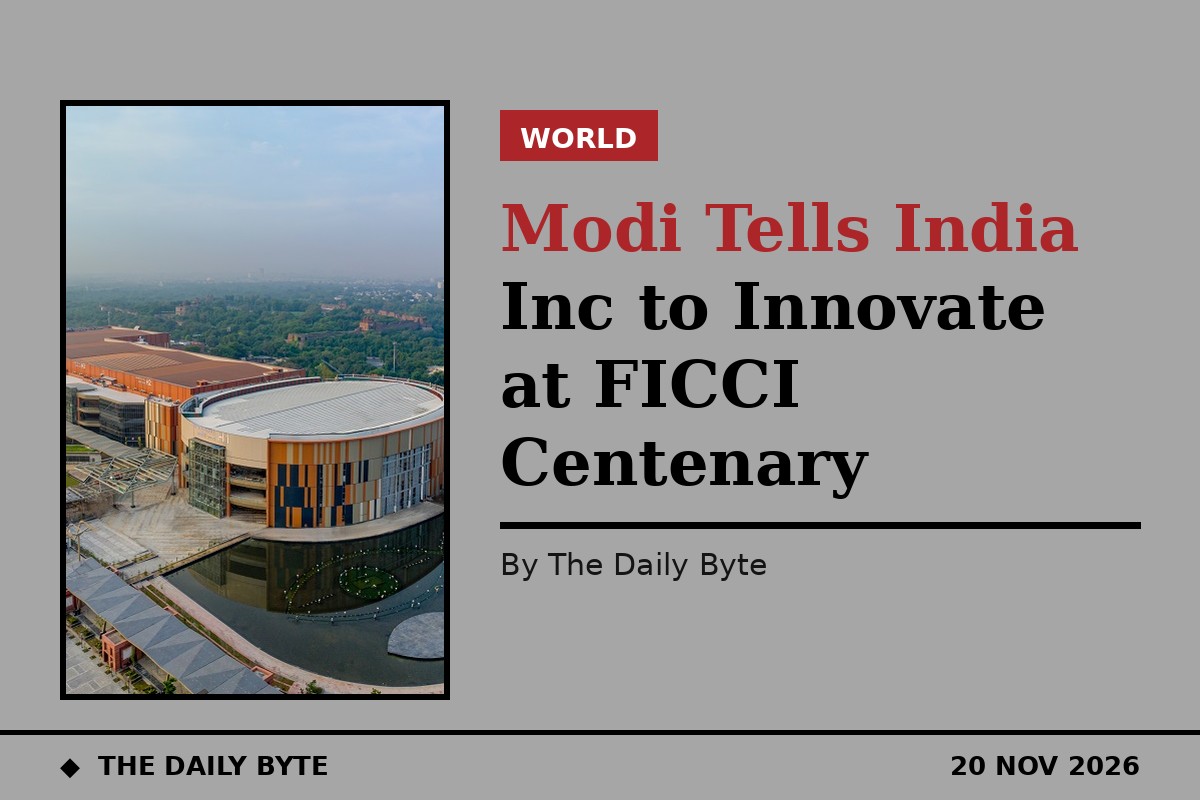
Prime Minister Narendra Modi has told Indian industry to stop treating the domestic market as a comfort zone, challenging business leaders to innovate, raise pay, create jobs and compete globally. He was speaking on Thursday at the inauguration of the Federation of Indian Chambers of Commerce and Industry’s annual general meeting and annual convention at Bharat Mandapam in New Delhi.
The convention marks FICCI’s centenary year. The chamber, founded on 7 April 1927, completes 100 years on 7 April 2027, and the gathering was held under the theme “Bharat 2047”, drawing more than 2,500 delegates including industry leaders, chief executives, ambassadors and policymakers.
A blunt message on jobs and pay
Modi questioned why businesses were failing to innovate, create jobs and compete globally despite government tax cuts and ease-of-doing-business reforms. He pointed out that the base corporate tax rate had been cut from 30 percent in 2014 to 22 percent, tax returns and refunds had been simplified, and goods and services tax rates had been rationalised.
“I know you will not applaud. I know that very well, because your appetite is so enormous that no matter how much you are given, it is never enough,” he told industry leaders. “I have given income tax relief up to Rs 12 lakh. But have you increased the salaries of your employees? Have you increased the number of employees? No!”
He also pressed companies on quality, saying Indian consumers deserved the same standard of products that firms sell overseas. “Do not take 140 crore Indians for granted as an assured market where anything will sell,” he said. “Even today, sellers tell customers ‘This is export quality’ to convince them it is good. What do you take our countrymen for? Do they not deserve good quality?”
The import gaps Modi named
Modi invoked Mahatma Gandhi’s call for swadeshi, noting that Gandhi had raised the same argument with the chamber in 1930. “In 1930 Gandhiji came to you and said the same thing, and after so many years I am still having to say the same thing. Is this your success or your failure?” he asked.
He named sector after sector where India still depends on imports. India is known as the pharmacy of the world and excels in finished medicines, he said, yet it imports billions of dollars’ worth of active pharmaceutical ingredients, bulk drugs and drug intermediates across hundreds of categories. India exports iron ore worth thousands of crores of rupees and holds vast bauxite reserves, yet imports finished steel, specialised aluminium alloys and other products.
Agriculture told a similar story. India’s share of global agricultural exports stands at just two to two-and-a-half percent, Modi said, even though the share of processed food in agri-food exports has risen from 13 percent to more than 20 percent over 12 years. “Tell me, what kind of country is it where wheat is exported and bread is imported? Ask yourselves that question,” he said.
Growth figures behind the pitch
Modi’s challenge was paired with an upbeat account of the economy. He said India is the world’s fastest-growing major economy, projected by major institutions to expand at around seven percent, and pointed to October’s record monthly goods exports of nearly 50 billion dollars. Moody’s Ratings, S&P Global Ratings, Fitch Ratings, the World Bank and the Asian Development Bank are revising India’s growth upward, he said.
He also cited a World Bank report stating that 50 crore Indians had moved out of poverty in just 12 to 13 years, calling it a source of pride for the nation. Commerce and Industry Minister Piyush Goyal told the convention’s valedictory session that India’s preferential market access through free trade agreements now covers about 70 trillion dollars of global GDP.
Looking ahead, Modi urged industry to make “India First” the foundation of every long-term investment decision for the next 20 years. “Our domestic market should not be our comfort zone, as it must give us the confidence to compete in global markets,” he said, adding that businesses should invest in understanding customers in different regions, meeting global standards and building distribution networks overseas.