MoEngage Breach Exposes WazirX, ZebPay User Data
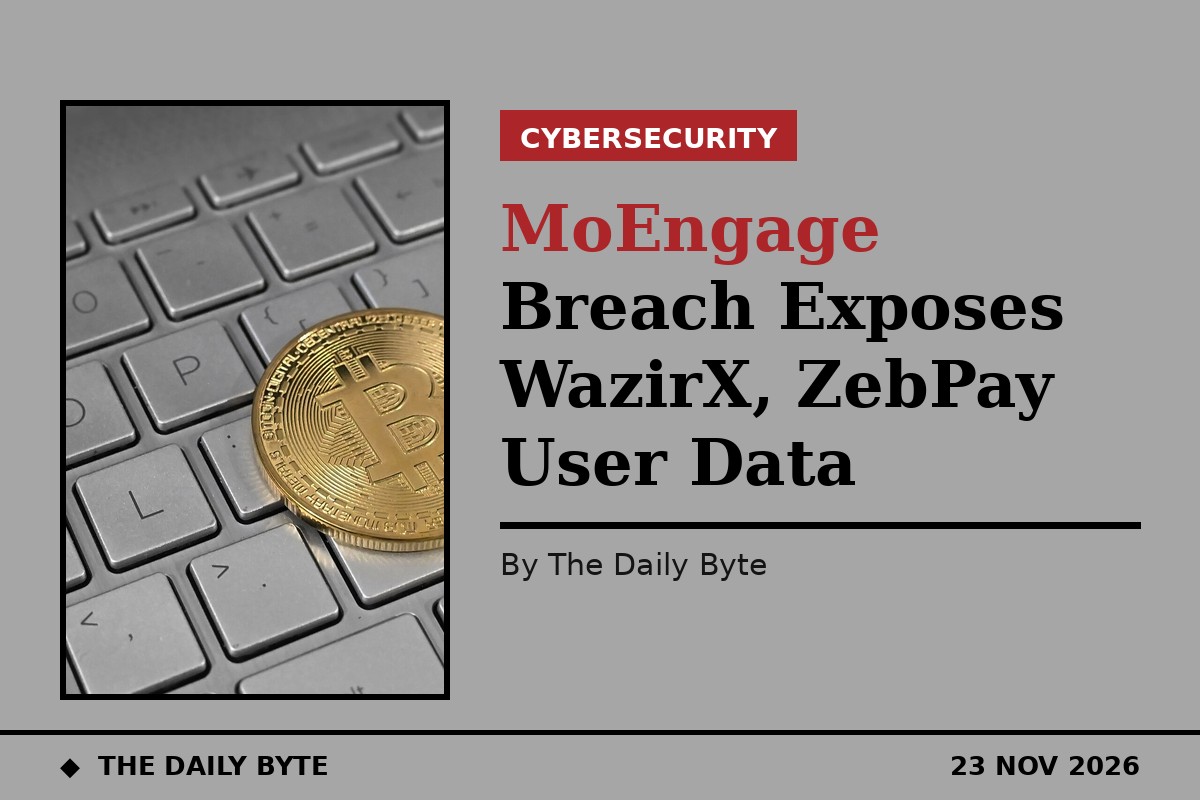
Indian cryptocurrency exchanges WazirX and ZebPay have told customers that some of their personal information was exposed in a cyberattack on MoEngage, the customer-engagement platform both exchanges use to message their users. The breach happened inside MoEngage's own cloud systems, the companies said, and neither exchange's wallets, trading platforms nor customer funds were affected.
What happened at MoEngage
MoEngage, a software company based in Bengaluru and San Francisco, confirmed the incident on 21 November. In a message to customers on 20 November, it said an unauthorised party had gained access to a limited part of its cloud infrastructure using credentials belonging to one of its third-party service providers. The access happened in late October, and MoEngage said it contained the incident, brought in independent cybersecurity experts to check its findings, and strengthened its controls. It said fewer than 1% of its customer accounts were affected and that it had told each affected customer directly. MoEngage also said the incident did not disrupt its services, although the Economic Times reported that some customers could not reach the platform for almost a week, with access restored for some on 19 November.
What data was exposed
WazirX disclosed the impact on its users on 23 November. It said the exposed information was limited to email addresses, basic contact identifiers, device metadata and engagement attributes. Passwords, private keys, sensitive financial records and trading information were not exposed, the exchange said, because those are held in separate, secure infrastructure. Its platform, wallets and trading systems were not affected, and customer funds and cryptocurrency holdings remained safe.
ZebPay told its customers on 21 November. Its notice said the information obtained included basic identifiers, contact details, online and device data, app settings, event data and records of recent account activity. Like WazirX, ZebPay said its own servers, databases, wallets and trading systems were untouched, that customer funds remained safe, and that it had found no unauthorised activity on its accounts. It said it had reported the matter to the relevant authorities. MoEngage has not published a list of all affected companies or said how many individual records were involved, so more of its customers may still come forward.
What users should do
Both exchanges warned customers to expect phishing attempts built around the leaked details. Attackers who hold a person's email address, device details and recent account activity can write messages that look genuine, so users should treat unexpected emails and calls with suspicion. WazirX said it would never ask users for passwords, one-time passcodes or two-factor authentication codes, or ask them to transfer funds to secure their accounts, and advised anyone receiving a suspicious email to open the app directly and contact support. ZebPay gave the same warning and added that it would never ask for seed phrases or ask users to install remote-access applications.
A warning about third-party risk
The incident is a reminder that a company's security depends on its suppliers as well as its own systems. Neither exchange was breached directly, yet their customers' data was exposed because it sat with a vendor they trusted to send messages. WazirX has been through a far worse breach before: in July 2024 attackers stole about $230 million from the exchange in an attack on a multi-signature wallet. That was a different incident, involving different systems, but it explains why the exchange moved quickly to reassure users that this time no funds were touched. For customers, the practical step is the same in both cases: watch for phishing, use strong unique passwords, and switch on two-factor authentication where it is offered. MediaNama first reported the ZebPay notice on 23 November, and Outlook Money reported the WazirX disclosure the same day.