MPs call for law to overturn Carter-Ruck privilege ruling
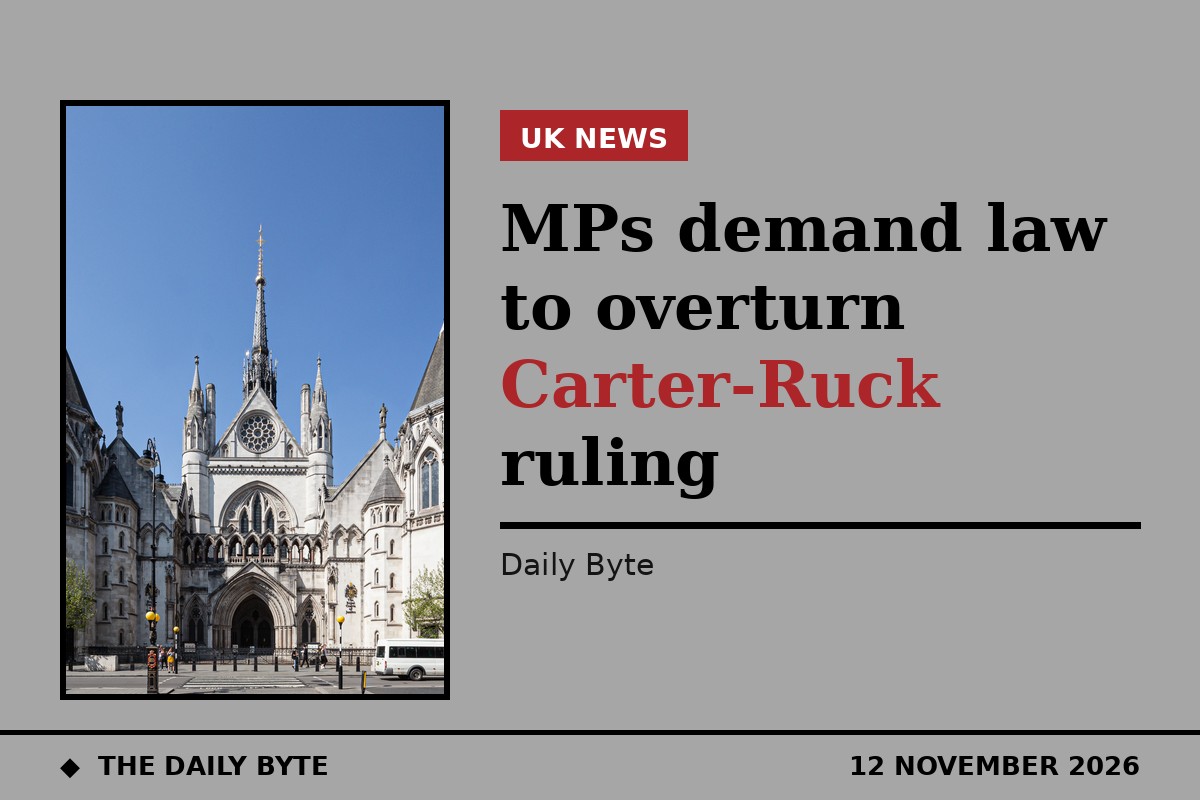
MPs have called on the government to legislate to overturn a High Court ruling on legal privilege, warning that it could leave regulators unable to tackle money laundering by solicitors. The call came during the second reading of the Financial Services and Markets Bill, which will move supervision of anti-money laundering work by lawyers, accountants and trust and company service providers to the Financial Conduct Authority.
Labour MP Phil Brickell, who chairs the all-party parliamentary group on anti-corruption and responsible tax, said that without action there was "a real risk that serious wrongdoing by solicitors involved in money laundering or abusive litigation practices will remain beyond effective scrutiny".
What the Carter-Ruck ruling decided
In September, the High Court ruled in Carter-Ruck Solicitors and Mohamed Amersi v Solicitors Regulation Authority that the Solicitors Regulation Authority, the SRA, does not have the right to require a law firm to produce documents covered by a client's legal professional privilege unless the client waives it. Mr Justice Butcher held that the SRA's information-gathering power under section 44B of the Solicitors Act 1974 does not override privilege, because Parliament has never given the regulator that power in clear terms.
The case arose from an SRA investigation, running since September 2023, into Carter-Ruck and one of its partners over the firm's conduct while acting for businessman Mohamed Amersi in bringing or threatening data protection and defamation claims in 2021 and 2022. The SRA served notices requiring Carter-Ruck to produce documents from Mr Amersi's client files, some of which were privileged. Carter-Ruck and Mr Amersi deny any wrongdoing, and nothing in the judgment finds otherwise.
The SRA has said it intends to challenge the decision, and the High Court has granted a leapfrog certificate allowing it to seek permission to appeal directly to the Supreme Court. The Supreme Court has yet to decide whether it will hear the appeal.
Why MPs say the bill must deal with it
Brickell said he backed the move to a single regulator, arguing that anti-money laundering oversight is currently divided among 22 professional body supervisors, many of which are also membership organisations. "That creates an inherent conflict of interest — it leads to inconsistent supervision, variable enforcement, fragmented intelligence sharing and uneven suspicious activity reporting," he said.
But he said September's ruling was "a significant problem" for the new system. When the bill was in the House of Lords, ministers confirmed that the FCA will not have powers to compel disclosure of privileged material, yet the ruling has exposed serious uncertainty about regulators' ability to access such information when investigating misconduct. "That litigation should prompt a rethink," Brickell said. "If the FCA inherits the same limitations, there is a real risk that serious wrongdoing by solicitors involved in money laundering or abusive litigation practices will remain beyond effective scrutiny."
He argued the bill should clarify that the regulator can access legally privileged material where necessary for anti-money laundering supervision, while continuing to protect clients' rights and confidentiality. Another Labour MP, Joe Powell, agreed that the FCA needed strong enforcement powers, including the right to inspect legally privileged material when necessary for anti-money laundering supervision, saying the capacity of individual legal and accountancy regulators "simply does not align with the complexity of modern anti-money laundering efforts".
Concerns about the single-regulator plan
Not all MPs were uncritical. The SNP's Kirsty Blackman warned about the loss of specialisation in moving to a single oversight regulator, pointing to Scotland's separate legal system. "If we put the work of the organisation that supervises lawyers and solicitors in Scotland into the FCA as a regulator that supervises lawyers, that may not be appropriate for the legal system in Scotland, and we may end up with only one person — the one who understands Scottish law — having the knowledge and doing that supervision," she said. "There, again, we would have a single point of failure, and that is really concerning in a place supervising people who are doing anti-money laundering."
Powell also cautioned that the transition would need careful management, warning that as responsibilities shift to the FCA in cohorts, some firms could be left behind, and calling for a reform road map making clear that existing anti-money laundering duties will apply. The bill has already passed through the House of Lords, where the government said the transition to FCA supervision would begin in 2028. Lucy Rigby, the economic secretary to the Treasury, did not have time to address the privilege points in winding up the debate, but they are expected to resurface at committee stage, when MPs go through the bill line by line.
Sources: Legal Futures and Charles Russell Speechlys.