NAB Files Rs37bn Kohistan Reference Naming 141 Accused
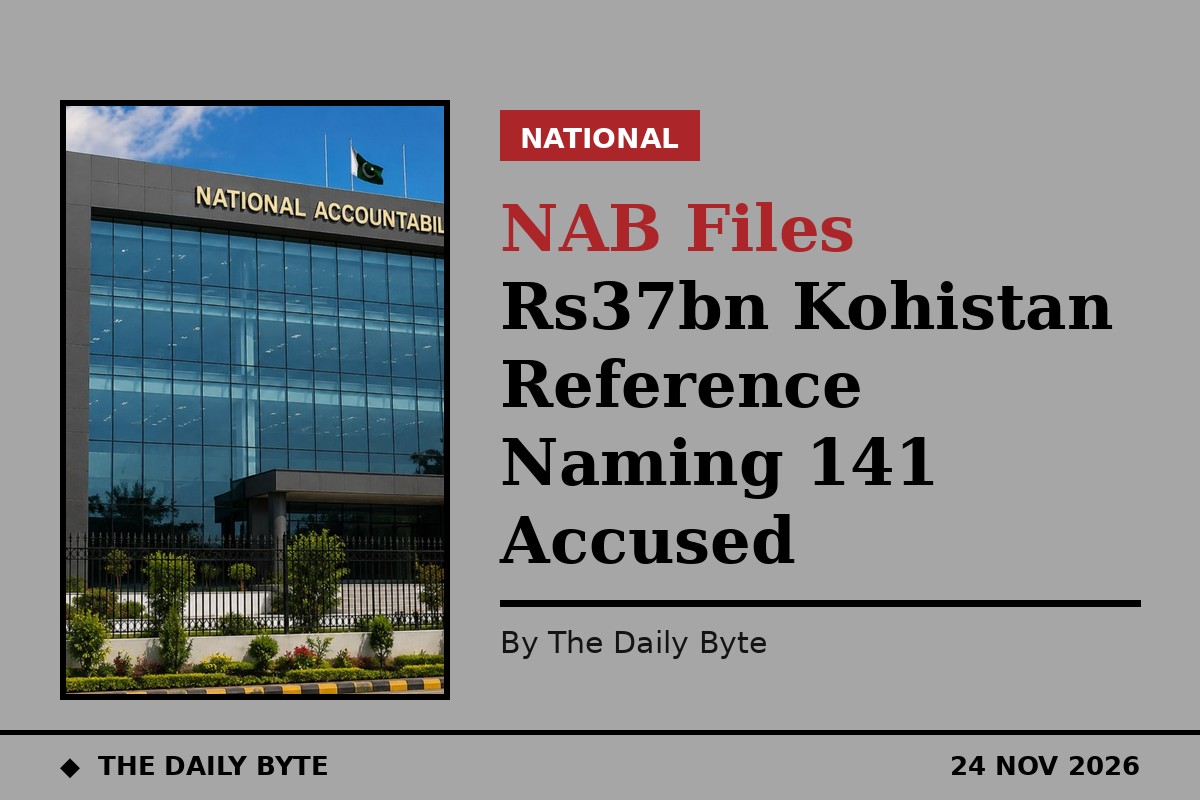
The National Accountability Bureau (NAB) has filed a reference worth Rs37 billion in the Upper Kohistan financial scandal before an accountability court in Peshawar, naming 141 people as accused in one of the largest corruption cases in Khyber Pakhtunkhwa's recent history. According to NAB, the reference was submitted to the court's administrative judge on Monday, 23 November. The filing moves a case that has been under investigation for more than a year from inquiry to formal trial, and it will now be for the court to decide whether the evidence supports the charges.
The case concerns the alleged embezzlement of public development funds in Upper Kohistan district between 2018 and 2024. NAB says money meant for development projects was withdrawn from the public treasury through official channels and bank accounts and moved into private hands. Investigators say the fraud centred on Head of Account G-10113 in District Upper Kohistan, from which funds were withdrawn in the name of contractors' security deposits. According to NAB, officials of the Communication and Works Department, in collusion with officers of the Accounts Office and the National Bank, carried out fake withdrawals from the national treasury in the name of projects and contractors who had not done any work. The reference runs to 77 volumes and more than 36,000 pages, a measure of how many transactions, accounts and officials had to be traced. ARY News also reported the filing on 23 November.
Arrests, plea bargains and recoveries so far
NAB says more than 32 suspects have been arrested during the investigation, and 12 accused have entered plea bargain agreements, under which an accused person offers to return money in exchange for a lighter outcome, subject to the court's approval. More than Rs6 billion has been recovered so far, according to NAB. That is only a fraction of the Rs37 billion alleged, and the pressure to trace and recover the rest will continue as the trial proceeds. No hearing date has been announced, and every accused person is presumed innocent until the court decides otherwise.
The scale of the alleged fraud is striking when set against the district it concerns. Upper Kohistan is one of the least developed districts of Khyber Pakhtunkhwa, with steep mountain terrain, scattered villages and limited access to services. Its annual development budget is less than Rs50 million, according to NAB officials quoted at a ceremony in June, so the sums involved in this case dwarf the money the district normally sees in a year. Development funds pay for roads, schools, health units and water schemes, and when money meant for those projects goes missing, the cost is borne by residents who wait years for basic services.
The investigation has already produced substantial recoveries. At a ceremony in Peshawar in June, NAB handed over recovered assets worth more than Rs6 billion to the Government of Khyber Pakhtunkhwa, including Rs5 billion in cash, one kilogram of gold, 12 luxury vehicles and 18 valuable properties, according to the Press Information Department. NAB said at the time that assets worth more than Rs27 billion had been frozen and assets valued at over Rs10 billion recovered through plea bargains. Investigators examined more than 1,500 bank accounts during the inquiry.
What happens next in court
A reference is the formal charge sheet that NAB files in an accountability court after completing its investigation. Once the court takes it up, the accused are formally charged, evidence is recorded and witnesses are examined before any verdict. The accountability court will now have to work through the 77 volumes of evidence in detail, and defence lawyers are expected to challenge the documents and the chain of money movement at every step. Cases of this size often take years in court, and the final outcome will depend on the evidence presented rather than the size of the sum alleged.
Accountability courts in Peshawar have already sent eight accused to jail on 14-day judicial remand and endorsed NAB orders freezing dozens of properties, including houses, commercial plazas, plots, vehicles, cash and foreign currency. Further remands and plea bargain applications are likely as the trial gets under way. For taxpayers, the case tests whether the bureau can take a large and complicated file from investigation to conviction and recovery; for the people of Upper Kohistan, it tests whether money meant for their roads, schools and clinics can be traced back to them.