National Diabetes Programme to Launch This Month
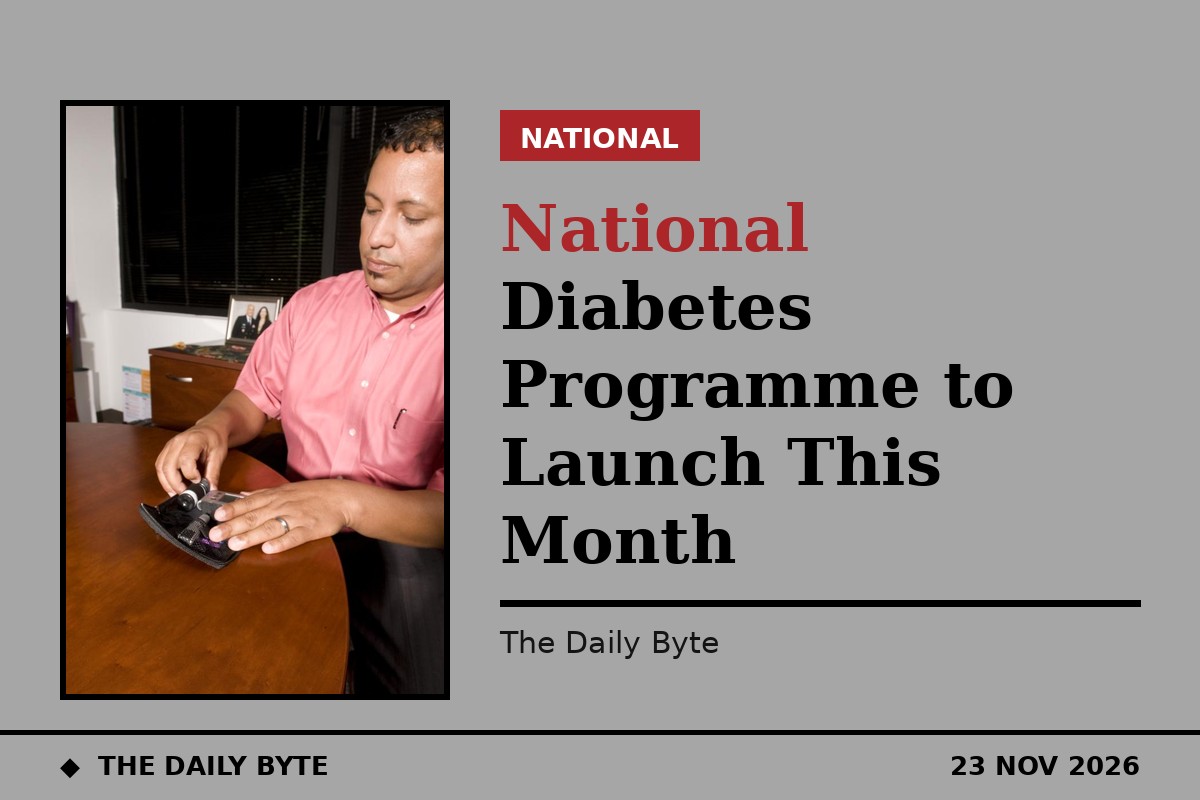
Pakistan's first-ever national diabetes prevention and control programme is to be launched this month, the Diabetes Association of Pakistan (DAP) announced at a scientific conference in Islamabad on Sunday, 22 November 2026. The programme, developed with the Federal Ministry of Health, will start in Islamabad and run for three to five years, beginning with public awareness and early risk assessment.
The announcement came at a one-day conference organised by the DAP to mark World Diabetes Day, which was observed on 14 November. Prime Minister Shehbaz Sharif had already announced an allocation of Rs6.8 billion for the Prime Minister's Programme for Prevention and Control of Diabetes Mellitus in his World Diabetes Day message, saying the disease had become a major public health challenge in Pakistan.
How the programme will work
DAP General Secretary Prof Dr Abdul Basit told the conference that the programme had been developed for the first time in the country's history on the directions of the prime minister and in collaboration with the health ministry. Its first priorities will be public awareness and early risk assessment through the RAPID Score, a quick method of estimating diabetes risk from a few simple questions about age, waist size and family history.
Later phases will focus on setting up diabetes prevention, diagnosis and treatment facilities across the country. Prof Basit said the details of the committee formed to oversee the programme would be announced within the next one to two weeks.
Mosque-based screening model
The conference also heard about a mosque-based diabetes awareness and screening model that is being prepared for introduction across Pakistan and in all 57 member states of the Organisation of Islamic Cooperation (OIC). The model, based on a scheme developed in Bangladesh and led by diabetes specialist Prof AK Azad Khan, is expected to be launched in Pakistan early next year.
Under the Bangladesh model, imams and women in 100 mosques were educated about diabetes prevention, and short awareness messages were included in Friday sermons. Screening facilities were arranged outside mosques for men and in adjoining rooms for women. According to Prof Basit, research on the initiative showed a reduction of up to 42 per cent in new diabetes cases in the targeted areas over one year, after which the campaign was expanded to about 300,000 mosques in Bangladesh, reaching an estimated 20 to 40 million people every Friday.
The International Diabetes Federation has appreciated the model, and Comstech, an OIC subsidiary organisation, has appointed Prof Basit as its representative to help expand it across the 57 Islamic countries. A grant application has been submitted to the Higher Education Commission, with a decision expected within two to four months; Prof Basit said the initiative would be launched early next year using personal resources even if the grant was not approved.
One in three Pakistanis affected
Speakers at the conference underlined the scale of the problem. DAP Vice President Prof Shabeen Naz Masood said about one in three Pakistanis is affected by diabetes, and stressed blood glucose screening before and during pregnancy to protect mothers and children. She recommended three-stage screening for pregnant women: before pregnancy or in its early months, between 22 and 24 weeks, and between 34 and 36 weeks. Without timely diagnosis and treatment, she warned, women with gestational diabetes face a higher risk of developing permanent type 2 diabetes within three to four years.
DAP Vice President (Academics) Prof M Zaman Sheikh said Pakistan had become one of the countries worst affected by diabetes, with a reported prevalence rate of 33 per cent. Describing diabetes as a silent killer, he said it could remain undetected for eight to 10 years, and blamed unhealthy lifestyles, fast food, sugary drinks, obesity and psychological stress.
IDF Vice President Iram Ghafoor highlighted continuous glucose monitoring technology, saying devices were available in Pakistan at estimated prices from Rs8,000 to Rs18,000, with more advanced devices costing between Rs150,000 and Rs200,000. The Prime Minister's Office message on World Diabetes Day is available here, and the full conference report is in The News.
Frequently asked questions
When will Pakistan's national diabetes programme launch? The Diabetes Association of Pakistan announced on 22 November 2026 that the programme will be launched this month, starting in Islamabad, with a mosque-based screening model to follow early next year.
How much funding has been allocated? The federal government has allocated Rs6.8 billion for the Prime Minister's Programme for Prevention and Control of Diabetes Mellitus, Prime Minister Shehbaz Sharif announced on World Diabetes Day, 14 November 2026.
What is the RAPID Score? It is a quick risk-assessment method used in the programme's first phase, estimating diabetes risk in about 30 seconds from questions about age, waist circumference and family history.