Pemra Bans Infant Formula Ads on TV and Radio
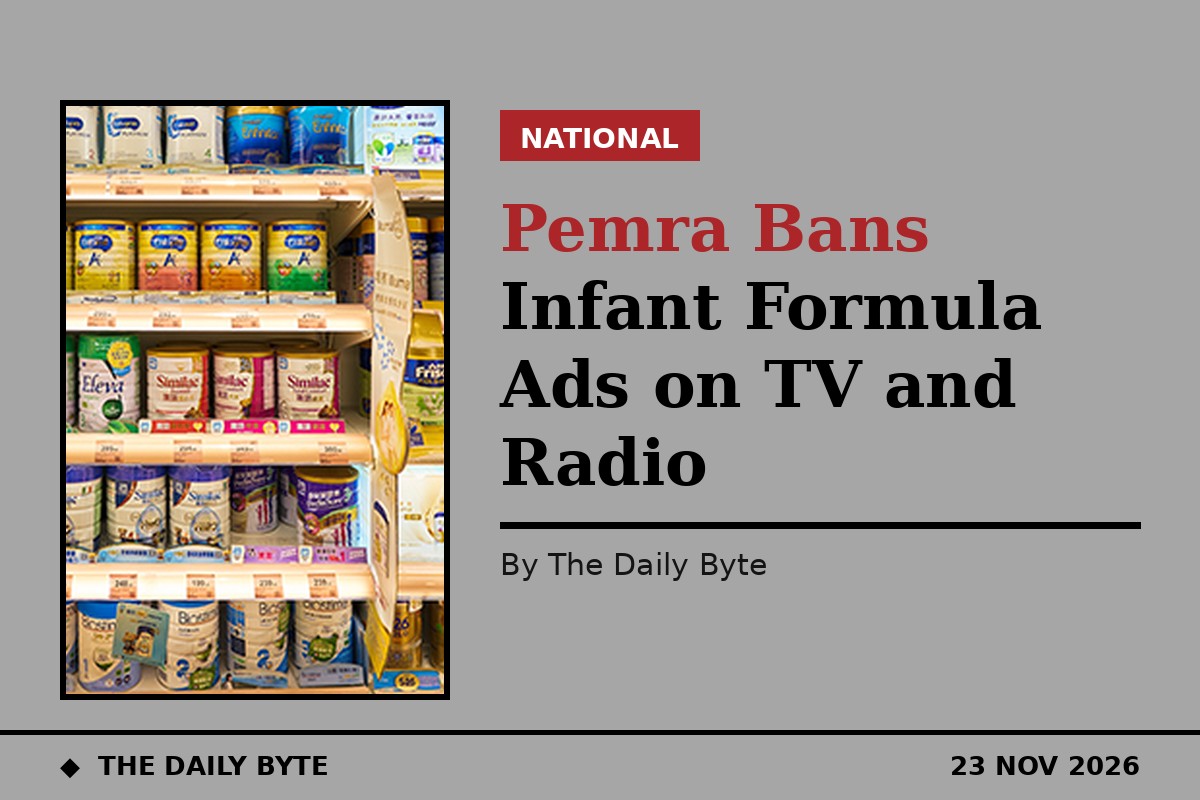
The Pakistan Electronic Media Regulatory Authority (Pemra) has banned advertisements and promotional activities for commercially manufactured infant formula milk on electronic media, ordering television channels and other regulated broadcasters to stop airing them with immediate effect. The regulator said the ban would remain in force until the required legal compliance was met and a no-objection certificate, approval or permission was obtained from the department or health regulatory body concerned. Pemra issued the order after a letter from the Ministry of National Health Services, Regulations and Coordination dated 18 November, which pressed for implementation of the law governing the marketing of breast-milk substitutes.
Senate committee ordered the halt
The ban came on the same day the Senate Standing Committee on National Health Services directed Pemra to stop the advertisements at once, citing a law that has been on the books for 24 years. The committee, chaired by Senator Amir Waliuddin Chishti, asked Pemra why the advertisements were still being broadcast and said the regulator did not need fresh government instructions to enforce a law already in force. Section 7 of the Protection of Breast-feeding and Child Nutrition Ordinance 2002 bars advertisements, promotional activities, free samples and direct marketing of designated infant products. Chishti told Pemra Chairperson Ambreen Jan that enforcement of that section was Pemra's responsibility alone. Senator Shahzaib Durrani asked Jan whether Pemra was a government body or a marketing agency for formula companies, telling her that carrying out federal government policy was part of the regulator's job.
The committee also directed Pemra to report back on enforcement at its next meeting, and said violations would invite action. It asked the health ministry to produce a breastfeeding awareness advertisement within 15 days and have it broadcast in the five per cent of free airtime allocated to television channels, subject to approvals. The committee also wants the words "Infant Formula" printed clearly on packs, rather than the word "milk", and has told the ministry to ensure the National Infant Feeding Board is set up under the relevant law. It stressed that enforcement must cover the whole country, not only Islamabad, as Khabr reported.
Court stay did not cover the law itself
Pemra told the committee that the matter was pending in court. Earlier this month, a multinational manufacturer obtained a stay from the Islamabad High Court against a committee directive requiring formula advertisements to carry the warning "Mother's milk is the best for a child." The senators rejected Pemra's argument, noting that the stay applied to two regulatory letters and not to the 2002 ordinance itself. Pemra officials said they had written to the Drug Regulatory Authority of Pakistan (DRAP) seeking its participation in the court proceedings to defend the policy and the law. Four importers challenged DRAP's jurisdiction over infant formula in the Sindh High Court in March 2024. Senators said jurisdictional disputes among state bodies had allowed the advertising to continue, particularly on channels with large audiences, despite repeated committee hearings on the issue, as TechJuice reported.
The health case against formula promotion
The committee heard that Pakistan imported infant formula worth about $60 million in 2024, while domestic sales stood at Rs124 billion, about $443 million. Dr Jamal Raza, director of the National Institute of Child Health, told the committee that formula milk was harmful to infant health and warned that children fed on formula were 15 times more likely to die from infections such as pneumonia and diarrhoea. Federal Health Minister Mustafa Kamal told the committee that breast milk was the best nutrition for children and that formula should not be promoted. He said the ministry would follow the committee's directives but asked to be held accountable only for matters within its jurisdiction. "The ministry supports the committee's decision," he said.
The 2002 ordinance treats infant formula as a regulated product rather than an ordinary food item, and breaches can carry fines and imprisonment under the law. The committee had already warned in October that the advertisements could be prohibited if spoken health warnings were not added.
What happens next
With the ban in force, broadcasters must now keep formula advertisements off the air until the compliance and approval conditions are met. Pemra is expected to report on how the ban is being enforced when the Senate committee meets again, and the ministry's breastfeeding awareness advertisement is due within 15 days. The committee has also sought the notification and records on a reported transfer of regulatory jurisdiction over formula milk from DRAP to another division, and asked for written clarification. For parents, the immediate change is on screen: the formula advertisements that have run on major channels are to stop, and the airtime is to carry the case for breastfeeding instead.