Pakistan Petrol Cut to Rs319 as Diesel Stays at Rs357
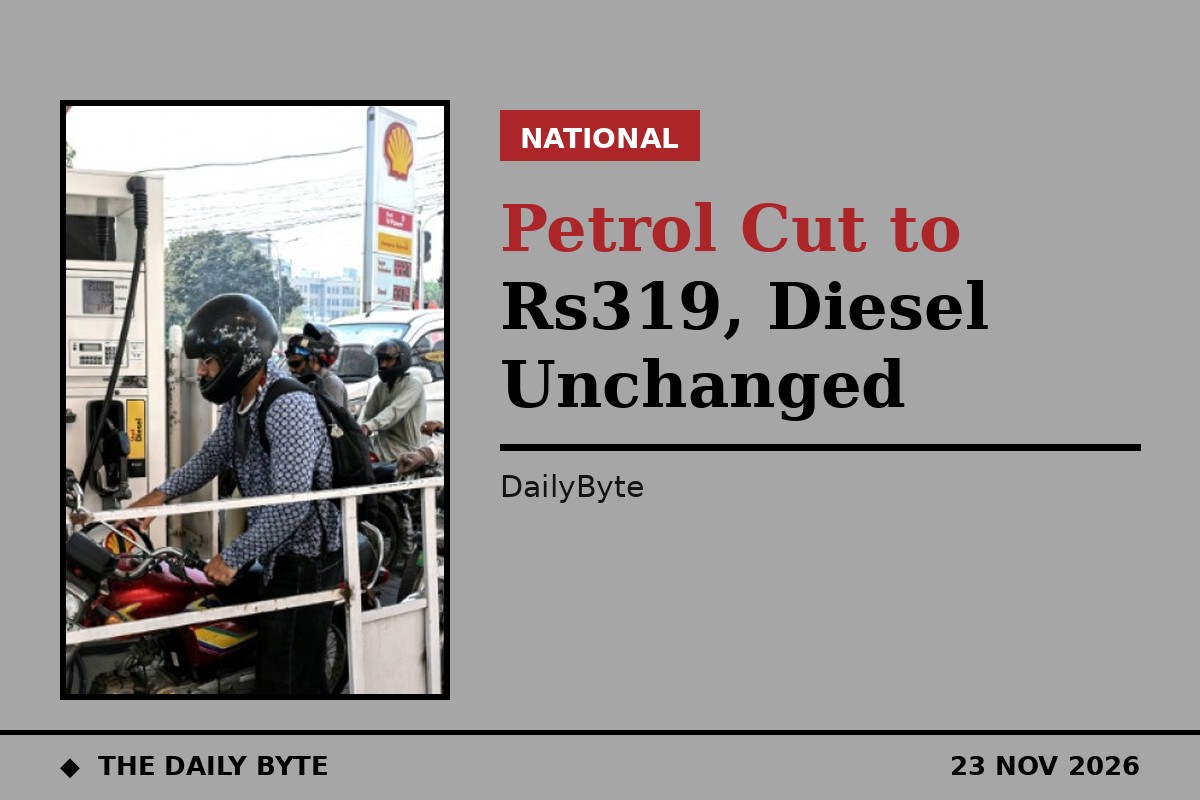
The price of petrol in Pakistan will fall by Rs3 a litre from Tuesday, 24 November, while the price of high-speed diesel will stay unchanged, under a notification issued by the Oil and Gas Regulatory Authority (OGRA) on Monday, 23 November.
Petrol will cost Rs319 a litre from Tuesday, down from Rs322, and high-speed diesel will remain at Rs357 a litre. The new rates were approved by the federal government and will apply across the country. Kerosene oil also became cheaper, falling by Rs10.42 to Rs273.22 a litre, according to fuel-price trackers citing the same notification. The prices are maximum ex-depot rates, so pump prices can vary slightly by city and station.
What the new prices are
The revision replaces the short three-day rates that ran from 21 to 23 November. Under those rates, petrol cost Rs322 a litre after a Re1 cut, and diesel cost Rs357 after a Rs2 increase. Both were notified by OGRA on Friday, 20 November, and expired at the end of Monday, 23 November.
The latest change therefore leaves diesel exactly where the previous notification put it, while petrol takes another step down. For a motorist filling a 40-litre tank, the Rs3 cut saves Rs120 on a full tank of petrol compared with the rate in force over the weekend. Diesel users, including truckers and bus operators, will see no change at the pump.
PakWheels reported that OGRA announced the reduction in a press release, with the revised prices taking effect from 24 November. Pakistan Today confirmed the same figures, putting petrol at Rs319 and diesel unchanged at Rs357.
A fortnight of falling petrol prices
The cut continues a run of falling petrol prices through the second half of November. Petrol stood at Rs335 a litre on 12 November and has now fallen to Rs319, a drop of Rs16 in under two weeks. The decline was interrupted only once, on 20 November, when petrol rose by Re1 to Rs323 before falling back to Rs322 the following day.
Diesel has followed a different path. It stood at Rs355 a litre before the 20 November notification, rose by Rs2 to Rs357 on 21 November, and has now been held at that level. The two fuels are priced separately because they serve different users and carry different taxes and levies, so a cut in one does not automatically mean a cut in the other.
Fuel prices in Pakistan are now revised in short windows rather than on the old fortnightly cycle. The last three revisions have each covered only a few days, which means motorists cannot assume the new Rs319 rate will hold for long. Another notification is expected when the current window ends.
Why diesel staying put matters
Diesel is the fuel that moves goods and grows food. Trucks, buses, tractors and tube wells all run on it, so its price feeds directly into transport fares, freight charges and the cost of getting wheat, vegetables and other goods to market. Holding diesel at Rs357 means transporters get no further relief from this revision, even as petrol users pay less.
That split matters for household budgets in a different way. A family that runs a motorcycle or a small car will feel the petrol cut at once. But the price of food and other goods, which depends heavily on diesel-powered transport, is unlikely to fall on the back of this notification alone. Any wider relief for consumers depends on diesel coming down as well, or on the separate relief package the government is discussing with Jamaat-e-Islami.
Relief talks continue
Technical-level talks between the government and Jamaat-e-Islami on public relief, including the petroleum levy, have concluded with draft proposals, and a final package is expected after a meeting between Prime Minister Shehbaz Sharif and JI Emir Hafiz Naeemur Rehman, expected on 24 or 25 November.
Under an arrangement announced on 2 November for 30 days, oil refineries are contributing a cumulative Rs15 billion towards the petroleum levy, which the government says enables a Rs14.71 a litre reduction in the petrol price paid by consumers. Whether that arrangement is extended, and whether the levy itself is cut, will be decided when the prime minister and the JI leadership meet.
For now, the position is simple. From Tuesday, petrol costs Rs319 a litre and diesel costs Rs357 a litre. Motorists should check the meter before refuelling, as OGRA advises, and expect another revision when the current short pricing window comes to an end.