New Zealand heads for cliffhanger election
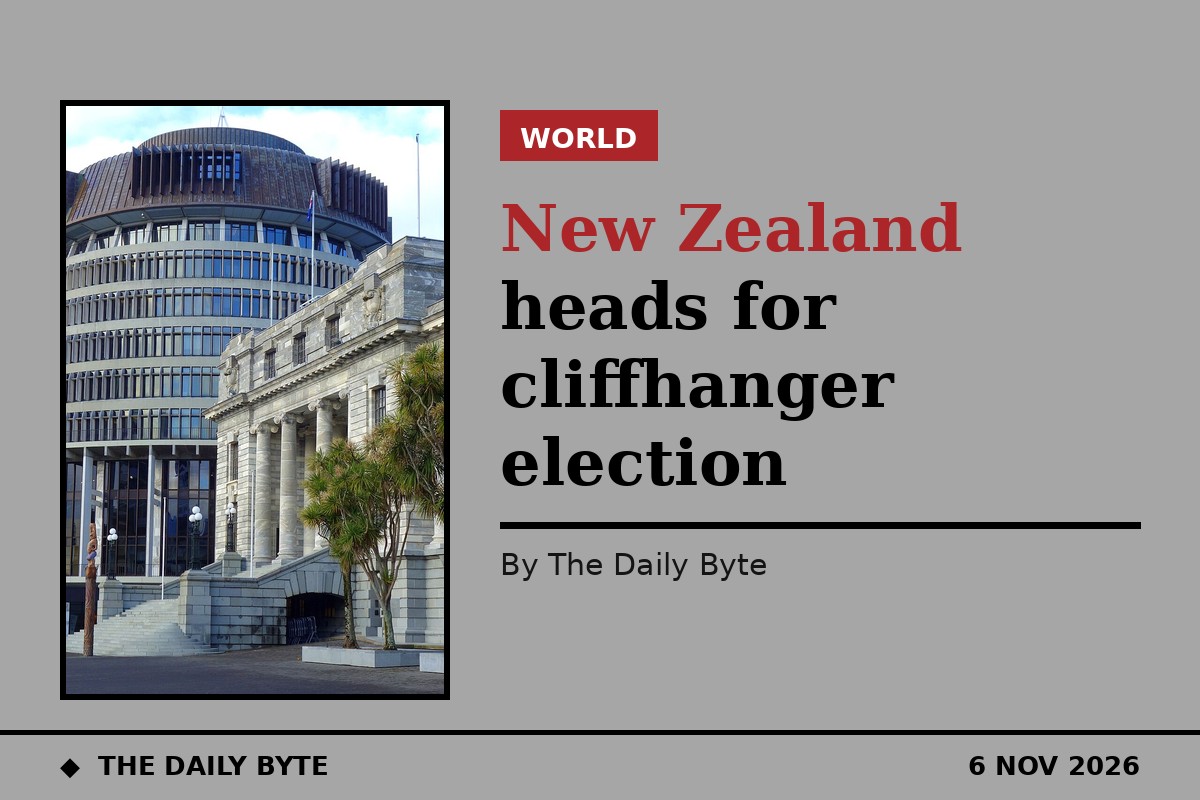
New Zealanders vote on Saturday, 7 November, in a general election that final polls suggest neither major bloc can win outright, with the centrist Opportunity Party potentially holding the balance of power.
The final 1News-Verian poll, of 1,006 voters from 29 October to 2 November, put Prime Minister Christopher Luxon's National Party on 30%, narrowly ahead of Labour, led by Chris Hipkins, on 29%. The Greens were on 16%, ACT on 10%, New Zealand First on 8%, Opportunity on 6% and Te Pāti Māori on 0.4%.
But the polls do not agree. A Taxpayers' Union/Curia poll also put National narrowly ahead, on 28.9% against Labour's 28.4%, while a Freshwater poll for The Post put Labour ahead, on 30.7% against National's 26.4%. Across the five most recent polls, Labour averages 29.1% and National 27.8%.
Neither side can govern alone
Modelling based on the 1News-Verian poll put the current coalition — National, ACT and New Zealand First — on 58 seats, three short of a majority, with Opportunity holding seven seats. Overhang seats could still change the outcome.
Under New Zealand's proportional voting system, governments are usually formed through coalitions. If no clear winner emerges, parties will have to negotiate — and may have to wait for the final count, including special votes from overseas, due on 27 November.
Cost of living dominates
The six-week campaign has been dominated by the cost of living and healthcare: in a recent Ipsos survey, voters' top concerns were the cost of living, cited by 64%, and healthcare, cited by 45%.
By 2 November, 913,762 people had already voted, about 200,000 more than at the same stage in 2023. Polls close at 7pm on Saturday.
Sources: Evening Report / The Conversation, NZ election eve poll watch: right's lead slipping, with Opportunity still the wild card, 6 November 2026; AsiaToday, New Zealand heads to dead-heat election with Opportunity as kingmaker, 5 November 2026.