Next Recalls Baby Sleeping Bag After Safety Alarm
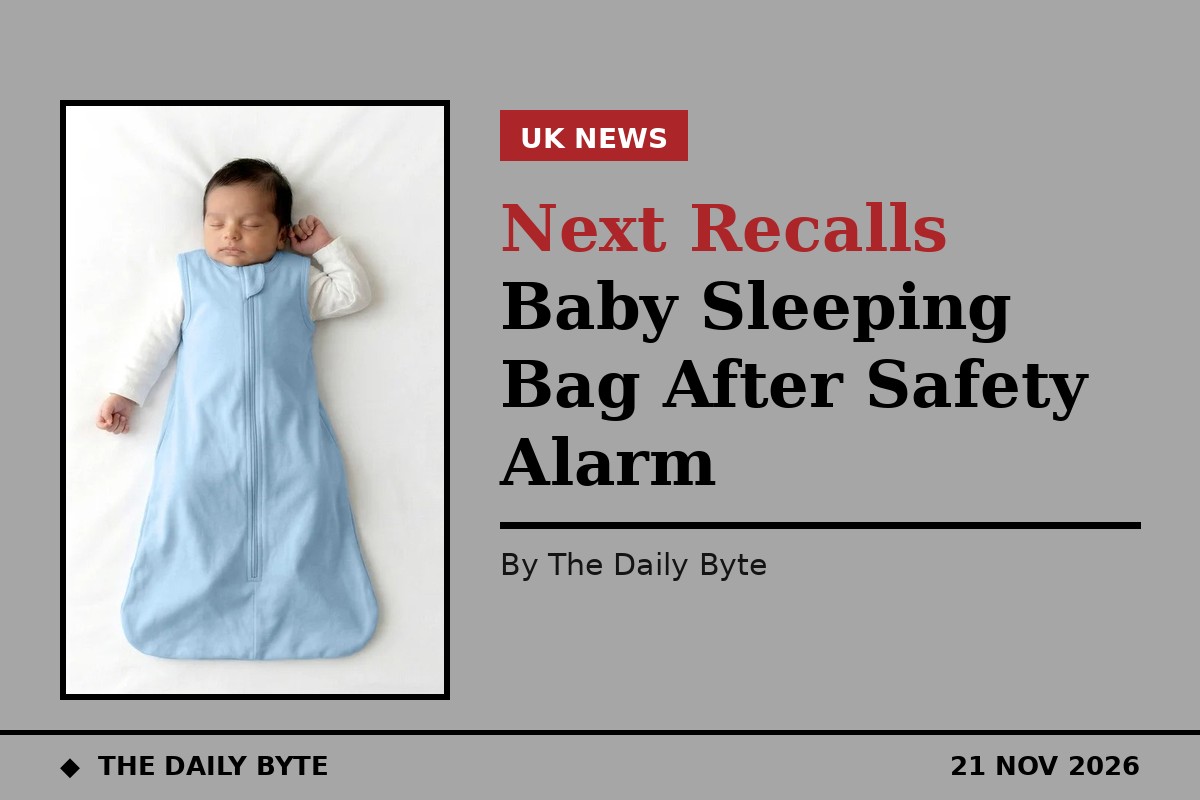
Sales of a baby sleeping bag have been halted across the United Kingdom by retailer Next, after a new mother in Norwich measured the neck opening herself and found it wider than the safety limit allows. The company has removed its own-brand 2.5 tog pink floral sleep bag with removable sleeves from its website and from all of its stores, and a product recall is now under way, with Next saying it will contact customers who bought the item directly.
Emma Hunter, 29, bought the bag for her daughter Rosie, who measured 59 centimetres tall at the time and is now three and a half months old. She had trusted the label, which stated that the bag met British standards. But when she looked closely at the fit around her daughter's neck, she felt something was wrong, and a tape measure confirmed her fear: the opening measured 36 centimetres around.
That measurement matters because of what can happen if a baby slips down inside a sleep bag. Under the EN 16781 standard, the neck opening of a sleep bag for a child between 50 and 65 centimetres tall should be at least 28 centimetres and no more than 32 centimetres around. The bag Hunter bought measured four centimetres beyond that maximum. According to the British Retail Consortium, a significant hazard arises if a child slips through the neck opening and the material covers the nose and mouth: suffocation can occur, starving the brain of oxygen.
A refund first, then a recall
Hunter said she was surprised by the company's first response when she raised the problem. She said staff seemed relaxed about it and simply offered her a refund, while she believed the bag was dangerous and should no longer be on sale, with a recall put in place. Next told her it was looking into the matter and that its product team was examining the bag. The retailer has since confirmed that the item has been removed from its website and all stores, that a recall is in place, and that it is contacting everyone who bought one to advise them of the next steps.
For Hunter, the risk was personal as well as practical. Her older brother died suddenly as a baby, so the danger of suffocation for infants is something close to her heart. She said it should not take a baby's death in a family for change to happen. She also questioned how a product could carry a label saying it met the British standard when it clearly did not, and said she had expected a big high street store to meet a certain standard, because parents put their trust in retailers to sell products that are safe for their children.
What parents should check
Health professionals say the key test for parents is the fit around the neck. Ruth Watts, a qualified health visitor in England, said babies differ in size and height despite their age, and that a sleeping bag should not be used if it covers the chin or face in any way, has a hood, or has no arms. Her advice is to check the gap around the neck: if one to two fingers fit around it, the bag is safe, but if the gap is tighter or looser than that, it should not be used.
The Lullaby Trust, a British charity that works to prevent sudden and unexpected deaths in infants, said it could not comment on the safety of specific products, because it does not carry out independent product safety testing. Its chief executive, Jenny Ward, encouraged families to check that any product they use has passed the necessary safety checks and meets British safety standards, and to follow the manufacturer's instructions. Ward advised families who are worried about any product to stop using it and to contact the manufacturer, and said the charity supports a recent warning from the Office for Product Safety and Standards about certain baby sleep bags.
A note of caution on the measurement
There is one important qualification to Hunter's measurement. The 2018 edition of the European standard sets a maximum neck circumference of 32 centimetres for bags intended for babies 50 to 65 centimetres tall, but it also specifies a particular test method, and the reporting does not state the intended size of Hunter's bag or how she measured the opening. Her measurement alone does not therefore establish a failure of that standard, and a 2026 revision uses a different neck-opening test, according to testing company Intertek. Next has nevertheless pulled the product from sale and recalled it, and the practical advice stands: check the fit around your baby's neck before you use a sleep bag, and stop using it if the fit looks wrong.


