Nigeria moves to end jail for attempted suicide
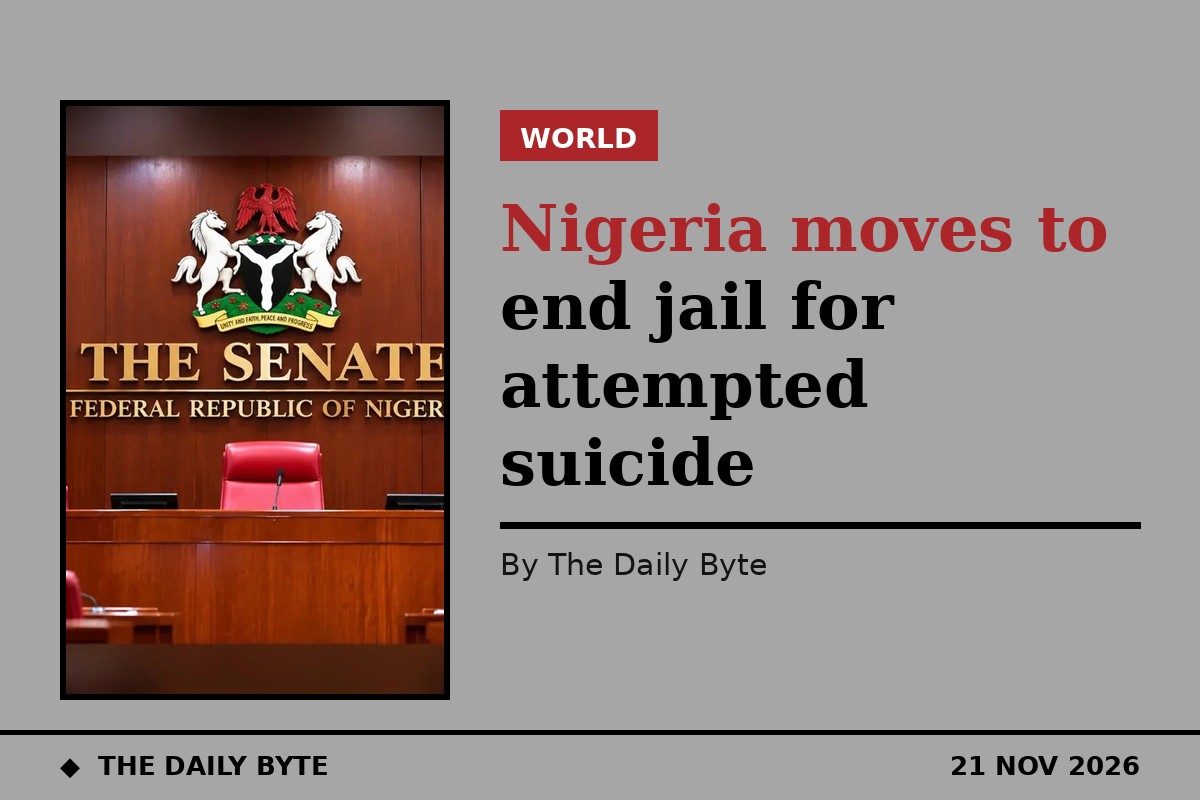
Nigeria has taken a step towards ending prison sentences for people who survive a suicide attempt, after President Bola Tinubu sent a bill to the Senate that would replace criminal punishment with medical care and rehabilitation.
The National Mental Health Amendment Bill 2026 was sent to the upper chamber in a presidential letter read during plenary on Tuesday, 17 November 2026, by Senate President Godswill Akpabio. The bill seeks to amend the National Mental Health Act No. 46 of 2021, removing the criminal penalties attached to attempted suicide and putting support for survivors in their place.
Under the law as it stands, attempting to take your own life is a crime in Nigeria. Section 327 of the Criminal Code Act makes it a misdemeanour punishable by up to one year in prison, while Section 231 of the Penal Code also prescribes imprisonment, a fine, or both. The bill now before the Senate would end that approach.
From punishment to treatment
The proposal has been building for some time. In October 2024, the Federal Ministry of Health and Social Welfare set up a National Task Force on the Decriminalisation of Attempted Suicide to review the laws and recommend reform. The process gained momentum on 19 August 2026, when the Federal Executive Council approved the proposed amendment to the National Mental Health Act.
Health Minister Professor Muhammad Ali Pate has said the existing criminal provisions sit uneasily with efforts to improve mental healthcare. The government restated its position at the 2026 World Suicide Prevention Day event in Abuja on 10 September, where the Minister of State for Health, Dr Iziaq Adekunle Salako, described decriminalisation as both a public health and a human rights imperative, saying people in mental health crises need care, support and appropriate intervention, not punishment.
The Senate has also been considering a separate bill on the same issue, sponsored by Senator Asuquo Ekpenyong, who represents Cross River South. That bill, which seeks a national framework for suicide prevention, the decriminalisation of attempted suicide and rehabilitation for survivors, passed its second reading on 13 October. During that debate, Ekpenyong asked whether prosecuting a survivor was the right response when the person might need urgent medical and psychological help.
Akpabio changes course
The debate has not been without controversy. Akpabio had earlier voiced reservations about removing criminal penalties, suggesting it could encourage the act, and mental health advocates criticised those comments. After Tinubu sent the bill, however, Akpabio welcomed the proposed amendment and clarified that his earlier remarks were not meant to cover people whose mental health conditions affected their ability to understand their actions.
Following the presentation of the president's letter, Akpabio referred the National Mental Health Amendment Bill 2026 to the Senate Committee on Rules and Business, which is expected to consider it and report back as soon as practicable. The bill must still pass committee review, debate and a vote in the National Assembly, and receive presidential assent, before it becomes law. Attempted suicide therefore remains an offence under existing laws for now.
One question the committee will have to settle is the scope of the change. Akpabio's clarification focused on people who are mentally disturbed, so it is not yet clear from the reporting so far whether the final law will cover every attempted suicide or only cases linked to a mental health condition.
Care must follow the law change
Advocates warn that changing the law, on its own, will not be enough. Mental healthcare is hard to reach in many parts of Nigeria, with concerns about the number of trained professionals, treatment facilities and affordable services, especially outside major cities. Survivors will need emergency treatment, psychological assessment, counselling, rehabilitation and continued support, and hospitals and law enforcement officers will need training to handle mental health emergencies.
The Federal Government has cited estimates of more than 7,000 suicide deaths and about 300,000 suicide attempts in Nigeria each year, although the real figures are hard to establish because of underreporting, stigma and weak reporting systems. Nigeria's National Suicide Prevention Strategic Framework 2023-2030 aims to cut suicide deaths by 15 per cent by 2030, through better access to mental healthcare, public education, research and community-based interventions.
For survivors and their families, the hope is that the bill marks a shift towards understanding and treatment. Whether it delivers will depend not only on the Senate's decision, but on whether help is there when people in severe distress ask for it, without fear of arrest, judgement or humiliation.