NIH Issues Three Winter Health Advisories in Pakistan
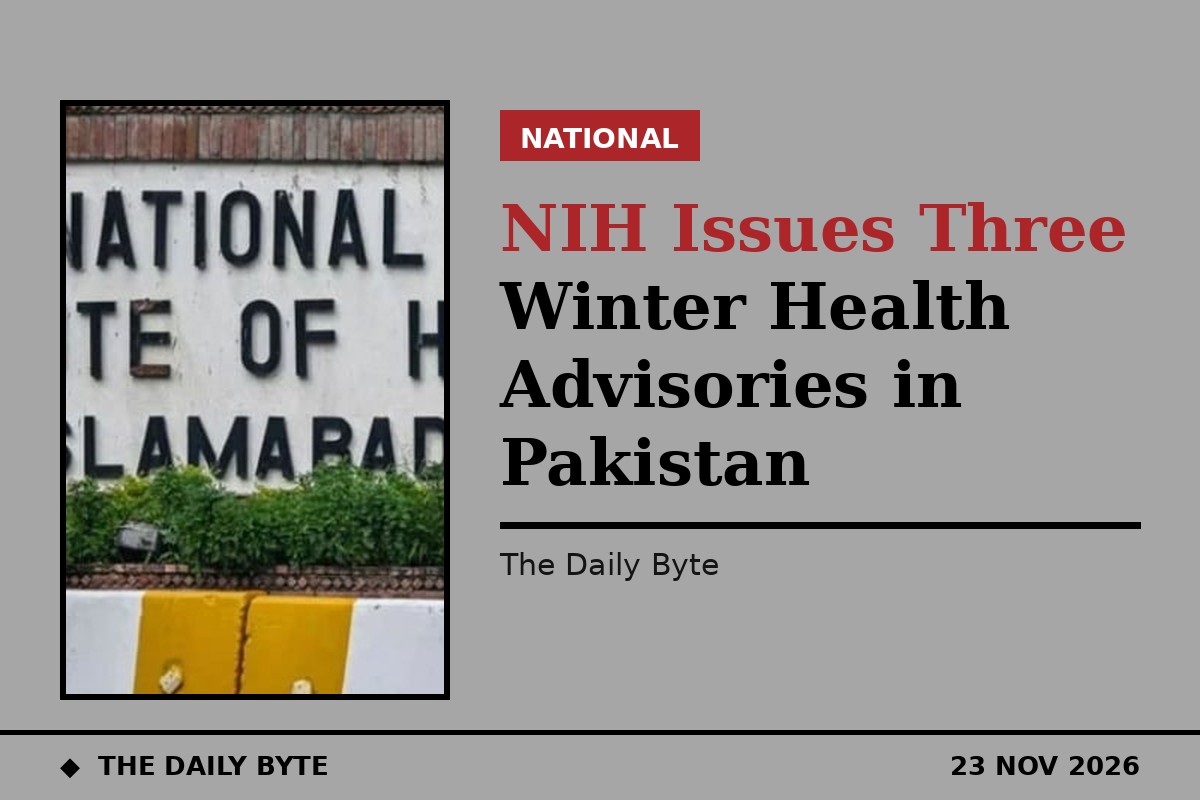
Pakistan's National Institute of Health (NIH) issued three nationwide health advisories on Saturday, 21 November 2026, warning of rising seasonal influenza, winter smog and vaccine-preventable diseases. The advisories urge federal and provincial health authorities to strengthen disease surveillance, vaccination and hospital preparedness ahead of winter.
The advisories were issued by the NIH's Centre for Disease Control and cover the prevention and control of seasonal influenza for 2026-27, the health hazards of smog and precautionary measures, and the prevention and control of vaccine-preventable diseases.
Measles, diphtheria and whooping cough rising
Cases of diphtheria, whooping cough (pertussis) and measles are increasing across Pakistan, including in Islamabad. Several diphtheria patients are being treated at the Pakistan Institute of Medical Sciences (PIMS) in Islamabad, while pertussis cases have been reported in recent weeks in Islamabad and Rawalpindi. Officials said several hundred children have died of measles across the country.
In its vaccine-preventable diseases advisory, the NIH listed inadequate routine immunisation coverage, population mobility, missed doses, weak cold chain management, delayed case detection and poor infection control in hospitals as key risk factors. It called for uninterrupted routine immunisation under the Expanded Programme on Immunisation, follow-up of children who missed doses and catch-up vaccination where needed.
For diagnosis, the advisory said measles should be confirmed through serum samples kept at 2-8°C during transport, while diphtheria requires throat or nasal swabs in Amies transport medium with charcoal. Hospitals were told to keep adequate stocks of Vitamin A, antibiotics and diphtheria antitoxin.
Flu figures and high-risk groups
Influenza is spreading at the same time. In its seasonal influenza advisory for 2026-27, the NIH warned that Influenza A(H3N2) and other seasonal viruses can cause mild illness but may progress to severe disease among high-risk groups, including people aged 65 and above, children under five, pregnant women, the obese, the immunocompromised and those with diabetes, heart or respiratory ailments.
Pakistan's disease surveillance system recorded 47,417 suspected influenza-like illness cases and 1,805 suspected severe acute respiratory infection cases in Week 41. The NIH clarified that these are suspected cases reported through its surveillance system, not laboratory-confirmed influenza infections. An infectious diseases specialist warned that with vaccines from multinational companies unavailable, many people remain unprotected and are falling sick.
The NIH advised symptomatic people to stay home, cover coughs and sneezes, wash hands and avoid contact with high-risk individuals. It asked provincial and regional health departments and hospitals to circulate the advisories and report the measures taken in their areas.
Frequently asked questions
What are the three NIH advisories? They cover seasonal influenza for 2026-27, the health hazards of winter smog, and the prevention and control of vaccine-preventable diseases.
Who is most at risk from seasonal flu? People aged 65 and above, children under five, pregnant women, the obese, the immunocompromised and those with diabetes, heart or respiratory conditions.
What should parents do? The NIH called for uninterrupted routine immunisation, follow-up of children who missed doses and catch-up vaccination where needed.
What should people with flu symptoms do? Stay home, cover coughs and sneezes, wash hands and avoid contact with high-risk individuals.
Sources: APP, via Tez Khabar and The News, as reported on 23 November 2026.