Pakistan, Iran Plan Power Group to Fund Gwadar Line
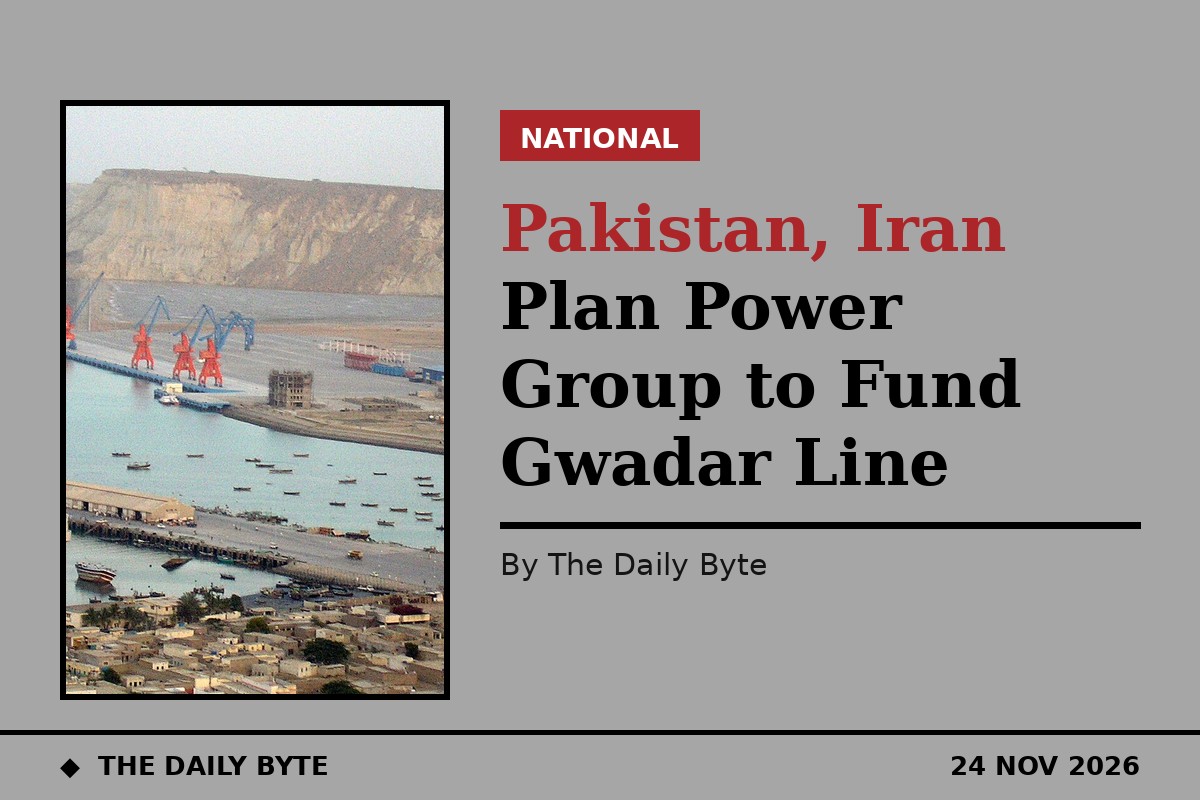
Pakistan and Iran are preparing to set up a joint working group on electricity and energy, with financing for the second phase of the Gwadar power transmission line expected to be the main item on its agenda. The plan was reported by Business Recorder on Monday, 23 November, citing sources familiar with the matter, and follows decisions taken at the 22nd session of the Pakistan-Iran Joint Commission for Economic Cooperation (JCEC), where the two countries agreed to create the group.
The Iranian Embassy in Islamabad has written to Pakistan's Ministry of Foreign Affairs setting out the composition of its delegation and a proposed agenda for the working group's first meeting, according to the report. Iran's Ministry of Energy has nominated representatives from its Centre for International Affairs, its Deputy Ministry for Electricity and Energy, the Renewable Energy and Energy Efficiency Organization (SATBA), the MAPNA Group and the Niroo Research Institute.
Financing the second phase of the Gwadar line
The central question for the working group will be how to pay for, and then build, the second phase of the Gwadar electricity transmission line. The line is intended to increase the amount of electricity Pakistan imports from Iran and to strengthen power supply in the port city, which has long relied on Iranian electricity because of its distance from Pakistan's national grid.
No cost, capacity figure or completion date for the second phase has been announced. The working group is still being formed, and its first meeting has not yet been dated, although Iran's Ministry of Energy has said it is willing to hold it virtually. What is clear from the reported agenda is that financing options and implementation arrangements, rather than the principle of the project, are what the two sides now need to settle.
More than a single transmission line
The proposed agenda goes well beyond the Gwadar line. The two sides are also expected to discuss cooperation in electricity generation, transmission and distribution, including the supply of electrical equipment and spare parts that Pakistan needs, and maintenance services for power plants. Renewable energy is another priority, with talks planned on exchanging technical expertise, investment opportunities in both countries and cooperation on renewable electricity storage technologies.
The working group will also examine how Iranian companies can take part in Pakistan's electricity market, opening the way to investment, technology transfer and joint ventures in energy-related projects. That would be a step beyond the existing cross-border electricity trade, in which Iran sells power to Pakistan, towards Iranian firms operating inside Pakistan's power sector.
Why Gwadar needs the power
Gwadar's electricity supply has been a persistent problem. Pakistan already imports up to 204 megawatts from Iran for the Makran region, including Gwadar, under an agreement signed in 2002 and amended in December 2024 for a further two years. The National Assembly was told in early November that about $12 million was owed to Iran's state power utility, Tavanir, for electricity already supplied, and that the arrangement carries a take-or-pay obligation of 30 million kilowatt-hours a month.
Power reaches the region through four cross-border links, the largest of which are the Pola-Jivani and Peshin-Mand connections, each rated at 100 megawatts. Although the Makran region has been connected to Pakistan's national grid, the long transmission lines still cause voltage problems, and a study on installing equipment to stabilise the supply is not expected to be completed until September 2027. Against that background, a second phase of the Gwadar line would matter most if it delivers more power more reliably, rather than simply adding another link.
The energy talks also come a week after Pakistan's energy minister, Sardar Awais Ahmad Khan Leghari, met Turkmenistan's energy minister in Islamabad on 17 November and proposed that Iran and Turkmenistan jointly study boosting transmission capacity to Gwadar through the Iranian grid. The new working group would give Pakistan and Iran a standing forum to take that idea, and the Gwadar financing question, forward.
What happens next
The next step is the working group's inaugural meeting, for which Iran has proposed holding the session online. No date has been fixed, and no agreement has yet been signed. The cooperation is also being pursued against the backdrop of sanctions on Iran's energy sector, which have long complicated energy dealings with Tehran, and which Pakistan has nevertheless navigated to keep electricity flowing to its south-western districts. Whether the working group can turn that record into financing for the Gwadar line will be the test of the new forum. Energy Update, reporting the Business Recorder story, and OilPrice both carried the report on 23 November.