Pakistan holds nearly half of region's extreme poor
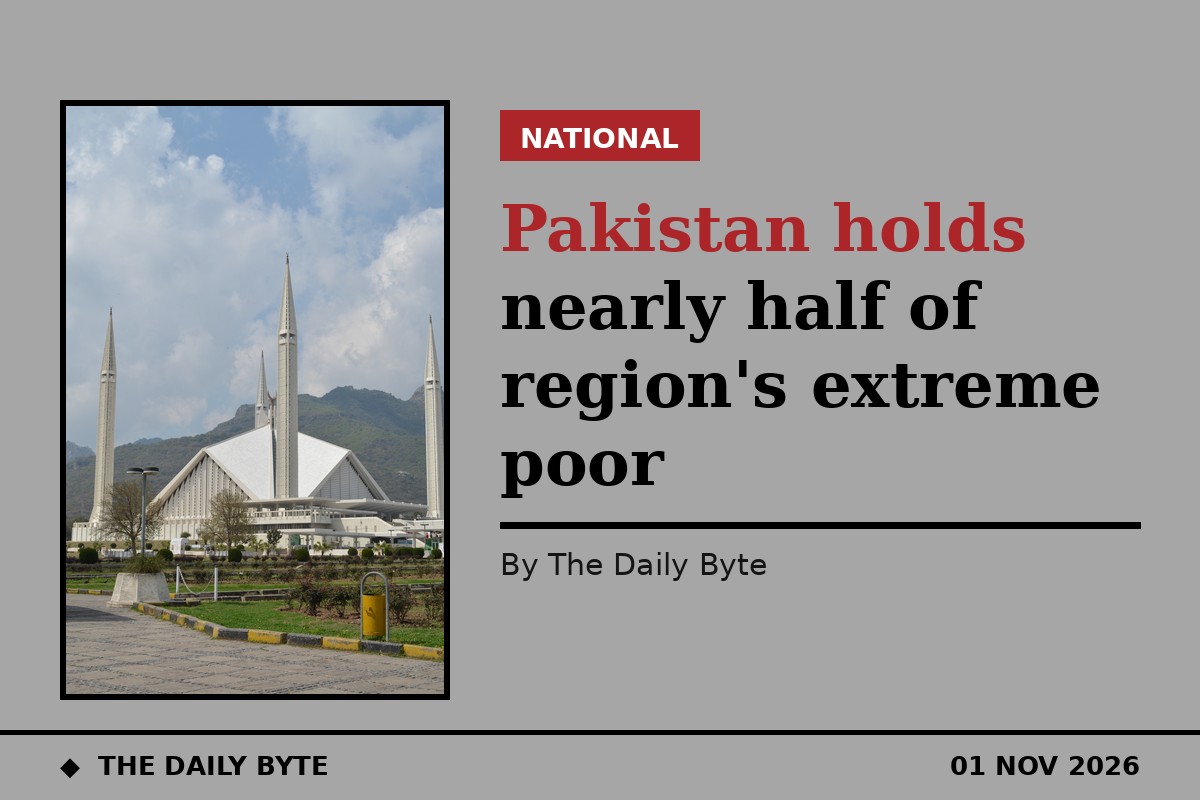
Pakistan accounts for about 48% of people living in extreme poverty across the Middle East, North Africa, Afghanistan and Pakistan region, known as MENAAP, according to the World Bank's October economic update. The finding was highlighted by Dawn on 7 October and reported again by IANS on 1 November.
What the 48% figure does — and does not — mean
The 48% is Pakistan's share of the region's extreme-poor population, not Pakistan's own poverty rate and not a share of the world's poor. Claims circulating online that 48% of the global poor live in Pakistan misread the report. The international extreme-poverty line used is $3 a day in 2021 purchasing-power-parity dollars, which adjusts for differences in living costs. About another 47% of the region's extreme poor live in Afghanistan, Syria and Yemen combined. The Bank says MENAAP is the only region in the world where poverty remains above pre-pandemic levels and continues to rise, as reported by IANS and The News.
How poverty inside Pakistan has moved
Pakistan's poverty rate at the $3 line rose by 6.4 percentage points between 2018–19 and 2024–25, and by 3.2 percentage points at the $4.20 line. On the national poverty line, the Planning Ministry, using the same survey data, reported an increase from 21.9% to 28.9% over a similar period. The Bank attributes the deterioration to successive shocks: the COVID-19 pandemic, the devastating 2022 floods, a macroeconomic crisis marked by high inflation and currency depreciation, and a prolonged period of adjustment that reduced real incomes.
What the Bank forecasts next
The Bank's October Pakistan Development Update forecasts economic growth of 3.8% in fiscal year 2026–27, with a fiscal deficit of 3.5% of gross domestic product. It has also said growth of about 4% is needed to keep pace with the number of people entering the labour market. The report's message is therefore twofold: the regional concentration of extreme poverty in Pakistan is stark, but it is a share of a regional total, and the domestic trend behind it is a rise of several percentage points over six years, not a single headline number.