Pakistan backs self-determination as MINURSO mandate ends
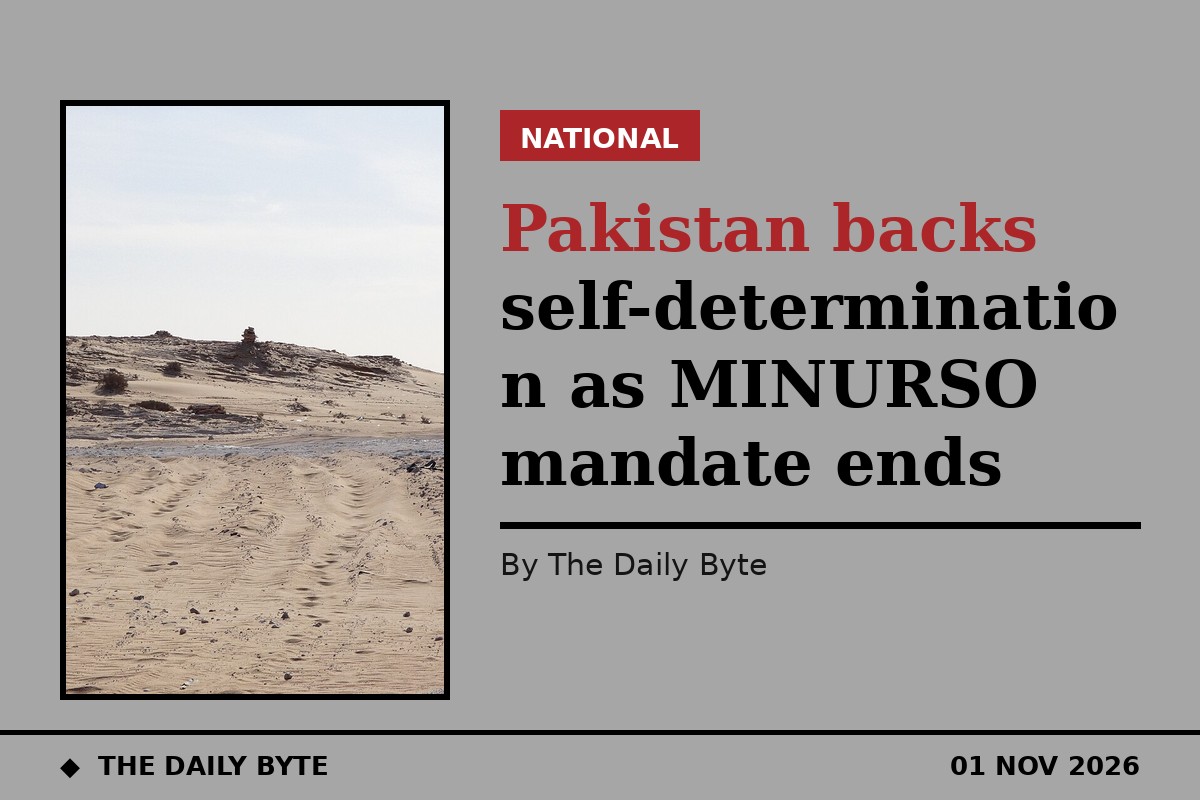
Pakistan has restated its support for the Sahrawi people's right to self-determination as the United Nations mission in Western Sahara lost its mandate, explaining its abstention in last week's Security Council vote as consistent with its longstanding position against imposed settlements.
A mandate that ran out
The Council failed on 30 October to renew the United Nations Mission for the Referendum in Western Sahara (MINURSO). A United States draft, which would have extended the mission for a year and renamed it, won 11 votes in favour but was vetoed by Russia, with China, Pakistan and Somalia abstaining. A competing Russian draft, proposing a straight one-year extension, won only three votes and was voted down by the United States. With no text adopted, the mandate expired at midnight on 31 October, and the Secretary-General's spokesman said on 1 November that MINURSO was ceasing operations and a liquidation period had begun.
Why Pakistan abstained
Speaking during Friday's Council session, Pakistan's representative said lasting peace required a mutually acceptable political solution reached through dialogue and consensus. According to the Sahara Press Service report of the statement, Pakistan objected that the United States draft would have redirected the political process towards Morocco's autonomy proposal as the sole basis for negotiations, while removing explicit references to a referendum and to the options available to the Sahrawi people, including independence.
Pakistan also raised concerns about redefining MINURSO's mandate, warning that shifting it away from its original task of organising a self-determination referendum towards monitoring the ceasefire and managing the situation on the ground would change the mission's character. The mission, established in 1991, had been renewed routinely for decades before this week's deadlock.
What happens next
The United Nations said it would continue working towards a political settlement through the Secretary-General's Personal Envoy for Western Sahara, Staffan de Mistura, even as the mission itself winds down. For Pakistan, the episode leaves its stated principle intact but unresolved: a settlement, in its view, must be agreed rather than imposed.
Sources: United Nations Meetings Coverage; Sahara Press Service; Maghreb Insider.