Pakistan petroleum levy tops Rs1,126bn in nine months
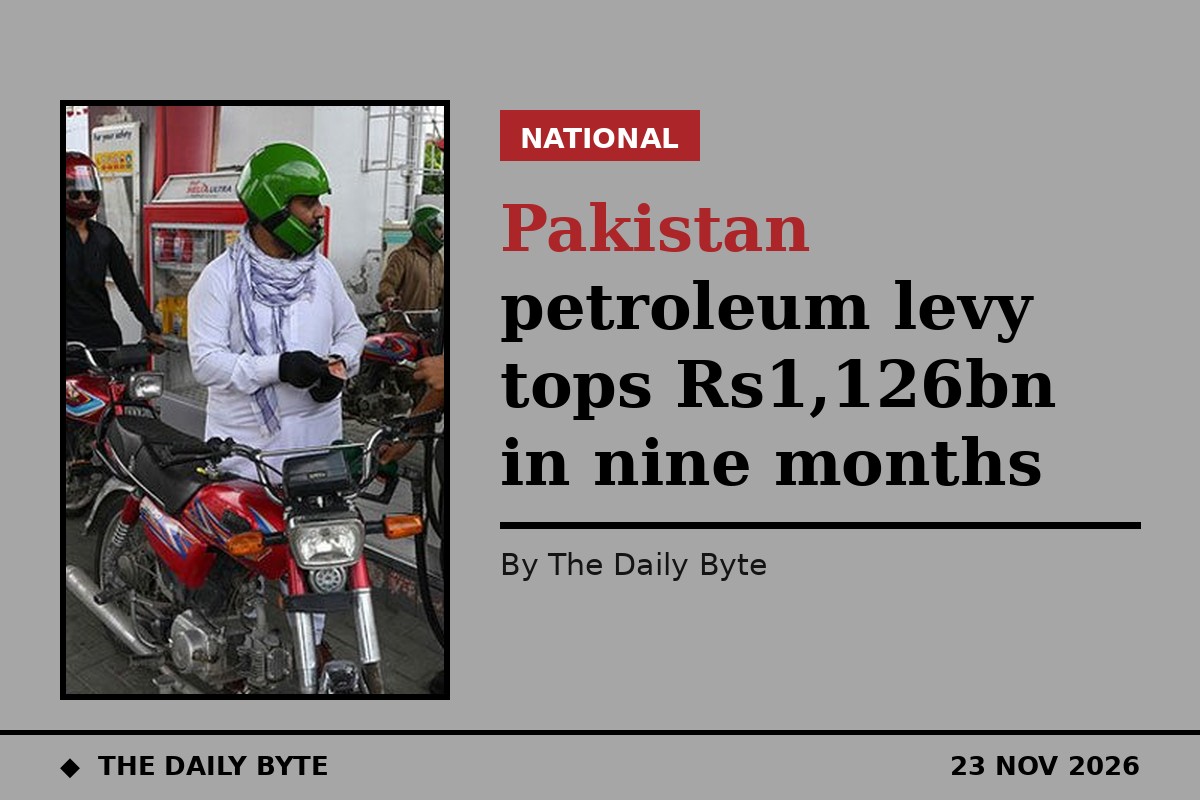
The federal government collected Rs1,126.34 billion through the petroleum levy during the first nine months of 2026, according to official figures reported on Monday, underlining how heavily the exchequer relies on fuel charges paid by motorists and businesses across the country. The levy is charged on petrol and diesel and is paid by consumers at the time of purchase, with oil marketing companies collecting the money on behalf of the government.
The figures cover the period from January to September 2026. Over the same nine months, the government collected about Rs47 billion separately through the Climate Support Levy imposed on petroleum products, taking the combined amount raised from the two charges to more than Rs1.17 trillion.
The scale of the collection matters because the levy is built into the price paid at the pump, so every litre of petrol or diesel sold adds to the total. That makes it one of the most dependable revenue streams available to the government, but it also means the burden falls directly on households, transporters and businesses, which pay it as part of their fuel bills. Abb Takk, reporting the figures, noted that the collections add to the financial burden on consumers already facing high fuel prices.
The same day brought a second set of figures that showed not all of the money collected from consumers reaches the exchequer on time. An audit report on the Petroleum Division for the financial year 2025-26, by the Auditor General of Pakistan, found that four oil marketing companies delayed depositing more than Rs3.4 billion in petroleum levy they had collected from fuel consumers. The delayed amount totalled Rs3,405,238,000, and the companies held the money for about four months before depositing it in the national exchequer.
Audit officials reviewed the levy payments of the four companies in 61 cases. They found that a surcharge of more than Rs46.3 million, payable on the late deposits, was not charged. The report states that the failure to recover the surcharge violates the Public Finance Management Act 2019, and it attributes the loss to the national exchequer to ineffective monitoring of timely levy collection. It also raises questions about the oversight role of the Directorate General of Oil.
The audit's findings matter because the levy is not the companies' money to keep. It is collected from consumers at the pump and held only briefly before it is due to be passed to the state. A delay of months, across dozens of cases, means public money sat with private companies while the government waited for it, and the missing surcharge means the delay carried no financial penalty for those responsible.
The matter was taken up with the management of the Petroleum Division in October 2025, and audit officials have directed the division to recover the outstanding surcharge from the companies concerned. Whether that recovery happens, and how quickly, will be the test of whether the audit's findings lead to action rather than remaining on paper.
Taken together, the two sets of figures published on Monday show both sides of the same system: the very large sums that fuel consumers contribute through the levy and the climate charge, and the gaps in making sure all of that money reaches the state in full and on time. The collections show the revenue is flowing; the audit shows the controls around it need to work better.